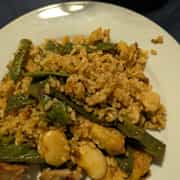
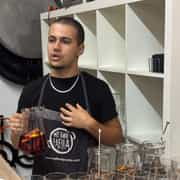
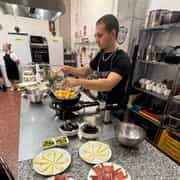
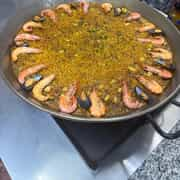
Authentic Valencian Paella Cooking Class Traditional Chicken and Rabbit Recipe
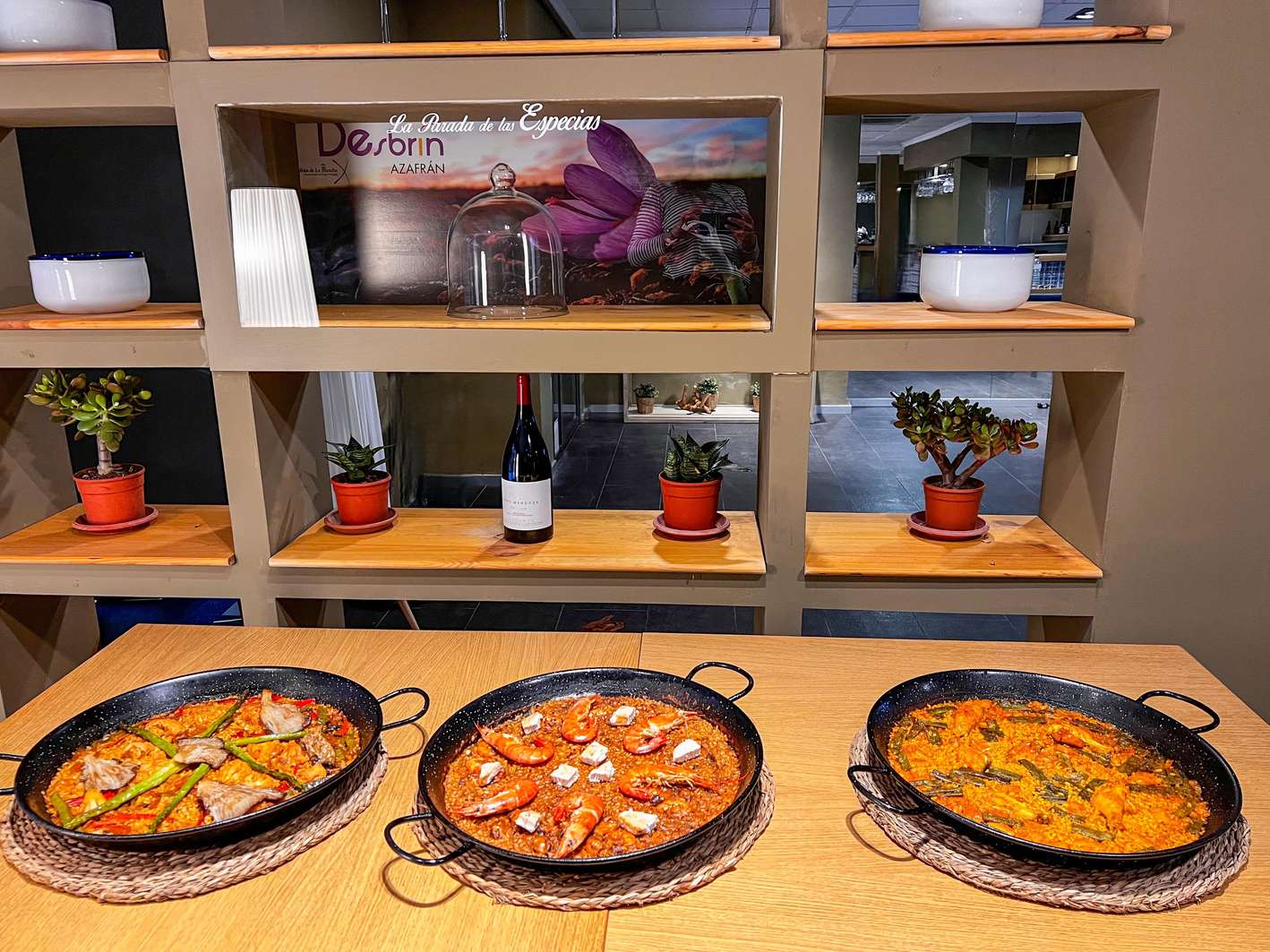
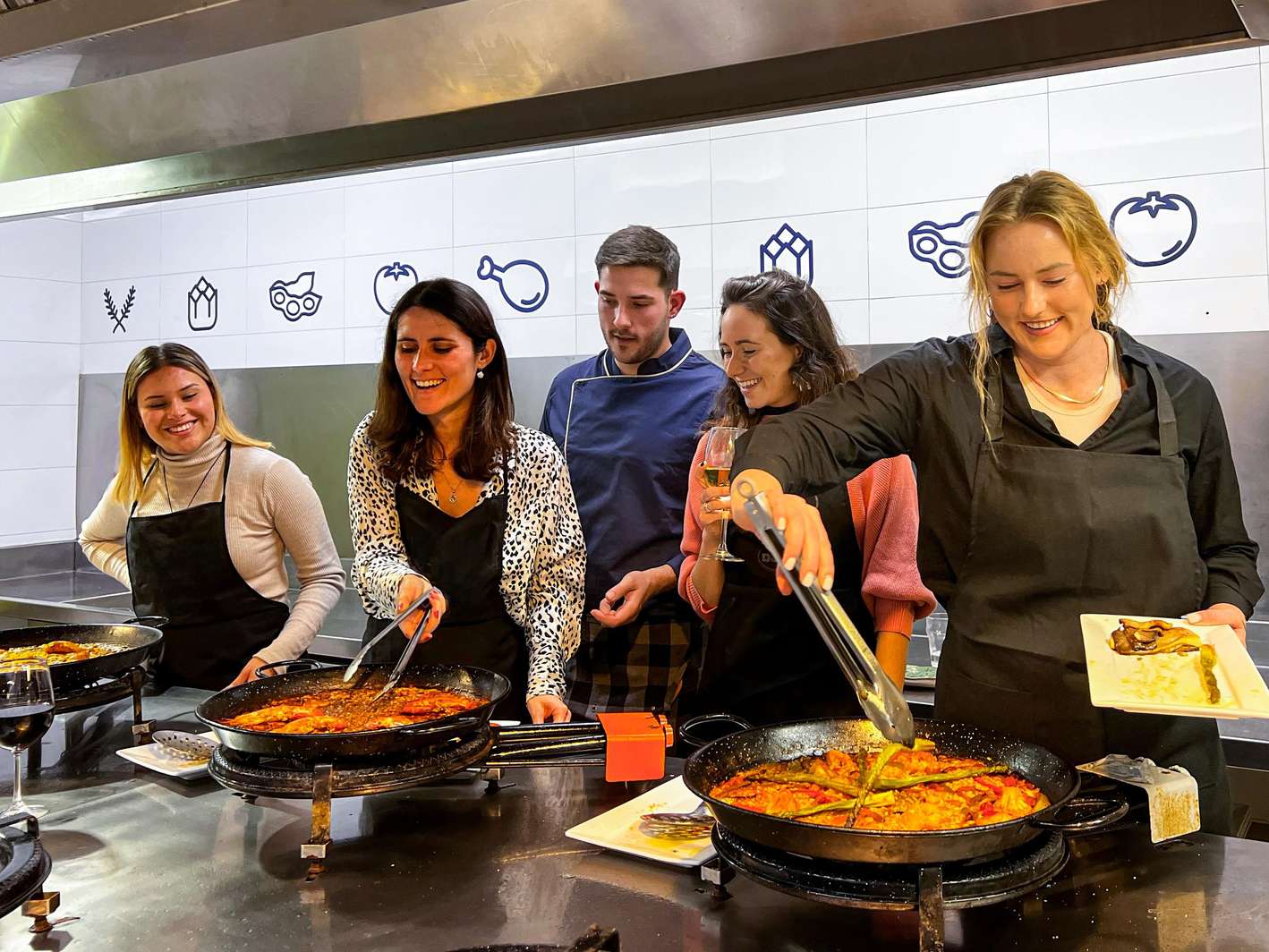
Cook the real thing - chicken, rabbit, garrofó beans and saffron, learned from Valencian chefs around a live fire. Choose a market-to-kitchen morning with fresh ingredients, a countryside farmhouse class among orange groves and rice fields, or an intimate terrace session with tapas and sangria. Every class shares its recipe afterwards, so you can recreate the dish at home for friends and family.
"So much fun learning to cook Valencian paella! Great starters: manchego, chorizo, olives, Spanish omelette. The chicken & rabbit saffron paella was delicious, and the dessert cake too."
4.9★average rating2,734traveler reviews100%free cancellation45countries travelers came from
Authentic Valencian paella cooking class - where to learn the real one
Two things set these classes apart: some start with a market walk to pick the ingredients, and others go straight to the kitchen with everything pre-sourced. Whichever you pick, you cook the classic chicken and rabbit recipe yourself, guided step by step by a local chef.
MarketsMercat Central and Mercat d'Algirós open Monday to Saturday from 7:30 to 3 pm and close every Sunday and on public holidays, so market visits run on mornings only.
EveningsAfternoon and evening classes skip the market visit and start directly in the kitchen with pre-sourced ingredients.
AugustMercat d'Algirós closes for the whole month, so its market visit is off during August.
BookingMost workshops need a minimum of two participants to run; if the number is not met, you can reschedule, switch to another session, or get a full refund.
Solo dinersA cooking class lets you eat freshly cooked paella without the two-person minimum that sit-down restaurants enforce.
What to wearCasual clothes you do not mind getting messy, long pants, fitted tops, and closed-toe shoes for the open gas burners; aprons are usually provided.
AllergiesTell the host about allergies when you book, and travelers with shellfish allergies should choose a land-meat or vegetarian paella instead of a seafood one.
RecipesHosts share the detailed paella recipe after the workshop so you can cook the dish at home, and portions are generous enough that takeaway containers are often provided.
ChildrenRules differ by class, from not suitable under 2 to not suitable under 10, and children must be accompanied by an adult where allowed.
Getting thereMetro stations like Colón or Xàtiva sit at the edge of the old town, and EMT buses run into the historic center; expect stairs to reach some terrace venues.
Which authentic Valencian paella class is yours?
Answer a few quick questions about your trip and the classes that match you best appear here.
1Who's coming?
2What's your budget?
3What kind of trip?
Your best match
match
Valencia: Paella Cooking Class with Central Market Tour★ 5.0 (1,260) · 4 hours · Market visit
Popular with solo travelers. 100% of solo travelers gave it 4 or 5 stars.
Booked 5 times yesterday
Shopping for your own ingredients at Mercado Central before you cook.
closureThe Central Market and Algiros Market close every Sunday, on public holidays, and in August, so market visits cannot happen on those days.
Book a morning class from Monday to Saturday to shop the market stalls with your chef, or on Sundays choose a session that starts straight in the kitchen with pre-sourced ingredients.
Four ways to cook authentic Valencian paella
Most popular
4 hours·English
5.0(1,260)
Valencia: Paella Cooking Class with Central Market Tour
A five-star record across 1,260 ratings, plus a market stroll through Mercado Central before the kitchen work starts.
Free cancellationLive paella cooking class with a chefAll cooking materials and ingredients
Inside the authentic Valencian paella class - a day at the chef's home
about 4.5 h
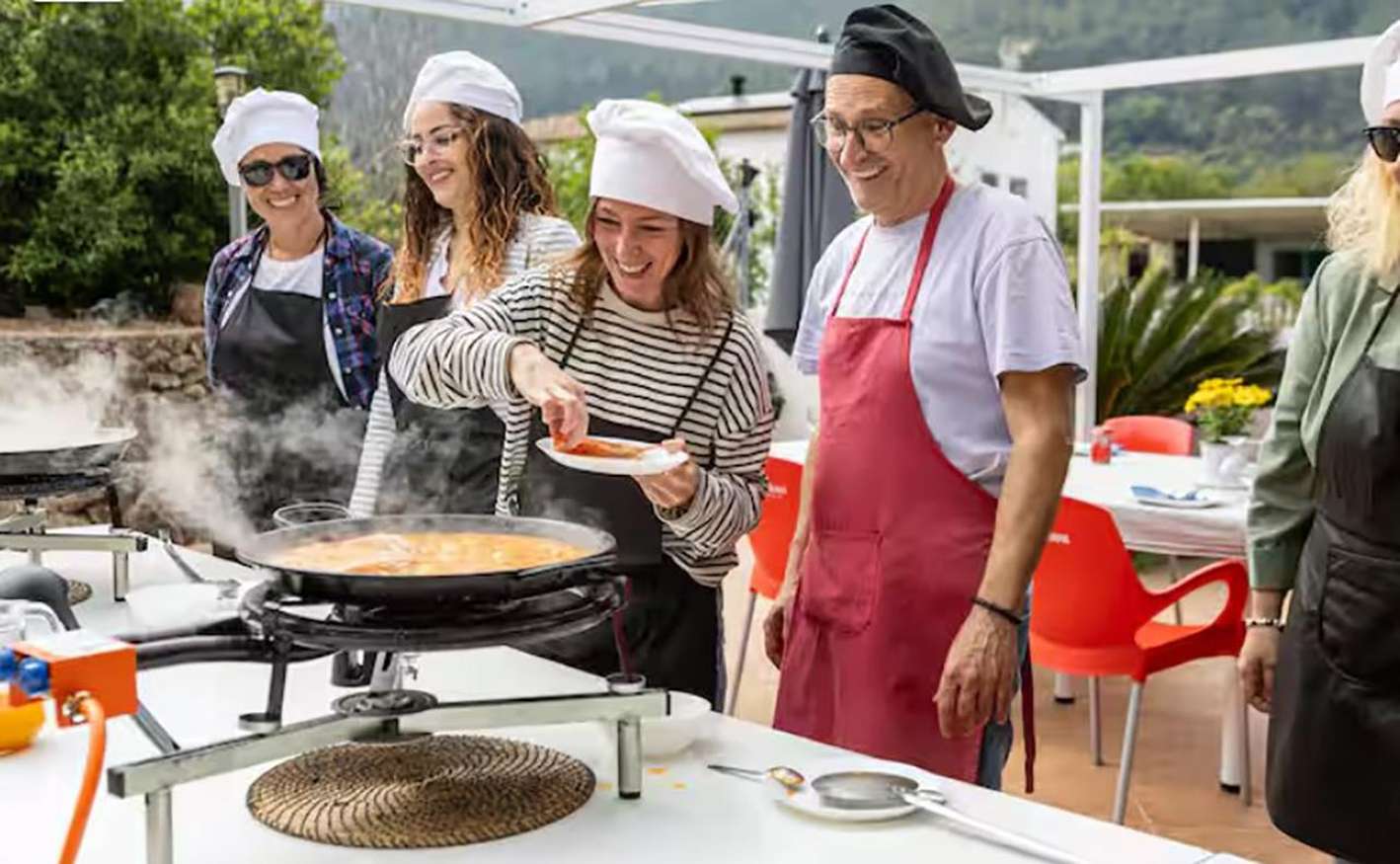
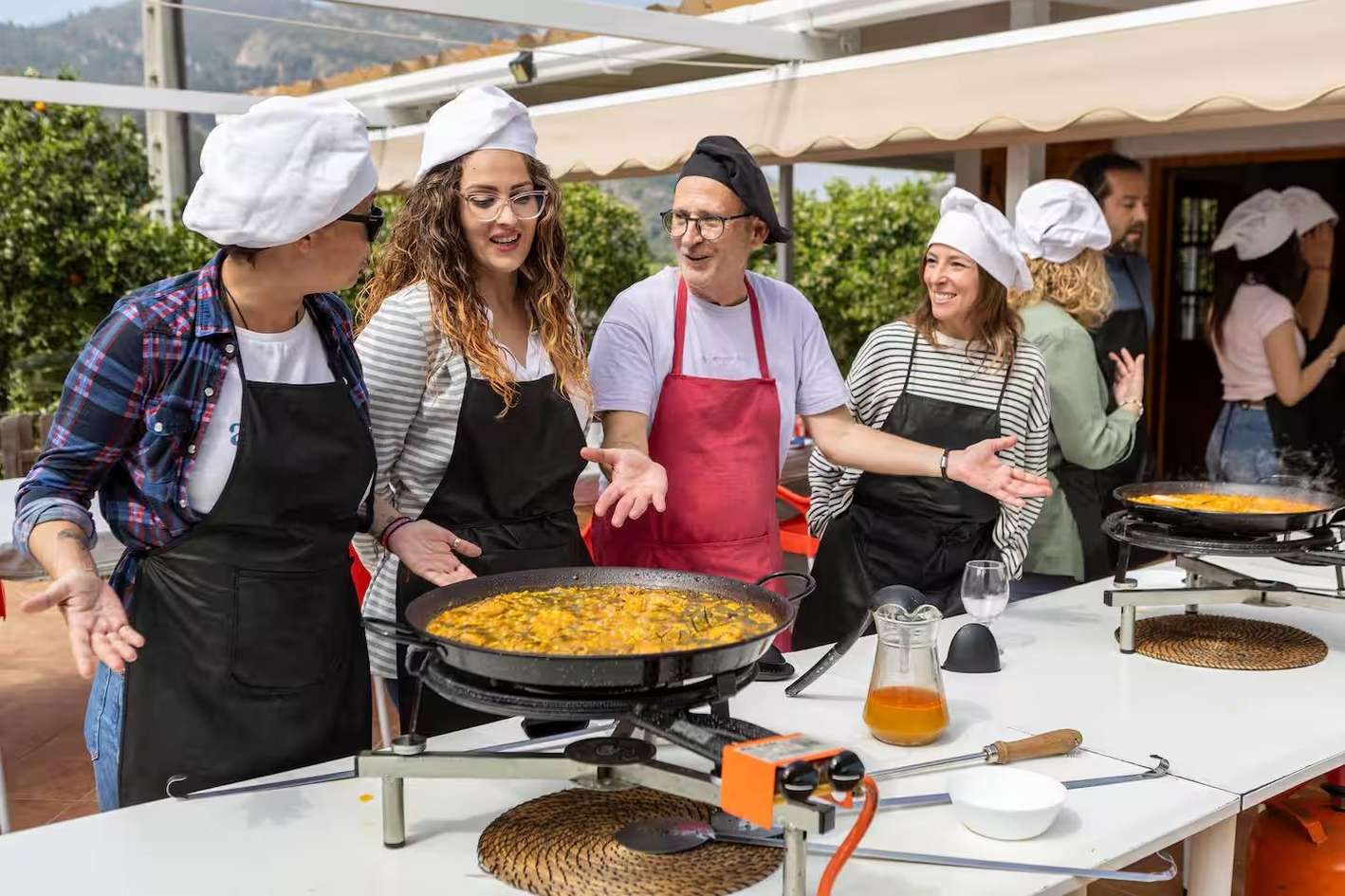
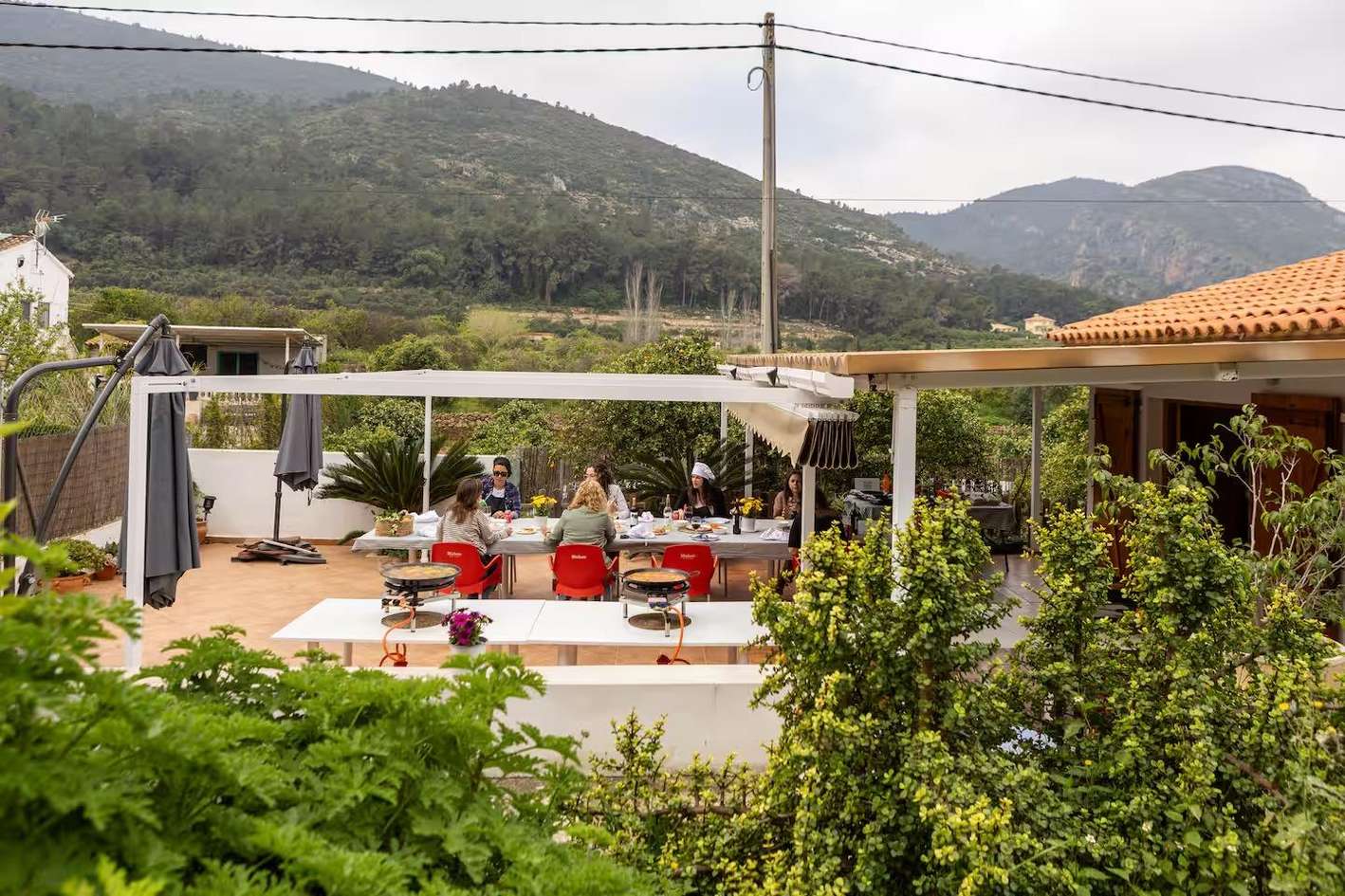
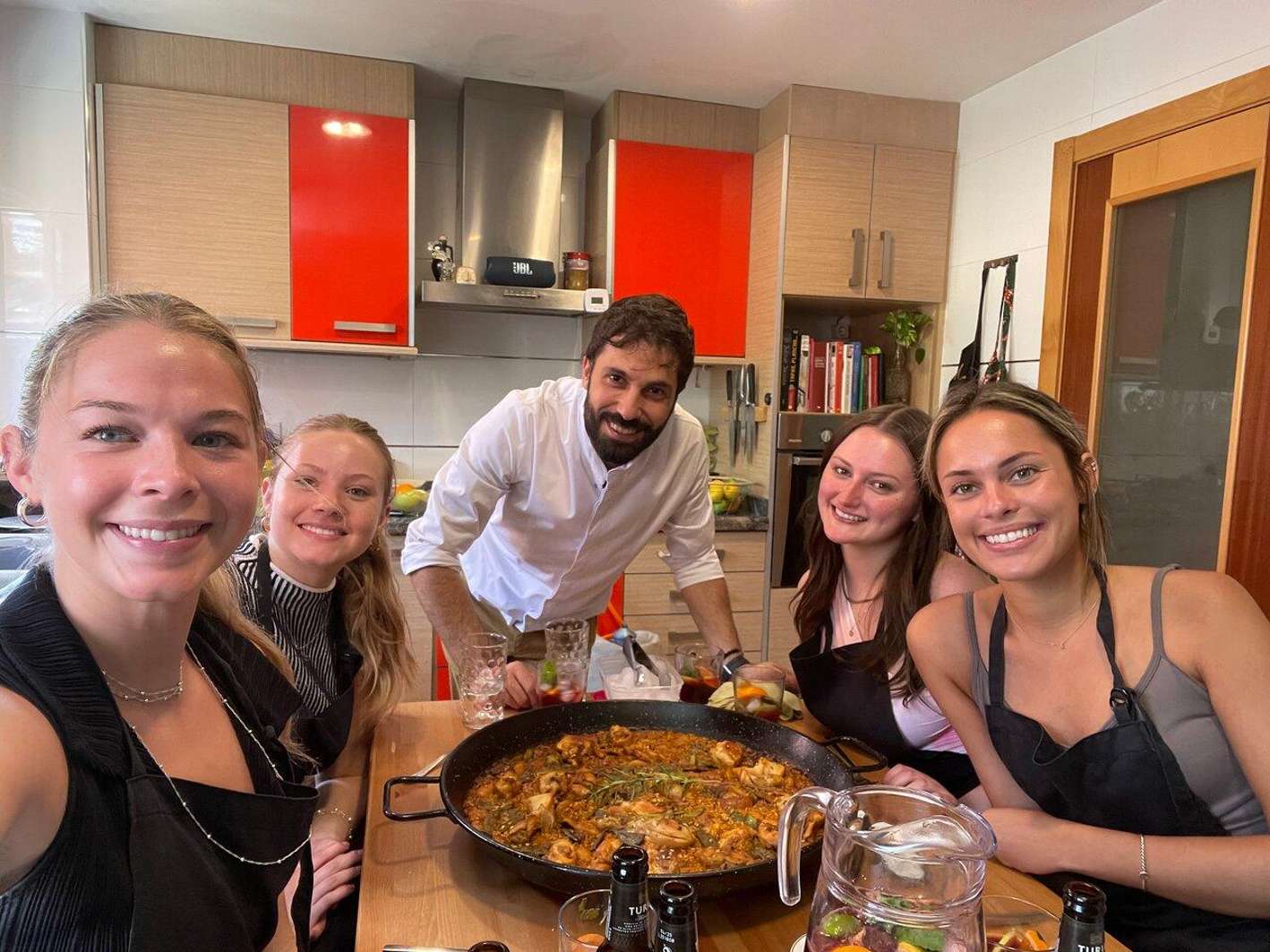
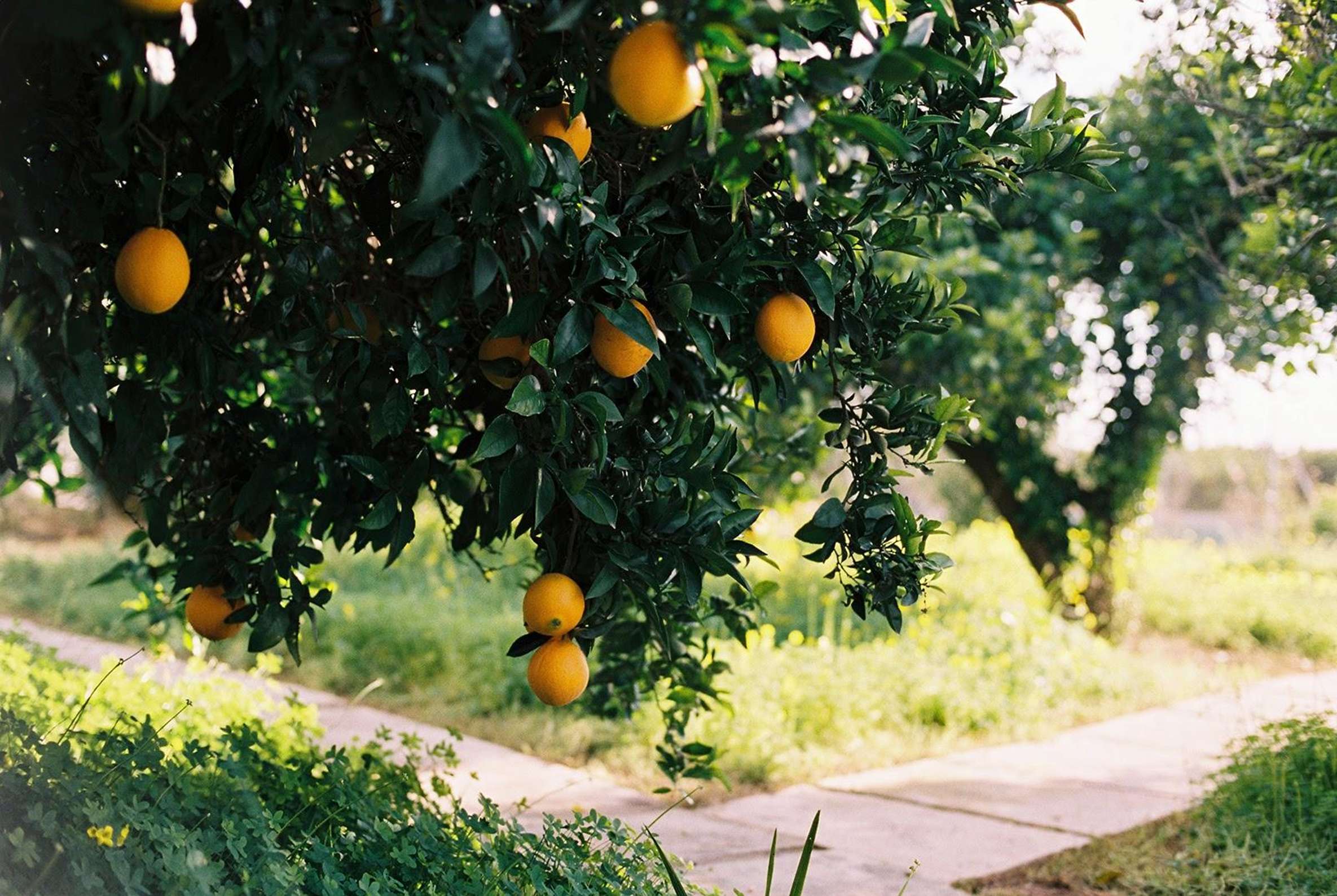
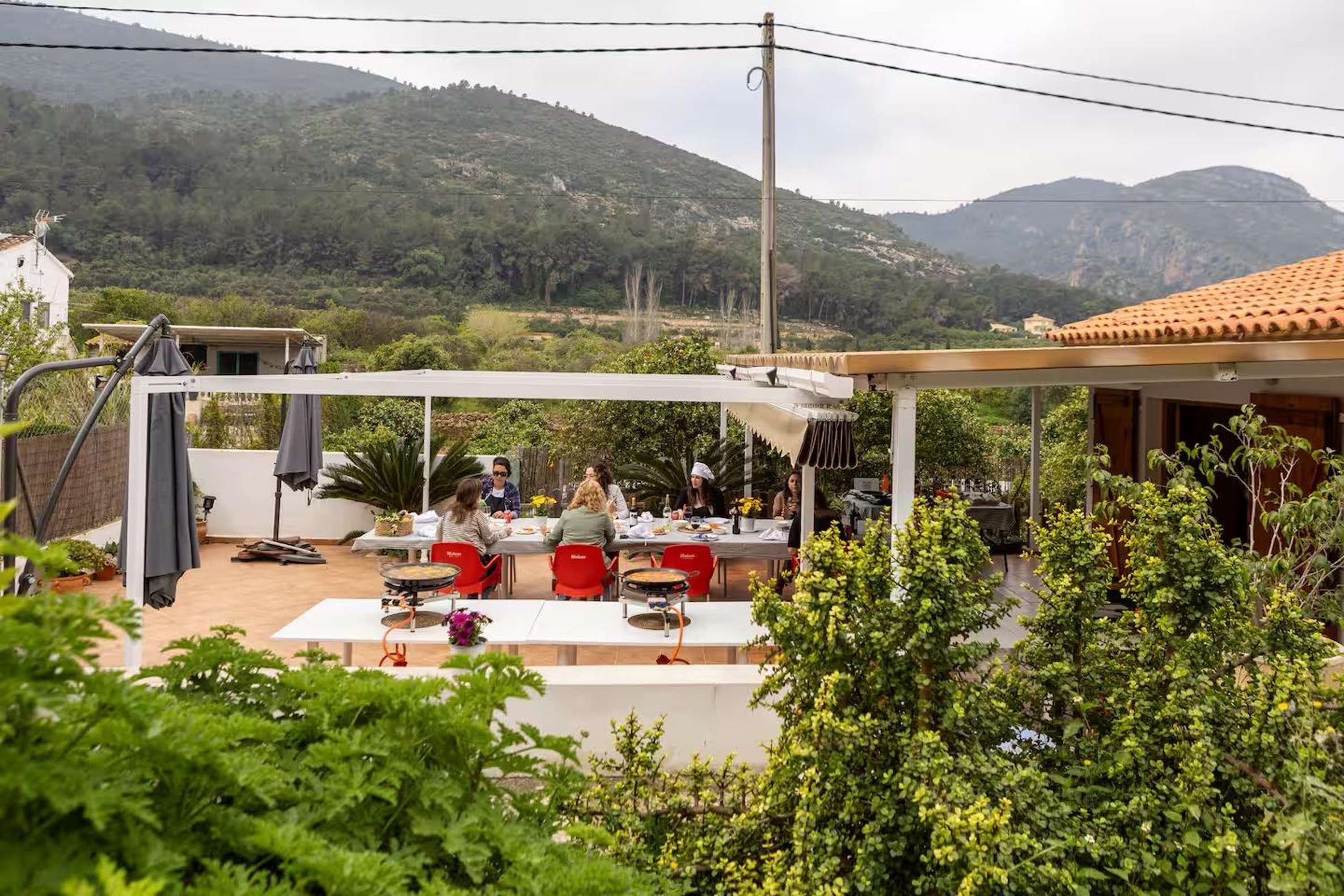
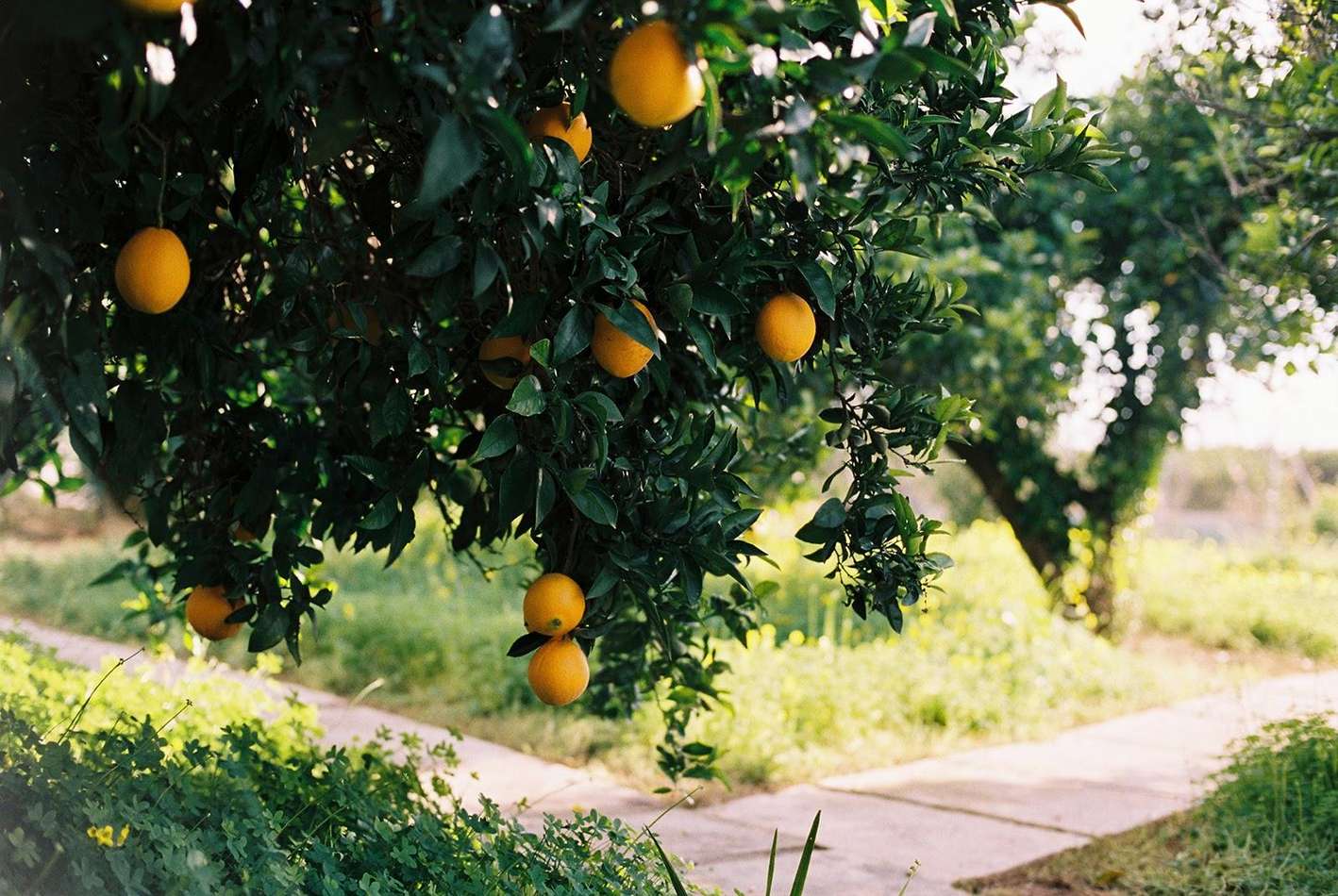
The trip out of the city is the first surprise. A Valencian chef meets you in Valencia and drives you about 20 minutes into the countryside, where the kitchen sits among orange groves and rice fields.
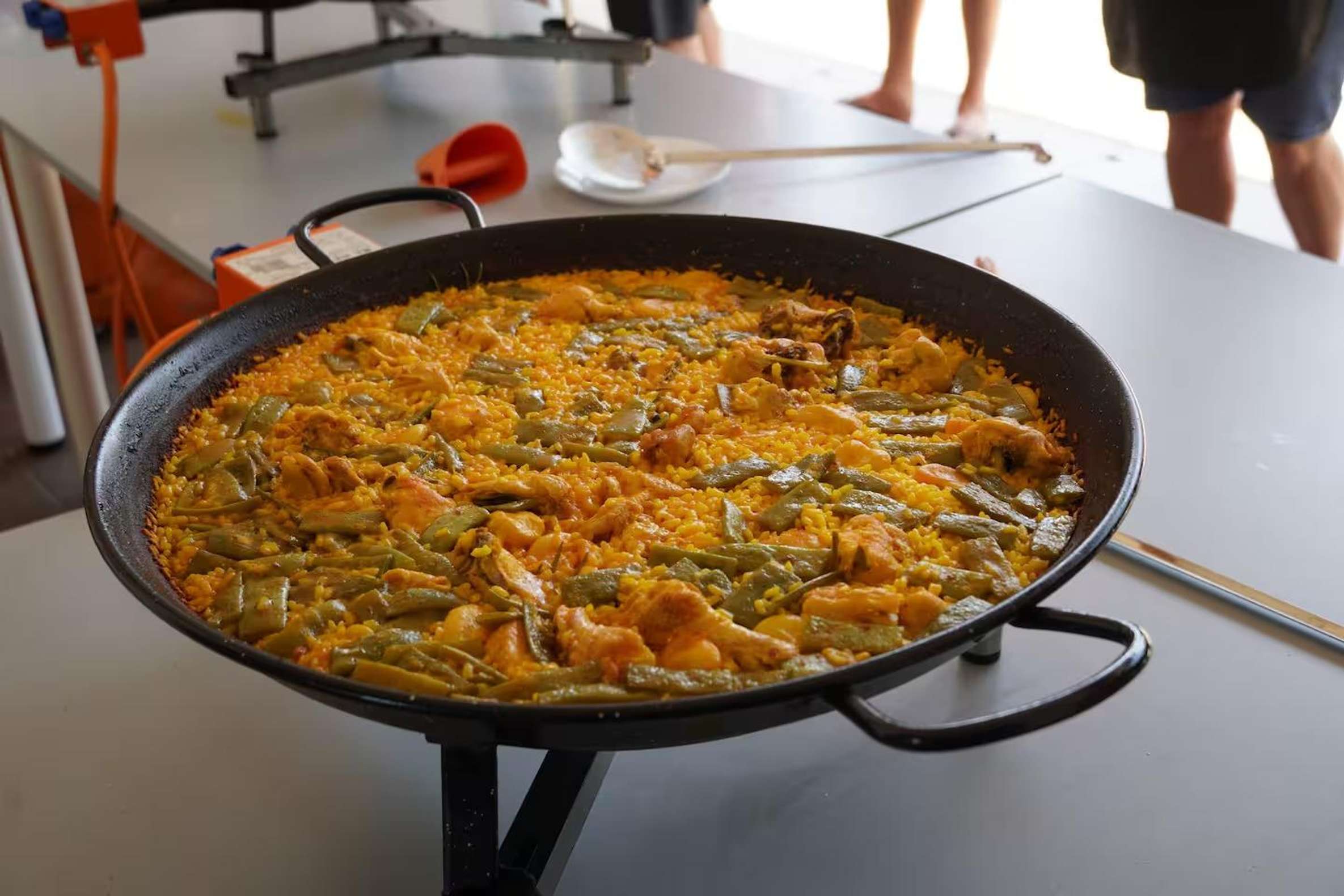
The class runs about four hours, and cooking the chicken and rabbit paella the traditional way is the heart of it.
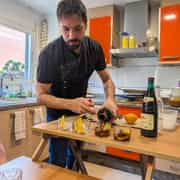
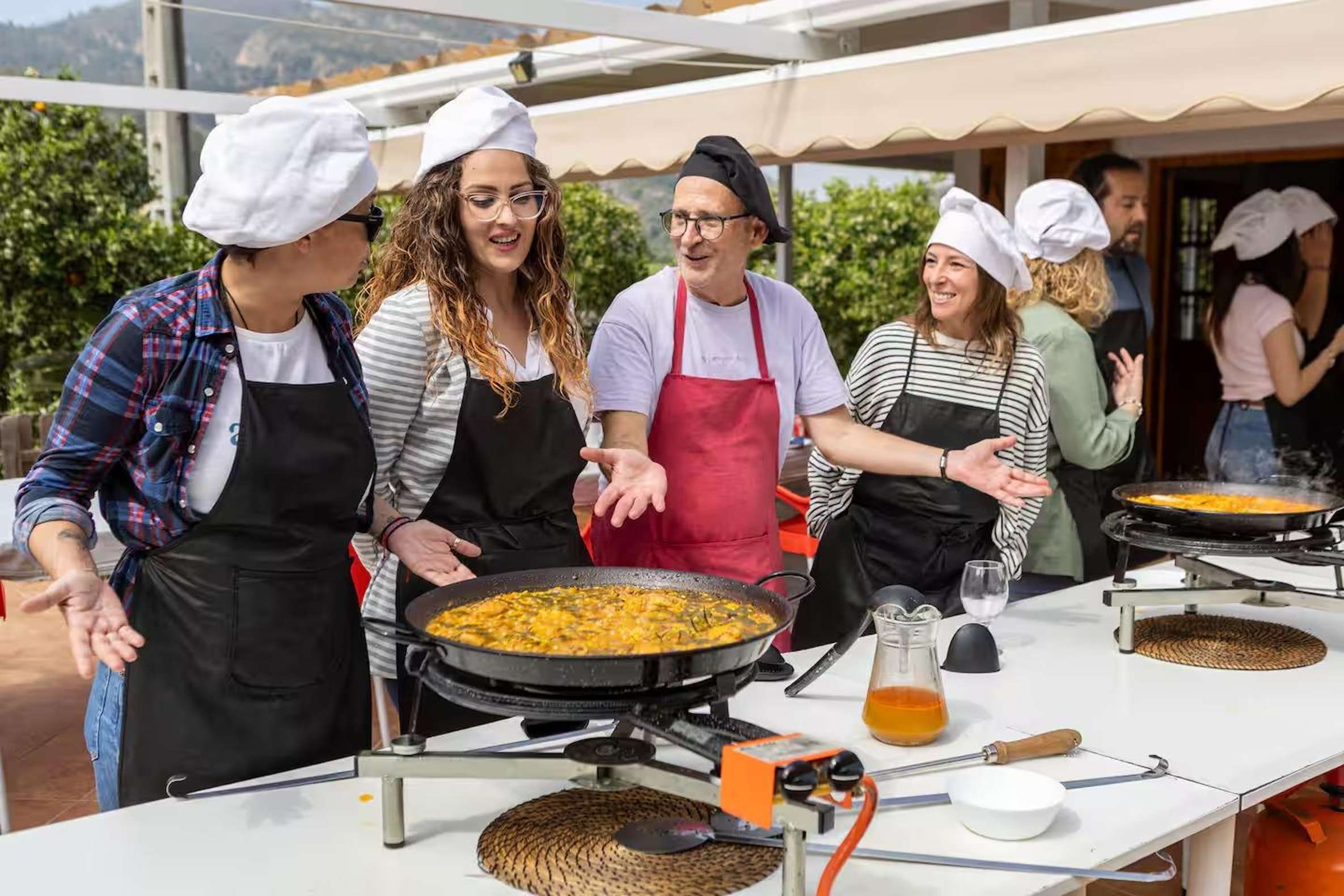
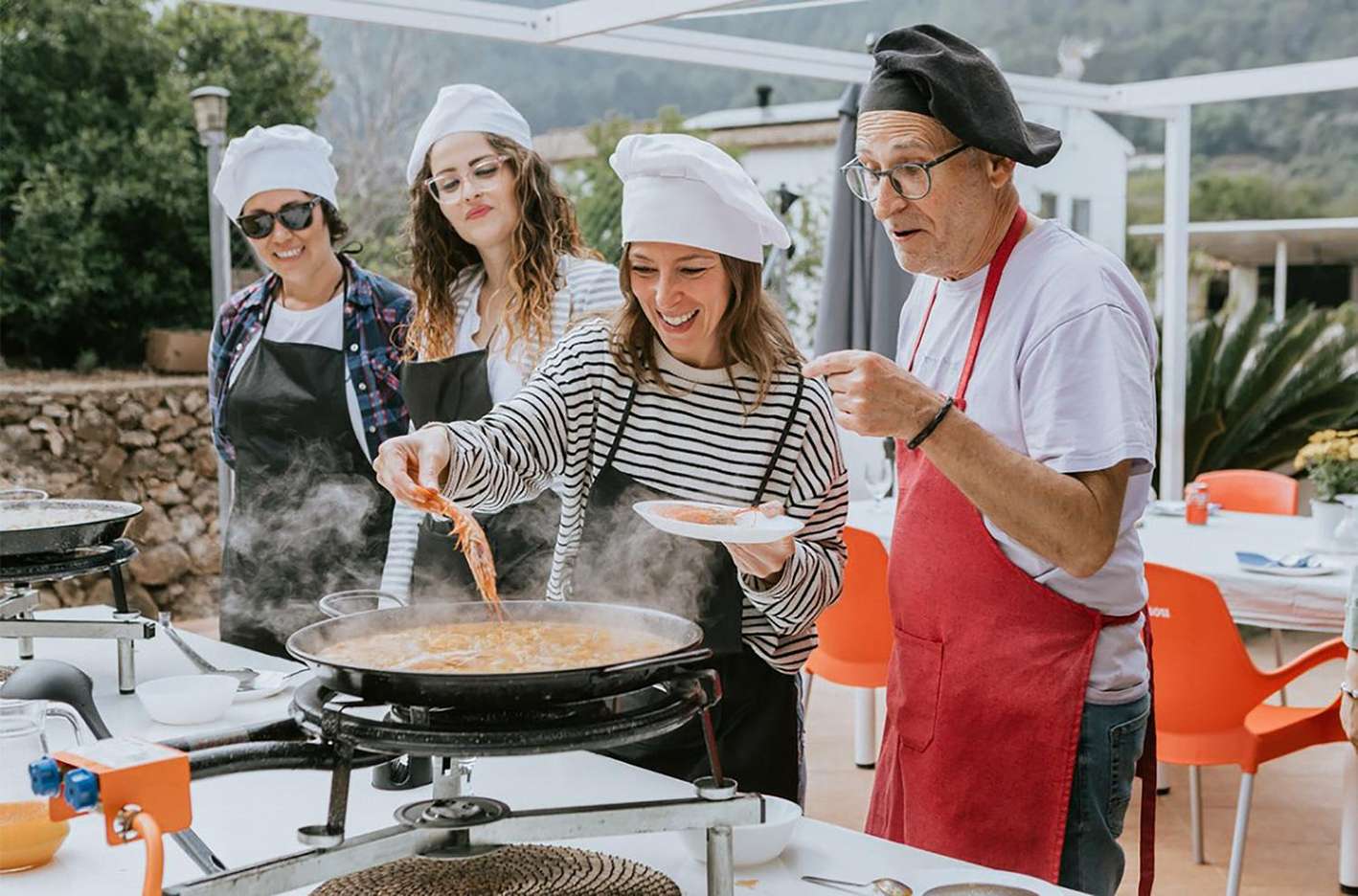
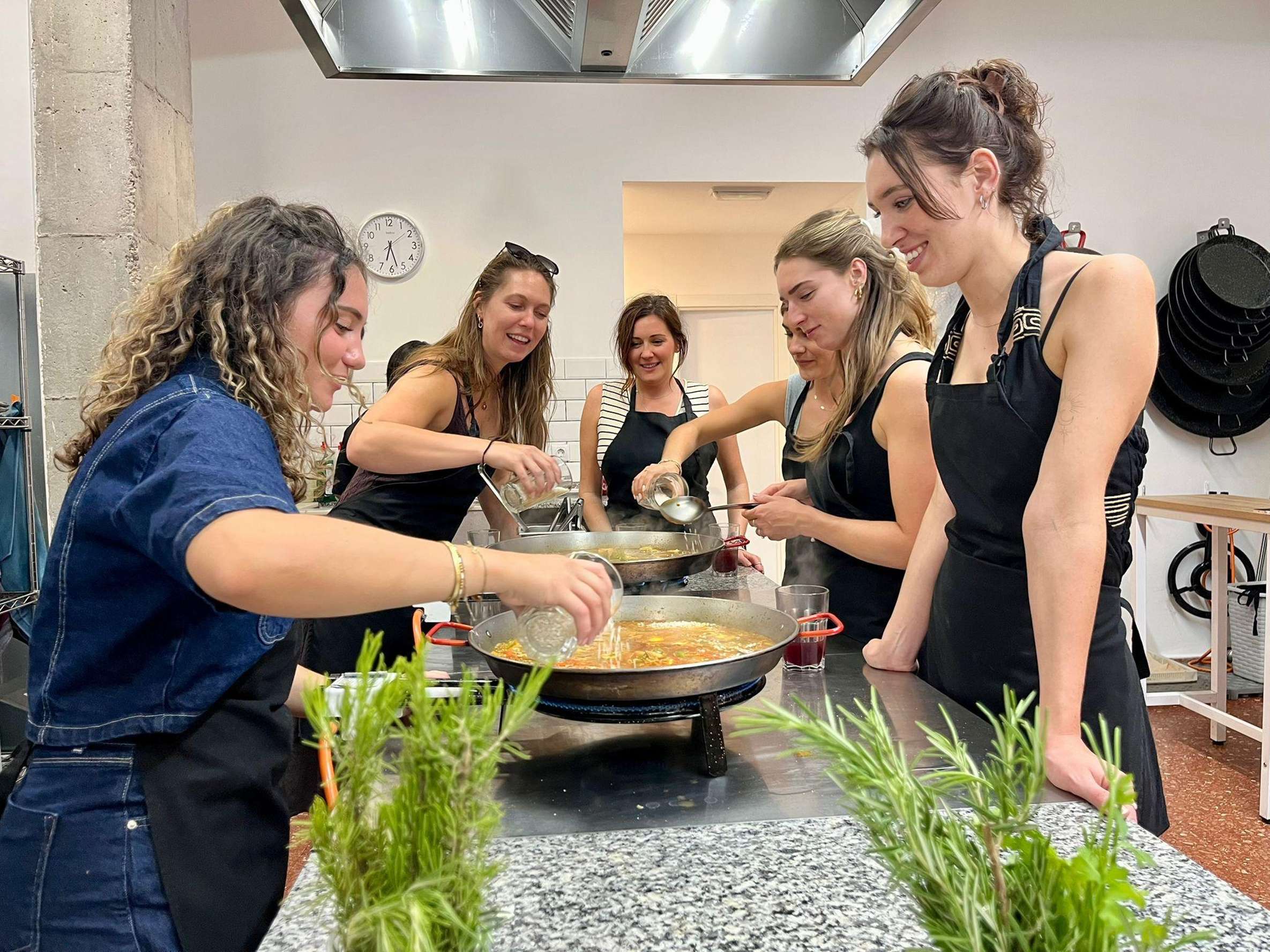
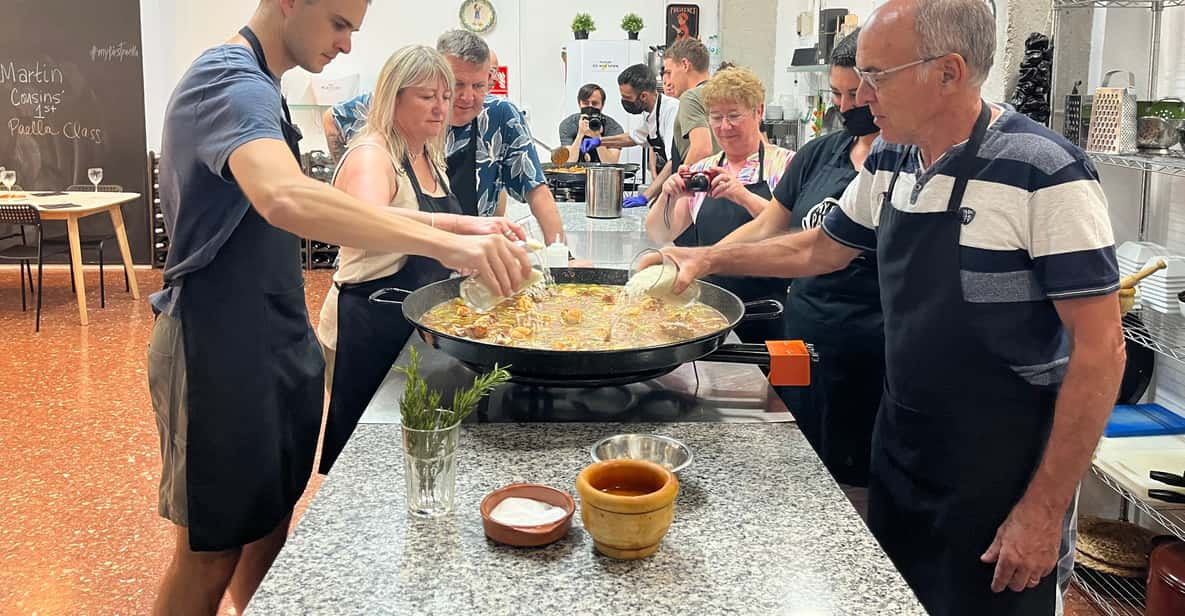
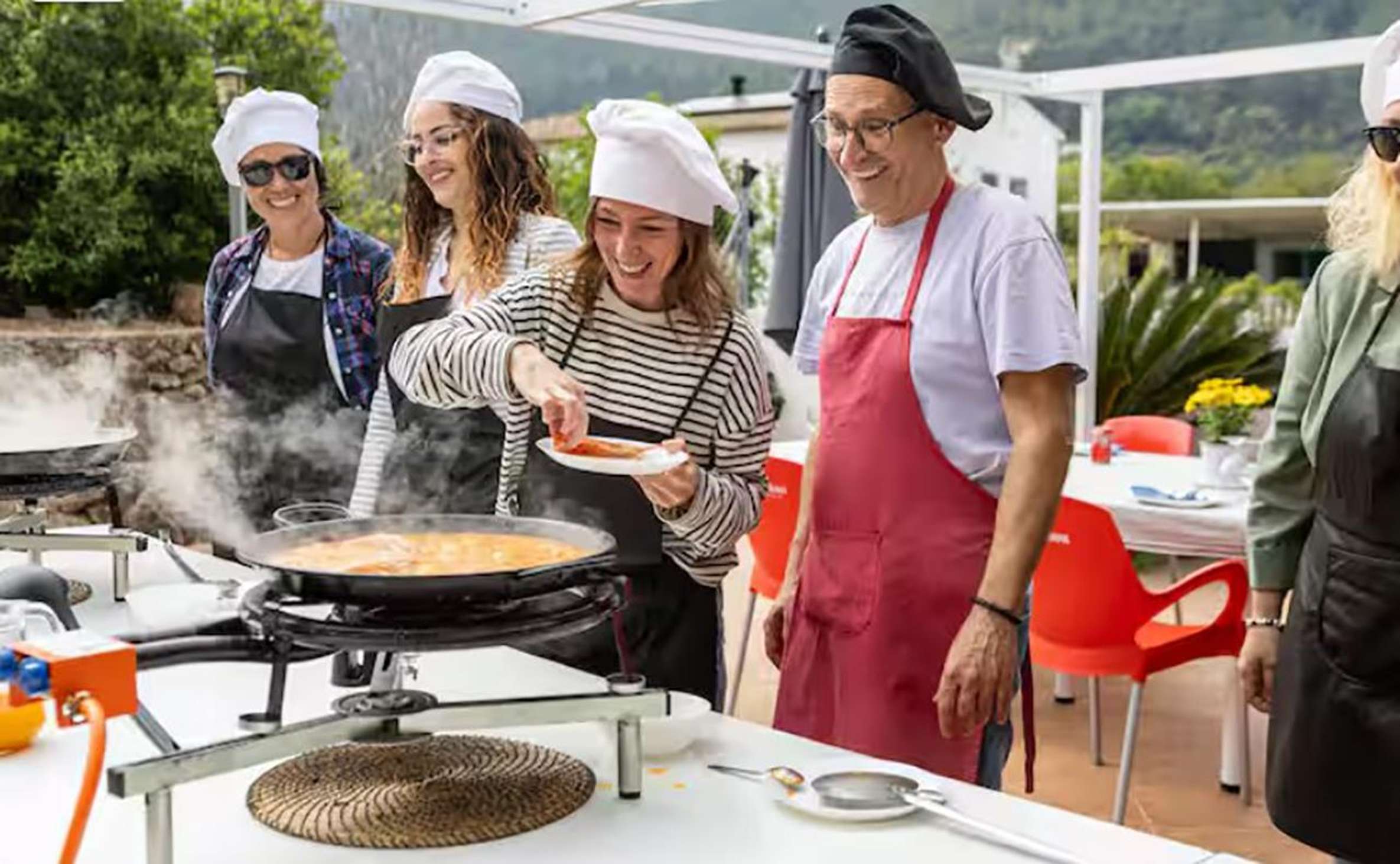
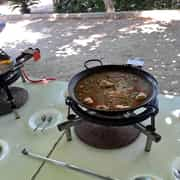
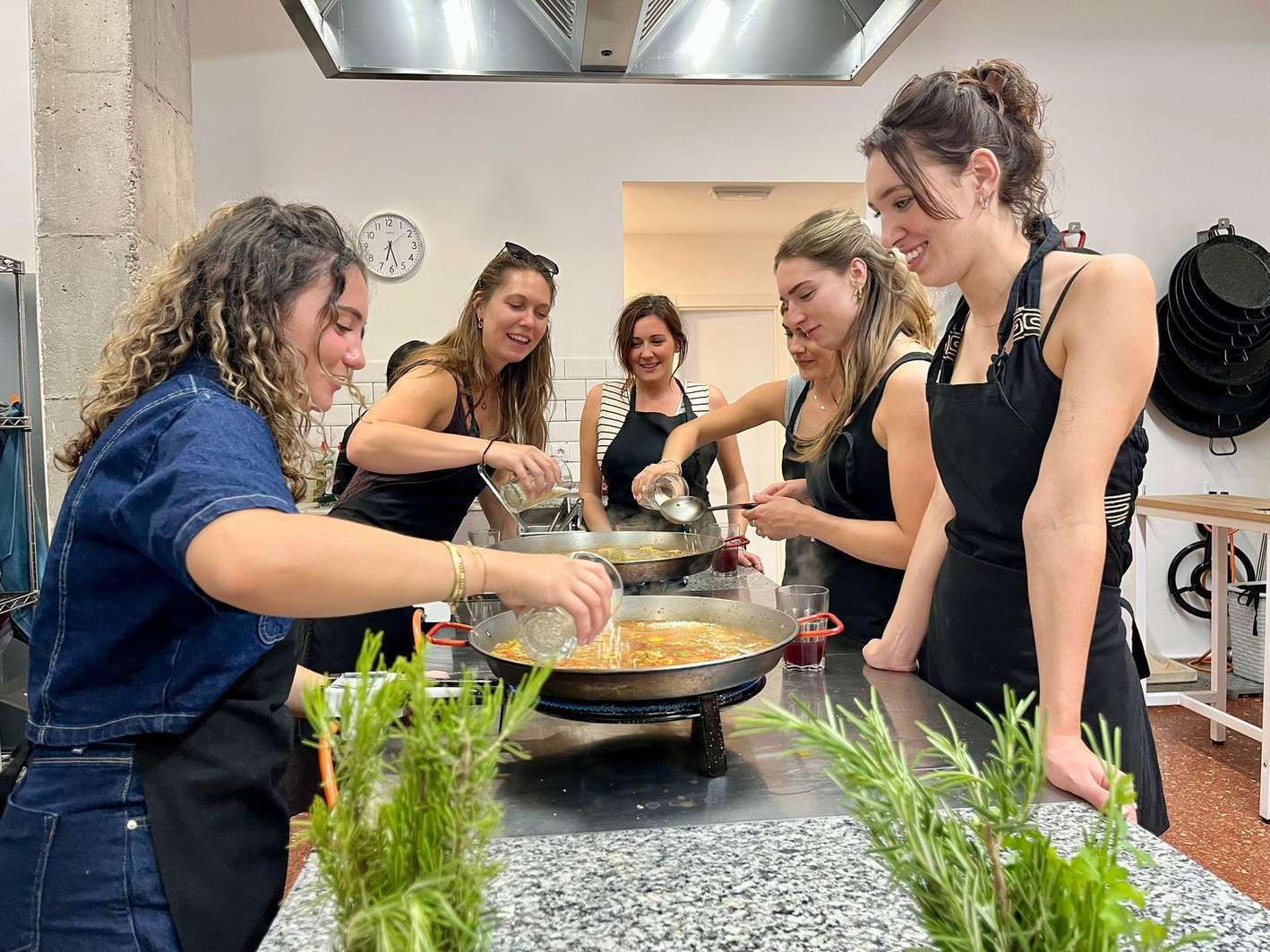
Nothing here is a demonstration. You put on an apron, work the pan over a live fire, and hear the reasoning behind each step from someone who grew up eating this exact dish.
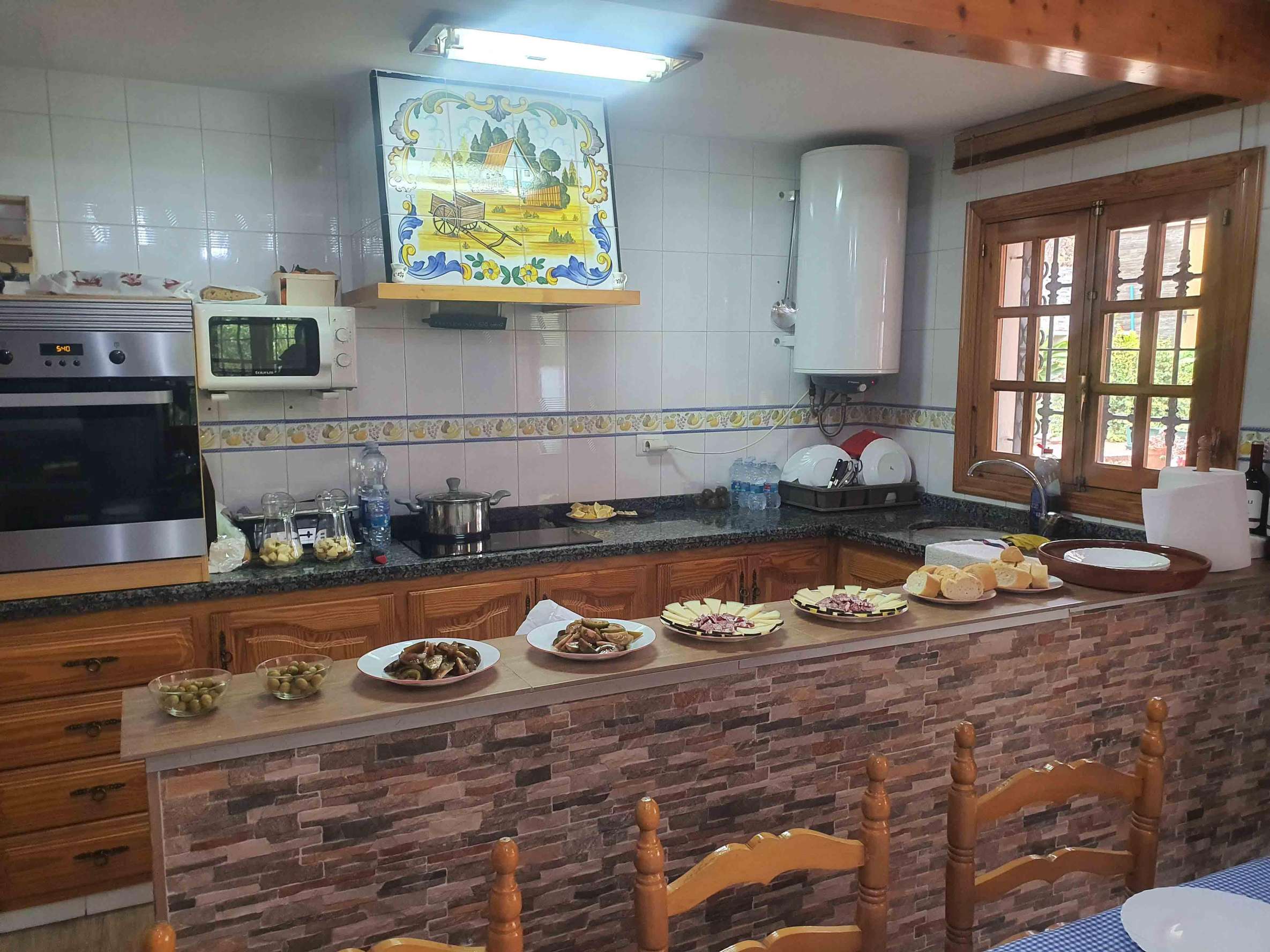
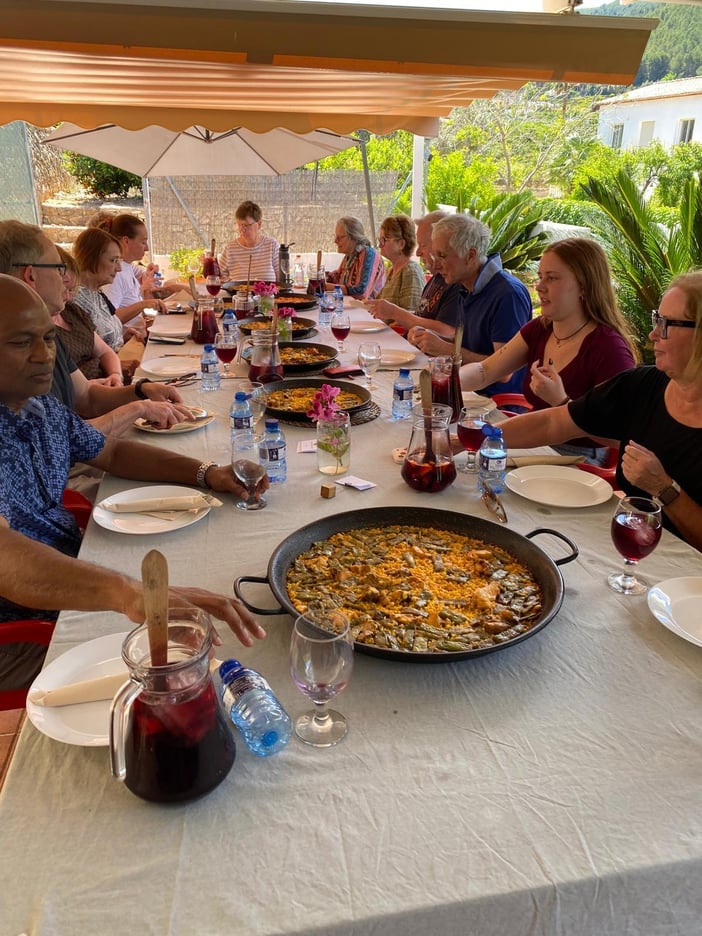
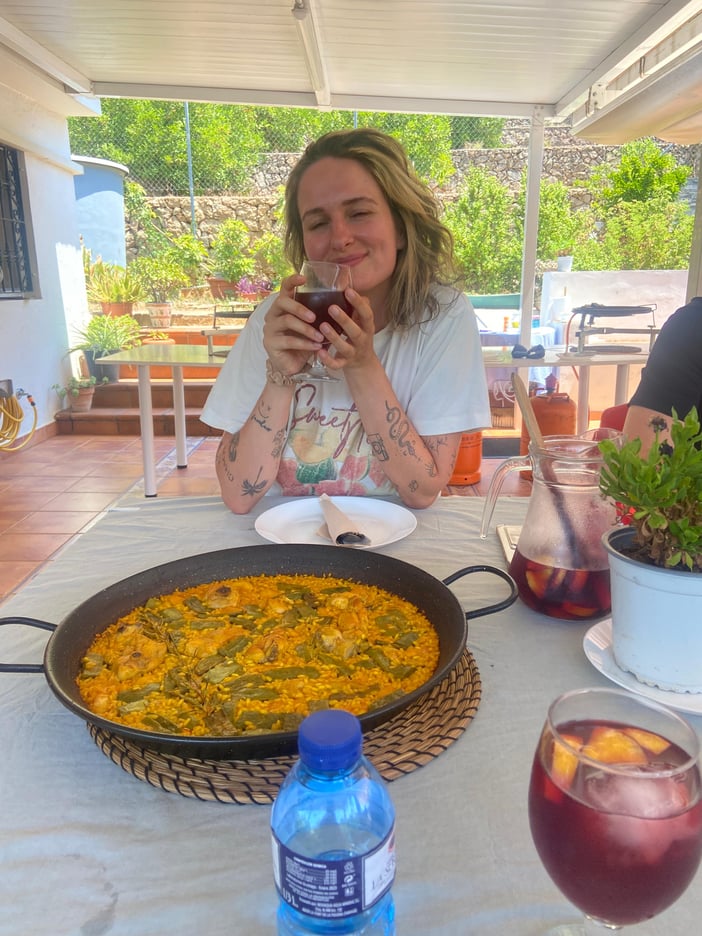
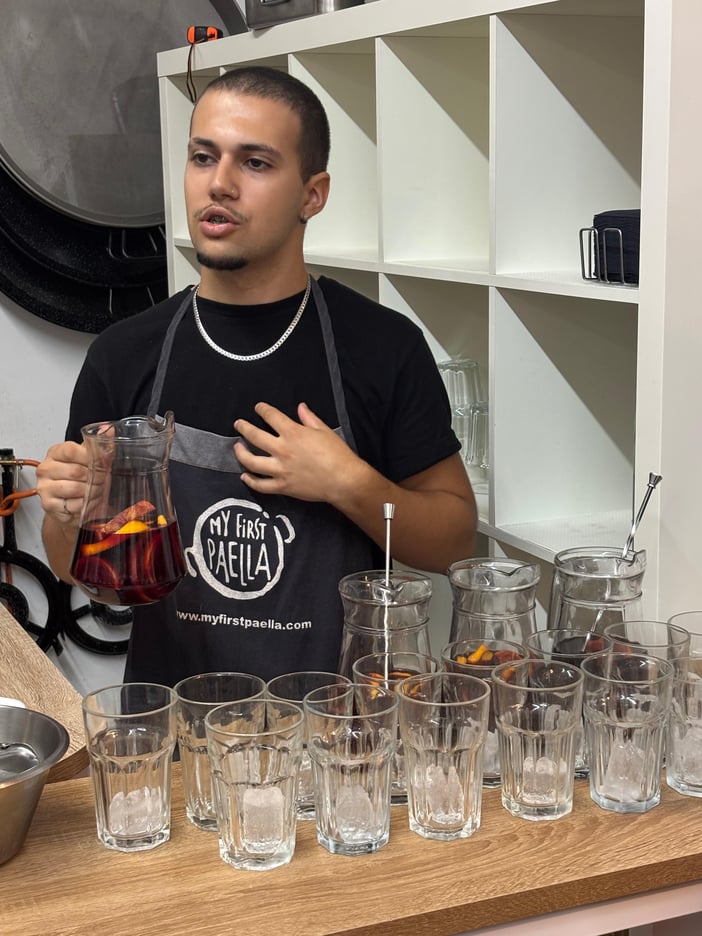
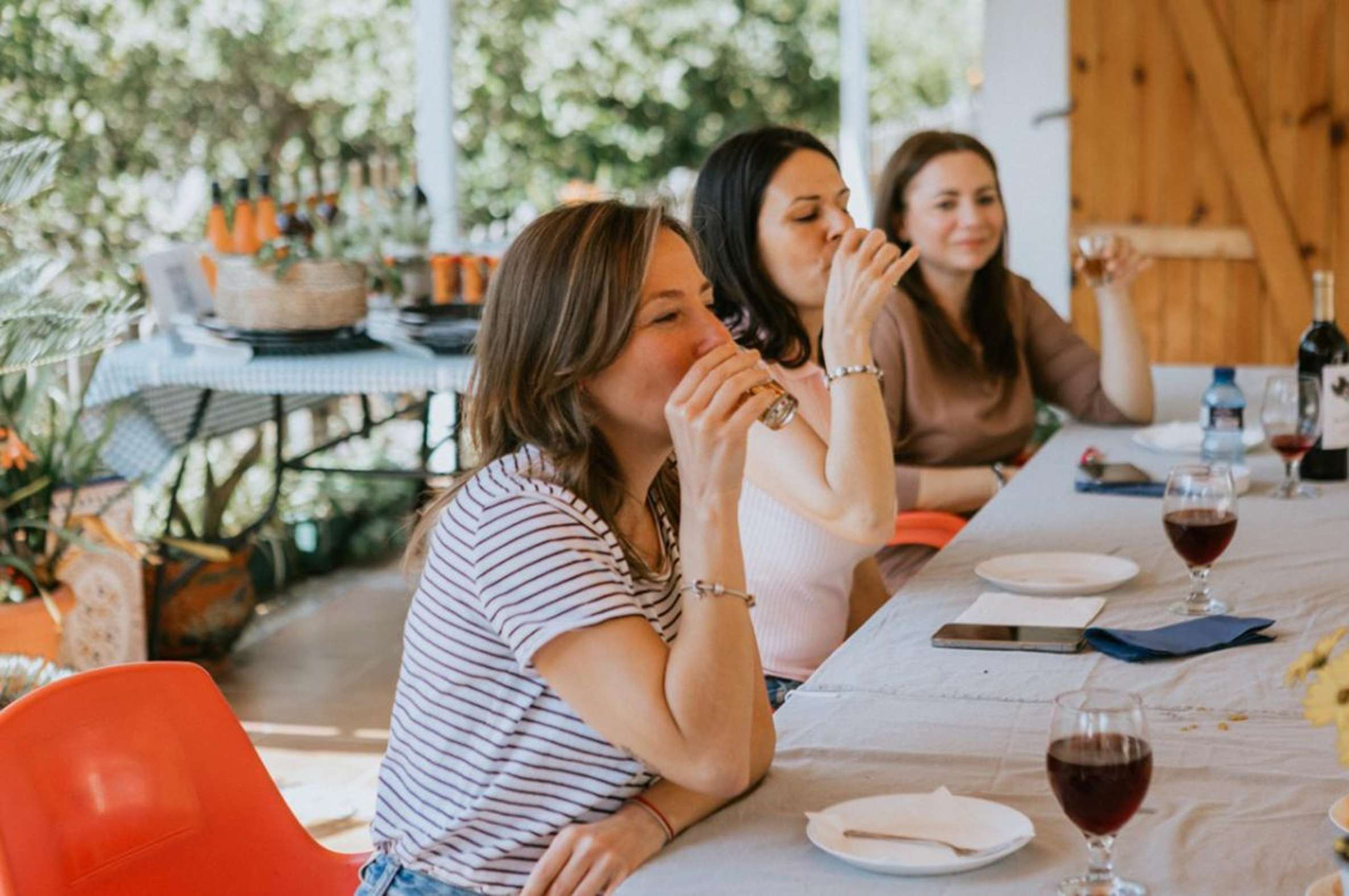
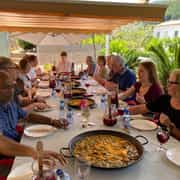
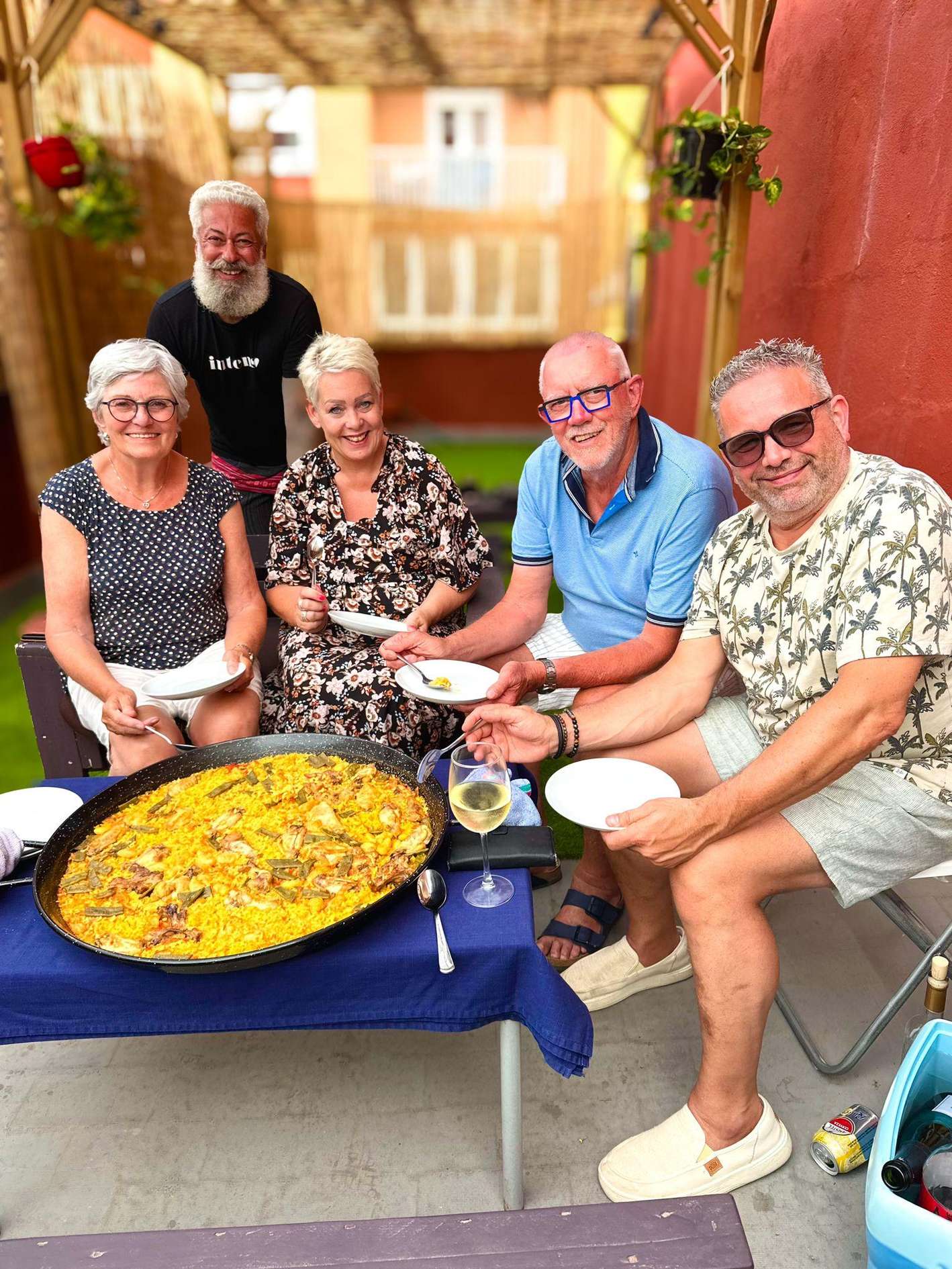
Between the browning and the simmering, there is tapas, sangria and conversation around the fire, and you leave with the recipe and a participation certificate.
1Out to the countryside· about 30 minThe chef meets you and drives you to a family home 20 minutes from the city, surrounded by orange trees and rice fields.2Cooking the paella· about 80 minAprons on and fire lit, you brown the chicken and rabbit, work in the beans and tomato, and learn each step from the chef.3Tapas while the rice simmers· about 40 minThe rice needs about 20 minutes of simmering without stirring, so you share local tapas, sangria, wine and soft drinks by the fire.4Lunch around the table· about 70 minEveryone sits down to the paella together, finishing with coca de llanda sponge cake, seasonal fruit and a glass of mistela.5Taking it home· about 20 minYou leave with the paella recipe and a participation certificate, so the dish can be recreated back in your own kitchen.6Taking it home· about 20 minYou leave with the detailed recipe and a participation certificate, so the dish can be recreated back home.
Included
InstructorPaella cooking experienceValencian snack with drinkAuthentic Valencian paella, with vegetable or seafood alternatives available on requestCoca de llanda (sponge cake) and seasonal fruitRecipes and participation certificate
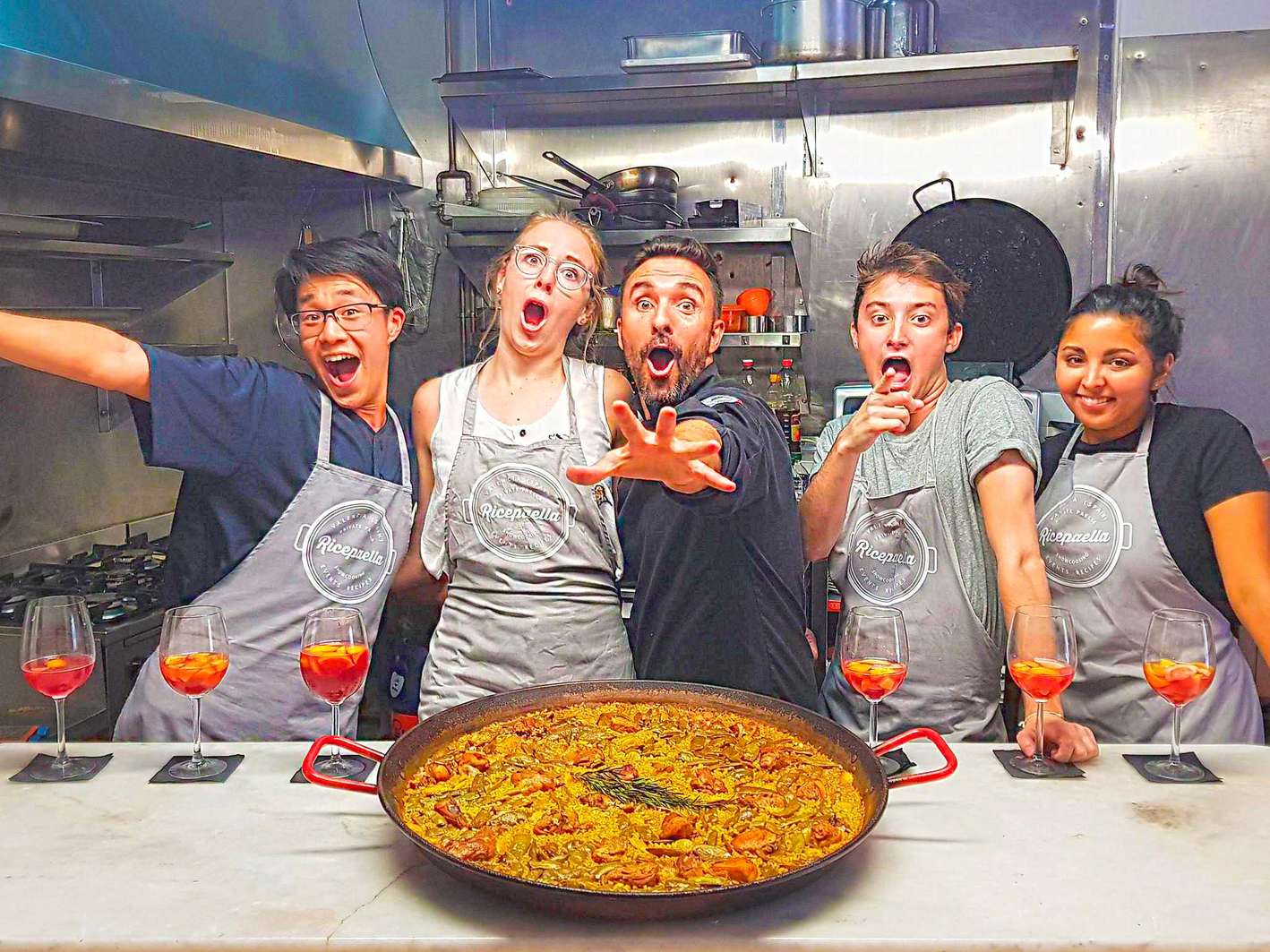
Most reviewers found the hosts so warm and welcoming that the class felt like a meal with family, tapas and sangria included.
Best surprise
Several couples loved the drive out through rice fields and orange groves to cook at a farmhouse in the countryside.
Most common wish
A few wished the drive to the countryside had come with some explanation of the rice fields and towns they passed.
Booking your spot in an authentic Valencian paella class
01
Pick the date with the market in mind
Choose a weekday morning if you want the market visit included. Central Market and Algiros Market open Monday to Saturday until early afternoon, so Sunday and evening sessions skip the market and go straight to the kitchen.
Pro tipA morning class pairs the market stroll with the meal Valencians traditionally eat at midday
Common mistakeFirst-timers book a Sunday market class and find the stalls shut; the kitchen part still runs, with extra cooking time instead
02
Choose your paella option
Several classes split groups by style, so you pick between the classic chicken and rabbit recipe, seafood, or a vegetable version when you book. Read each option's description before confirming, because one operator asks for at least two people per paella type.
ImportantTravelers with a shellfish allergy should reserve the land-meat or vegetable version, since seafood paella shares the same kitchen
Pro tipOn some classes the menu comes with vegetarian alternatives on request, which you mention in a message when booking
03
Check the minimum numbers
Most traditional workshops need at least two participants to run. If the threshold is not met, the operator lets you reschedule to another date or time, move to a different session such as a morning class, or take a full refund.
Common mistakeBooking solo for a slot late in the season and assuming it will run; two-person minimums are standard here
Pro tipIf you travel alone, a small-group class is the easy way around the two-person minimum that restaurants set per pan
04
Mind the cancellation window
Every class on this page lets you cancel up to 24 hours in advance for a full refund. Keep that deadline in mind when your itinerary is still open, and book the slot you want early rather than late.
ImportantAfter the 24-hour mark the booking no longer refunds, so confirm your travel plans before then
RecommendedSeptember and October fill up fastest; summer sessions are quieter and the kitchens are air-conditioned against the July heat
05
Prepare for the day itself
Wear closed-toe shoes and casual clothes you do not mind getting messy, since you cook beside open gas burners. Arrive at the meeting point, usually in the Old Town for market classes, a few minutes early with comfortable shoes already on.
RecommendedMetro stations like Xàtiva or Colón sit at the edge of the old town; EMT buses go further in if you prefer to walk less
Pro tipPortions are generous and hosts hand out takeaway containers, so keep room in your day for leftovers
What to know before you book an authentic paella class
Can stop the dayGood to knowGood news
01
ChoosingWhat it is, who it suits, when to go
6
Market daysCan stop the day
Mercat Central and Mercat d'Algirós trade Monday to Saturday from 7:30 am to 3 pm, and shut every Sunday plus public holidays. Book a morning class if the market walk matters to you; afternoon and evening sessions skip it on any day, and Algiros Market closes for all of August.
Sunday classes
A Sunday booking still runs. Classes that normally visit a market simply add extra cooking time in the kitchen instead, trimming the session by about half an hour, so the paella itself stays unchanged.
What's included
Ingredients, the chef's instruction, tapas and the paella meal come as standard. Drinks vary: sangria, local DO wine, beer and soft drinks flow through most sessions, and some add mistela, coffee and coca de llanda sponge cake at the table. Extra market purchases stay on you.
Hands-on cooking
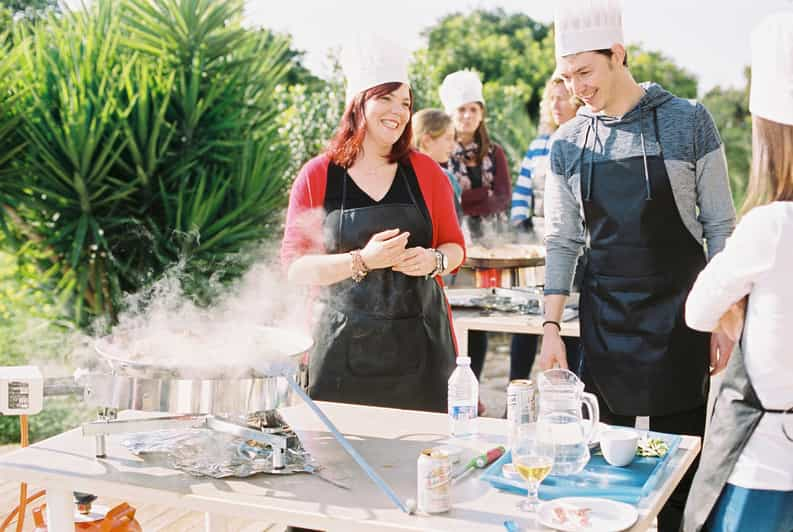
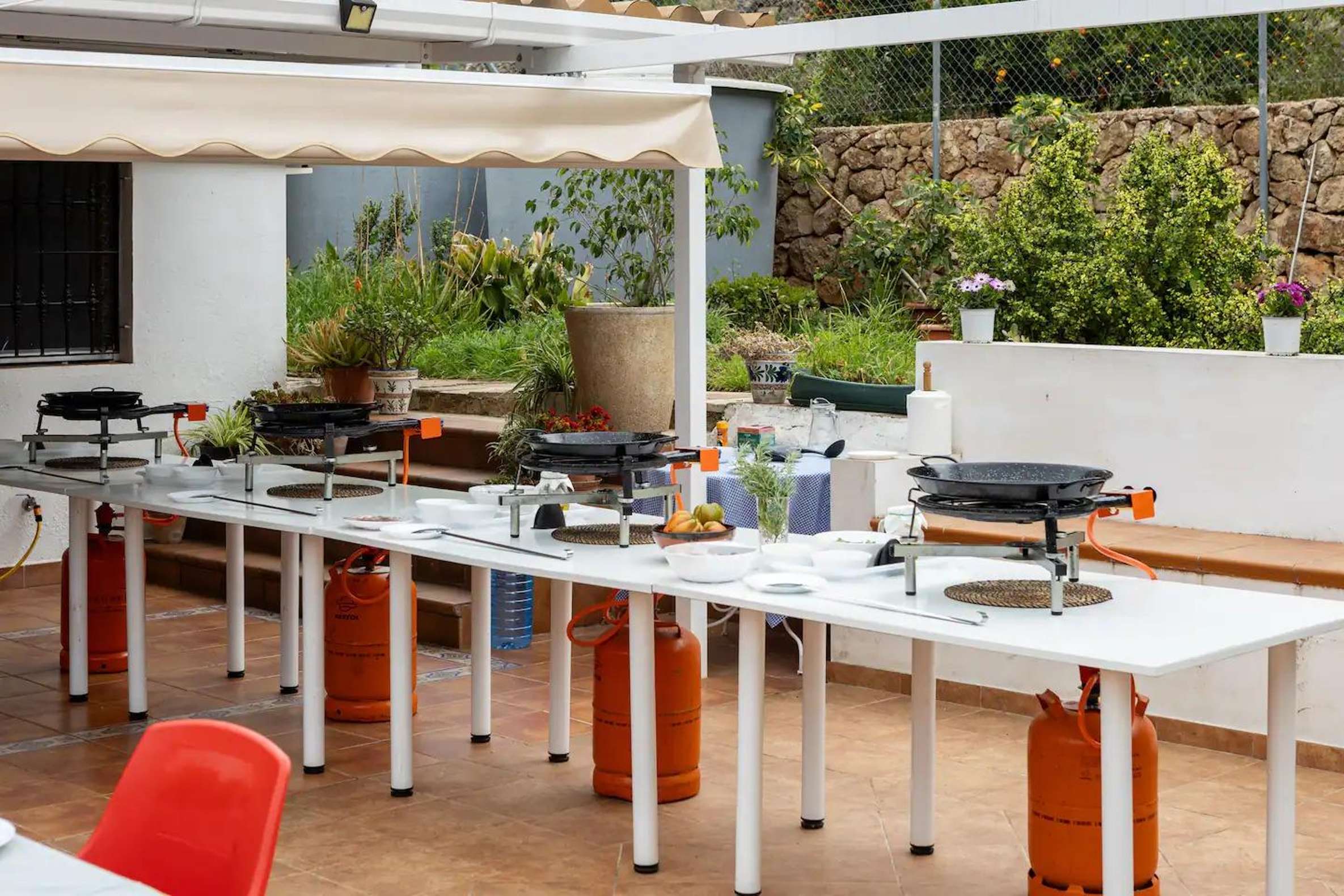
These classes put you at the stove. One runs stations of one to three people, another hosts small groups on a terrace. If pan setup matters to you, read the experience description before booking, because it tells you whether you cook an individual, paired or communal pan.
Recipes to take
Hosts share detailed recipes after the workshop, and one countryside class adds a participation certificate. Buy a wide carbon-steel paella pan and Valencia short-grain rice, and the dish travels home with you.
Summer heat
July and August push daytime highs past 30°C while you stand at a hot burner, so an air-conditioned kitchen earns its keep then. Spring and autumn sit near a mild 20 to 24°C, and autumn draws the biggest crowds.
02
BookingHow far ahead, and what happens if plans change
2
Group minimumCan stop the day
Most workshops need at least two participants to run, and one countryside class sets a minimum of 2 adults per booking. If numbers fall short, you choose a new date, switch to another session, or take a full refund.
Cancellation
Every class featured here cancels free up to 24 hours before the start, with a full refund. That makes it easy to lock in a spot early and shift plans if your itinerary moves.
03
Before you goPapers, health, what to bring
2
What to wear
You cook beside open gas burners with oil in the pan, so wear closed-toe shoes and clothes you do not mind splattering. Long pants and fitted sleeves give the best cover, and the kitchen hands out aprons anyway.
Age limits
Children are welcome in different measures. One workshop is not suitable for children under 2, another sets the bar at 10, and kids must be with an adult at the countryside class. Check the age rule for your chosen session before you book.
04
On the dayWhere to be, when, and how you get there
2
Meeting point
None of these classes includes hotel pickup, so plan your own route. Market-to-kitchen sessions meet in the Old Town, usually near Plaza de la Virgen or at the market itself, and most studios sit within a short walk of Colón, Xàtiva or Plaça d'Espanya.
Getting there
Metro trains stop at the edge of the Old Town, so walk in from Xàtiva or Colón, or take an EMT bus straight into the historic center. Studios in Ruzafa sit an easy walk from Colón, or on Metro Line 10.
From pan to plate - your guide to an authentic paella class in Valencia
Valencia cooks its signature rice dish with chicken, rabbit and garrofó beans, and it cooks it at lunchtime. Where to book, when to go and how the real socarrat crackles: a midday decision, and a delicious one.
Valencia
If you only remember three things
1
Book a midday class Monday to Saturday if you want the market walk; markets shut by 3 pm and stay shut on Sundays.
2
Stir the rice only for the first 5 minutes, then leave it alone until you hear the crackle.
3
Arrive in closed shoes and long pants: open gas burners spit oil, and aprons are provided.
Is an authentic paella class better than a famous restaurant?
The revered rice houses of Valencia cook every pan to order, which sounds like a virtue until you are the one ordering. Guests are asked to choose their rice dish by the morning of the visit, and a table at a famous arrocería is only yours after that bit of paperwork.
A class flips the deal. You decide the day you arrive, you stand over the fire instead of waiting for a waiter, and the recipe leaves with you.
For solo travelers the maths is simpler still: almost every traditional sit-down restaurant enforces a two-person minimum per pan, while a cooking class seats one happily around a shared table.
There is still a case for the restaurant. If you want someone else to cook a single made-to-order portion on a whim, the specialized paella bars in Russafa exist exactly for that, one diner and one pan at a time.
A traveler's note
Expected an okay time, couldn't be more wrong, one of my best afternoons in Valencia! Robert was the perfect host, his relaxing home and Frieda the friendly dog made it special.
What makes paella authentically Valencian, and what offends
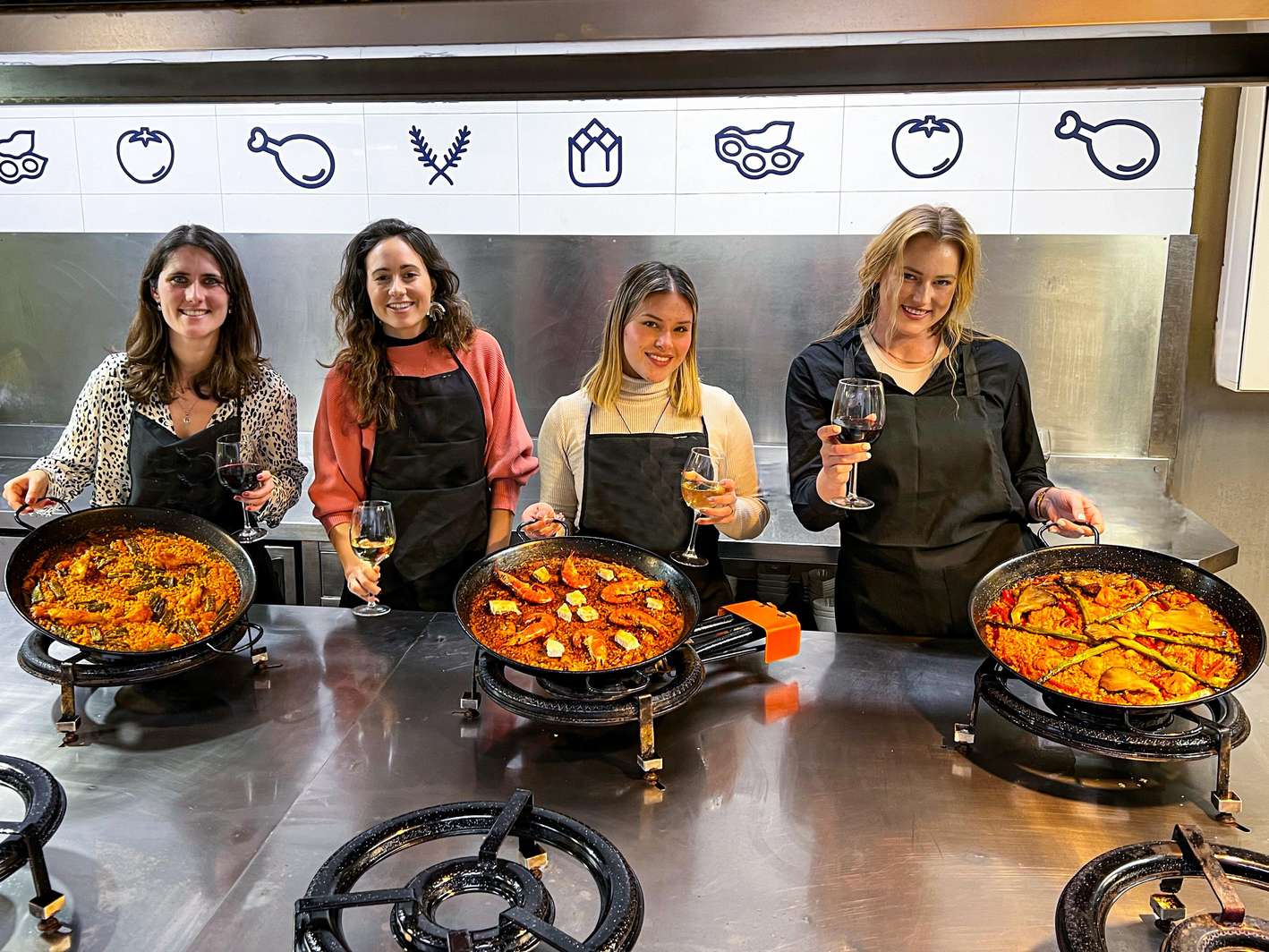
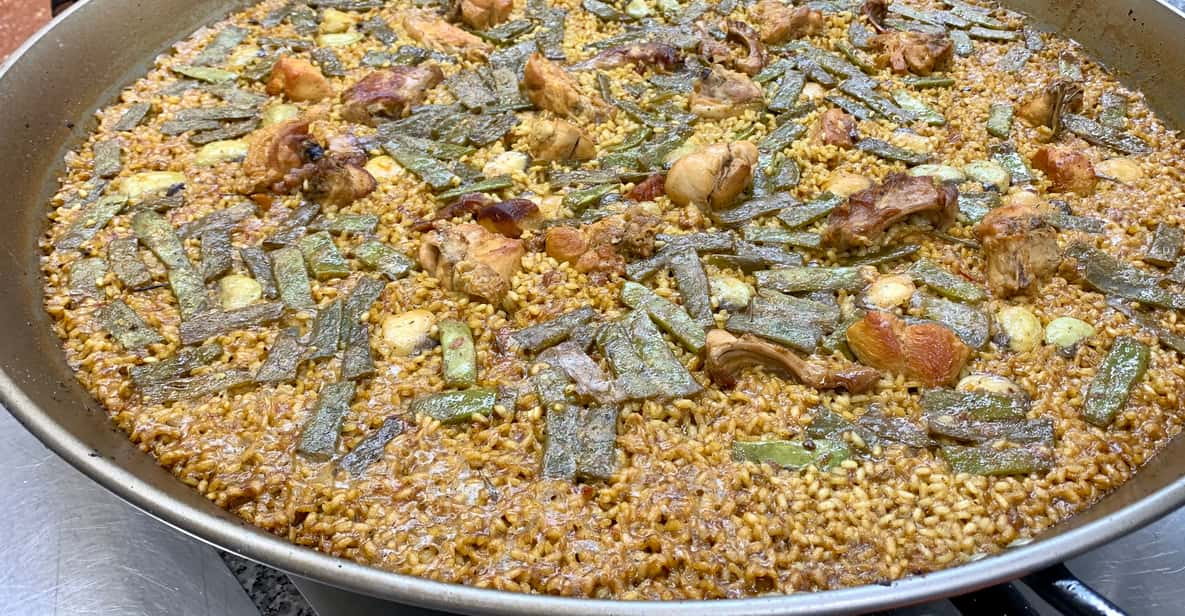
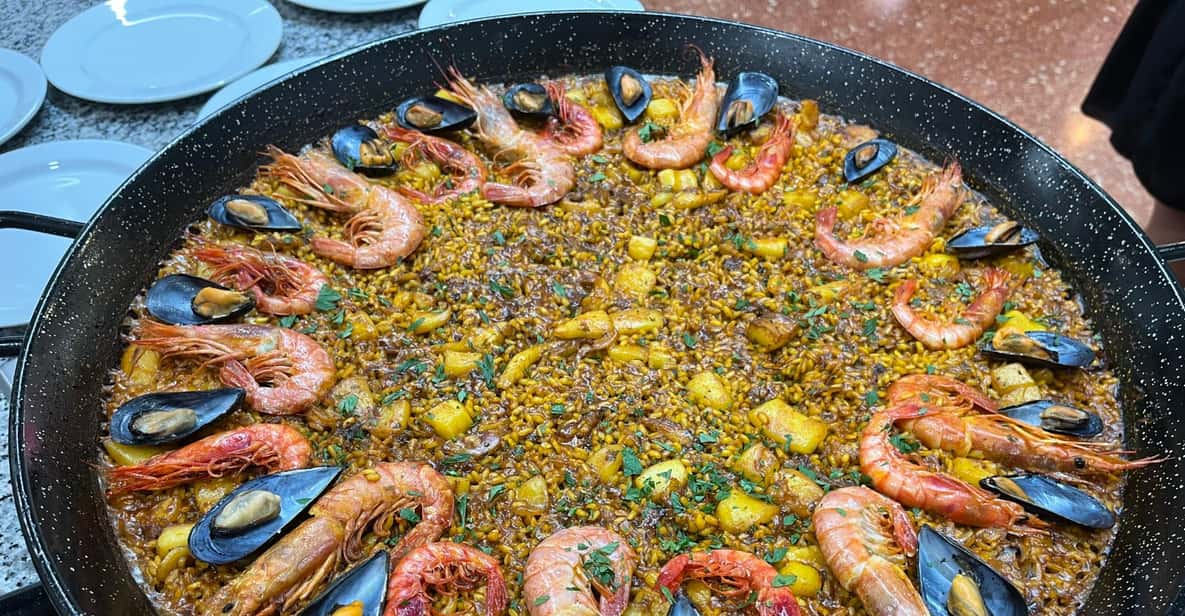
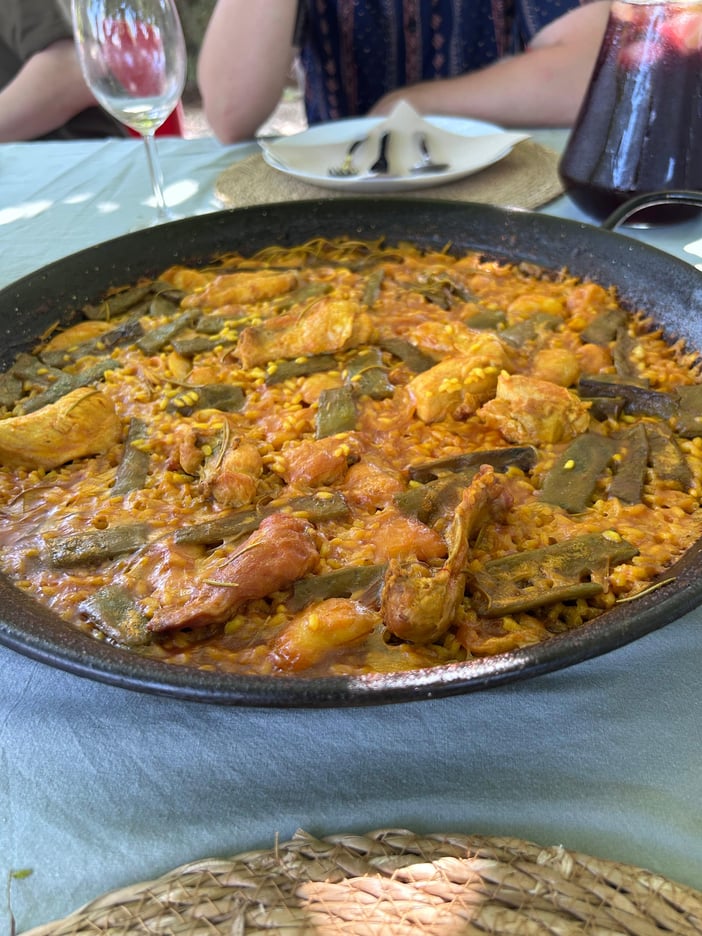
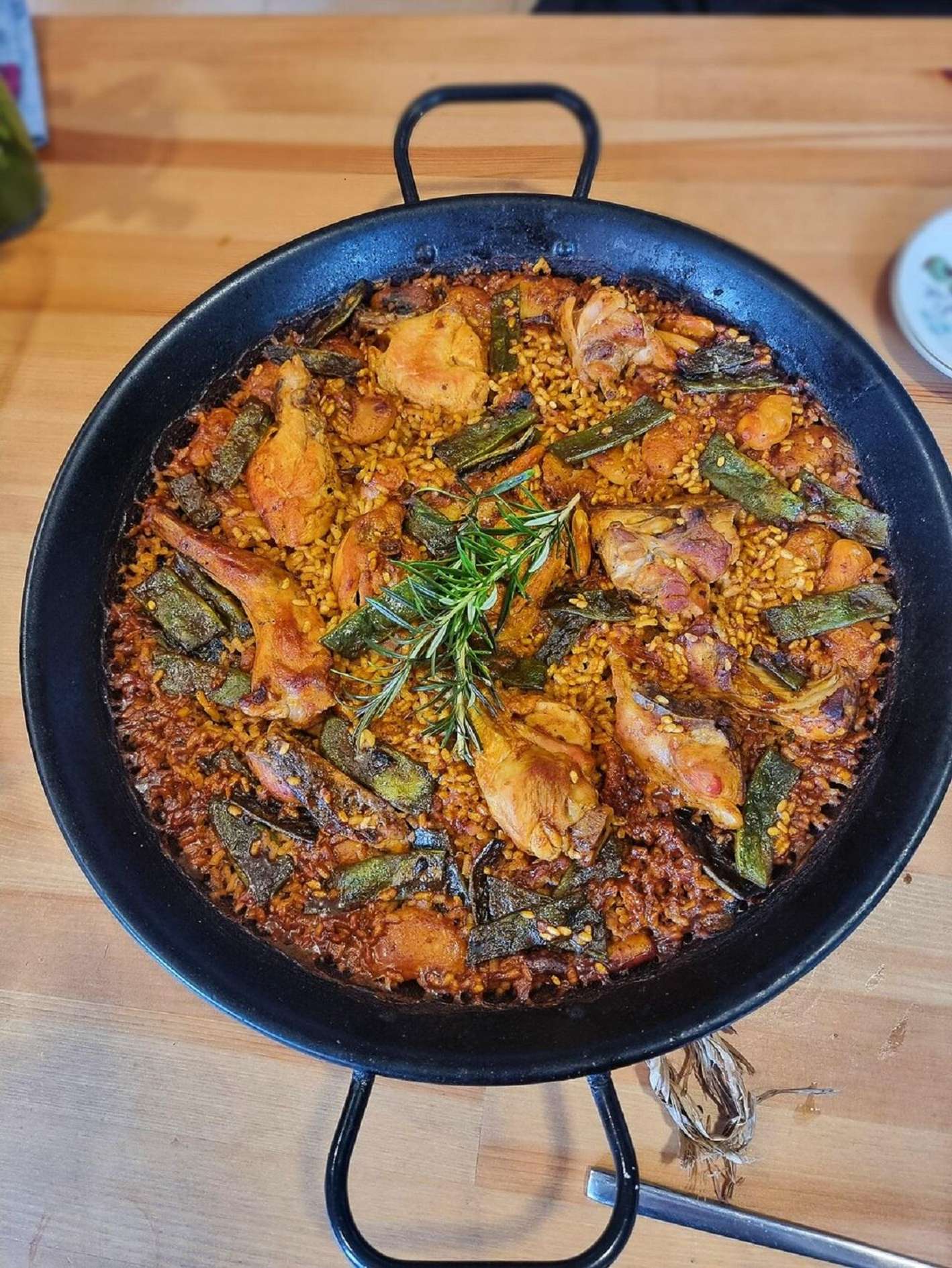
The original recipe is short and rural: chicken, rabbit, sometimes snails, and two local beans cooked over open flame. That is the whole idea. Valencian purists hold that Paella Valenciana means land meat and beans, and they name seafood versions separately, as arroz de marisco.
The things that get locals angry are all additions. Chorizo and bacon change the profile and break the traditional rice method; mixing seafood and chicken in one pan counts as a culinary offense.
Lemon squeezed on top by default is not tradition either, and neither is that neon yellow color: real paella takes its hue from natural saffron and from the meats as they brown.
Even the beans carry history. The garrofó, a giant white lima bean prized for its thin skin and creamy texture, arrived from South America by early trade routes and now defines the dish.
What visitors believe about authentic paella
MythSeafood belongs in Paella Valenciana
Reality
Valencians call seafood versions arroz de marisco; the original is land meat and beans.
MythLemon on top is traditional
Reality
A lemon wedge on the side is as far as it goes; squeezing it over by default is a tourist habit.
MythChorizo is just another option
Reality
Locals treat chorizo or bacon in the pan as a culinary offense against regional ingredients.
A genuine workshop will cook the dish as above and will tell you the same without prompting.
How an authentic Valencian class day unfolds, market to table
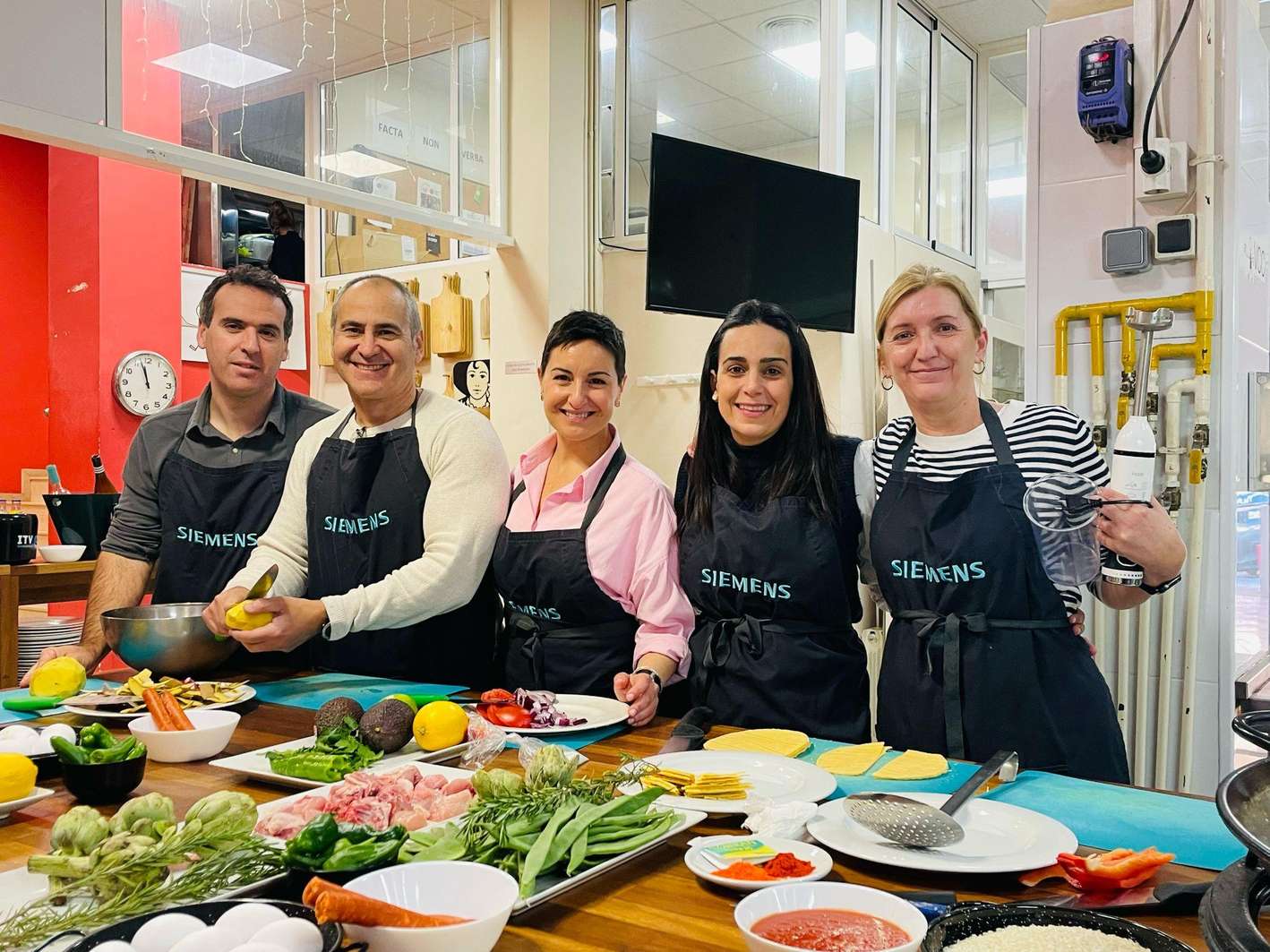
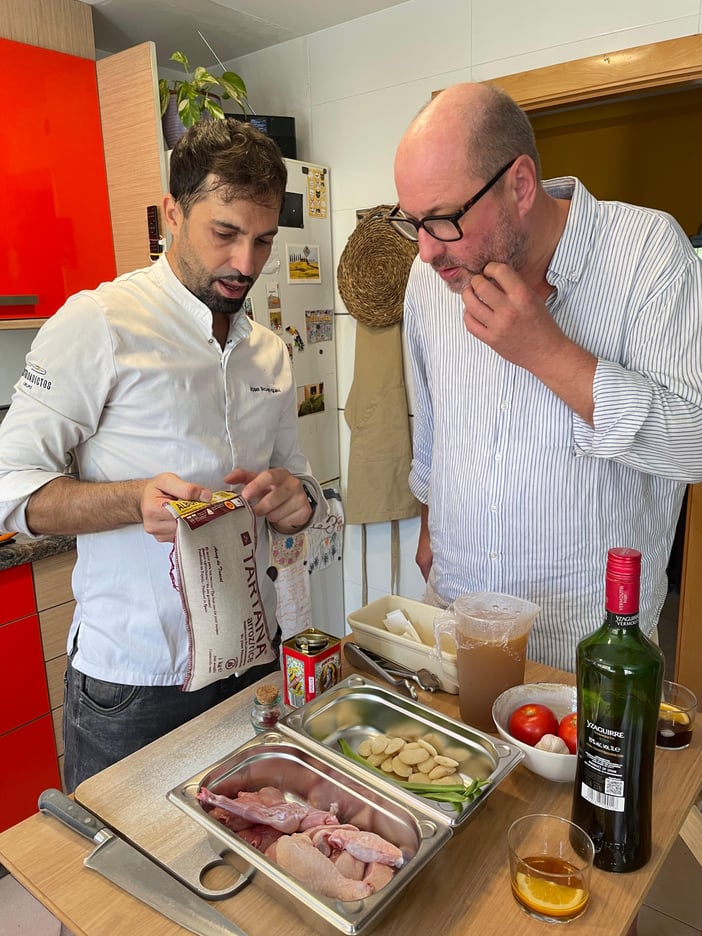
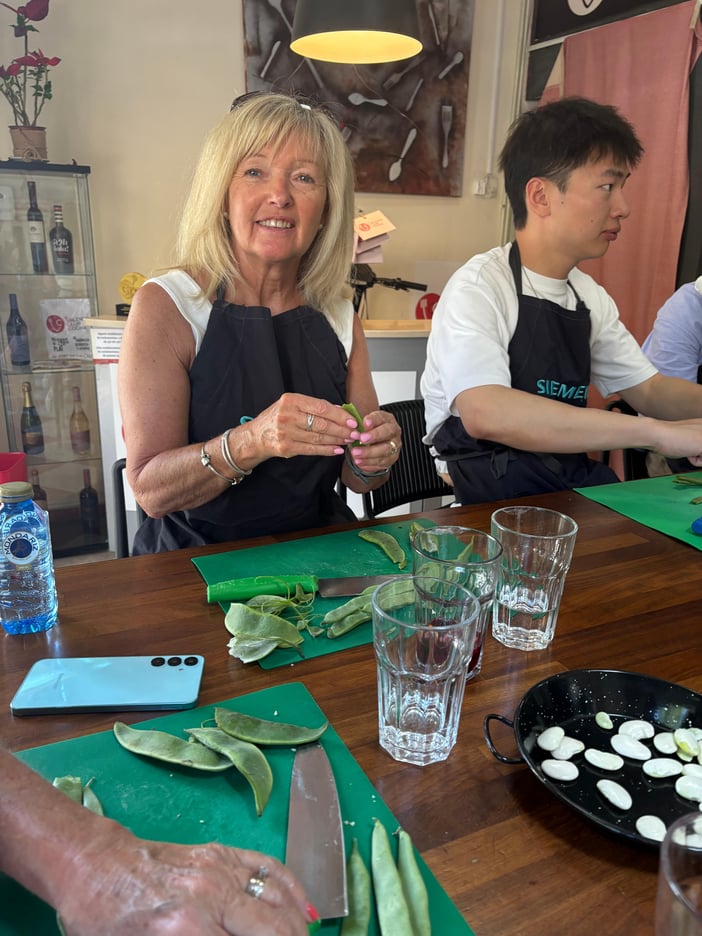
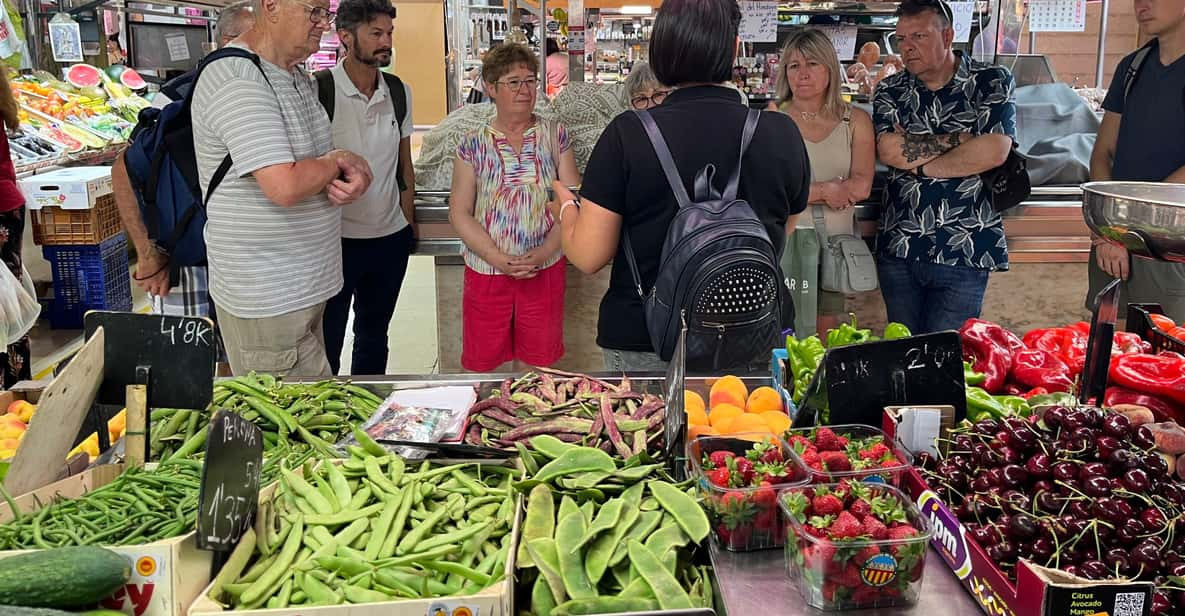
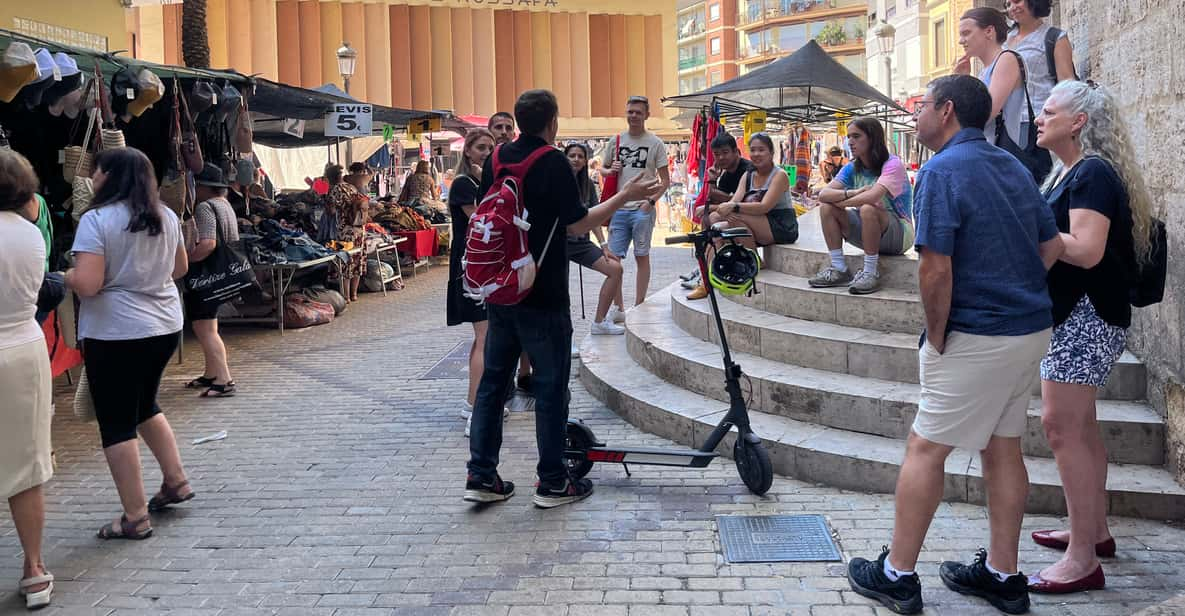
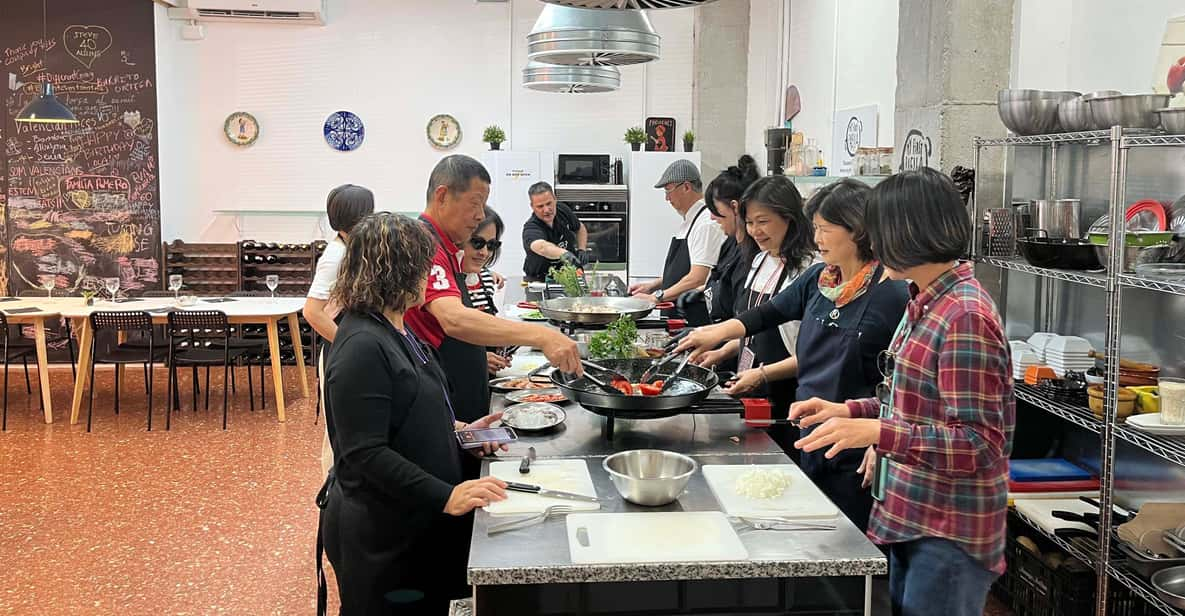
A morning session usually starts among the stalls of a market such as Ruzafa or the Central Market, picking up produce, beans and meat with the chef. Back at the kitchen, the work is real: grating tomatoes for the sauce, shelling garrofó beans, snapping bajoqueta and rojet green beans at your own station.
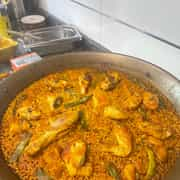
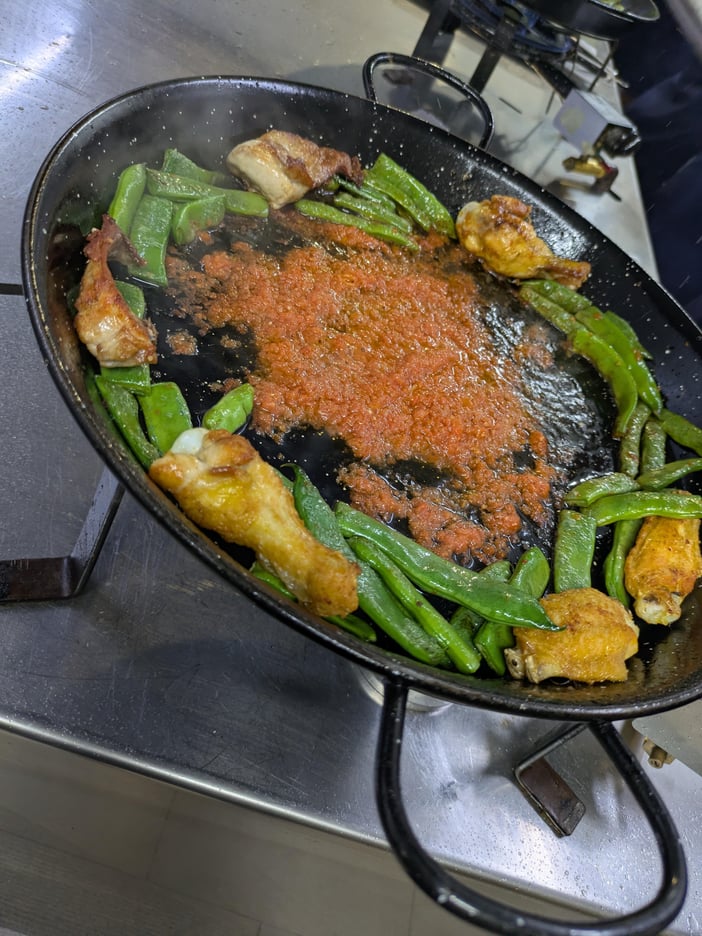
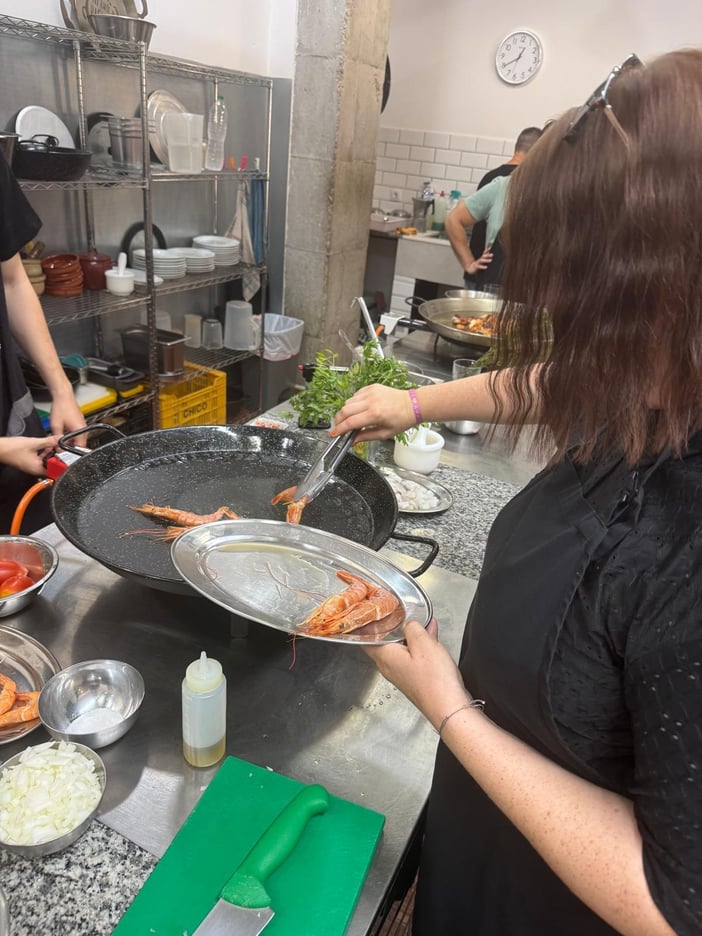
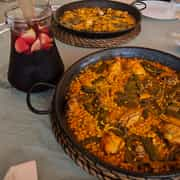
Then the pan. Olive oil goes in with salt, the chicken and rabbit brown until sealed, and the beans caramelize in the center. Grated tomato and sweet paprika build the sofrito, water covers everything, and saffron with a fresh sprig of rosemary seasons the stock as it reduces to the pan's rivets.
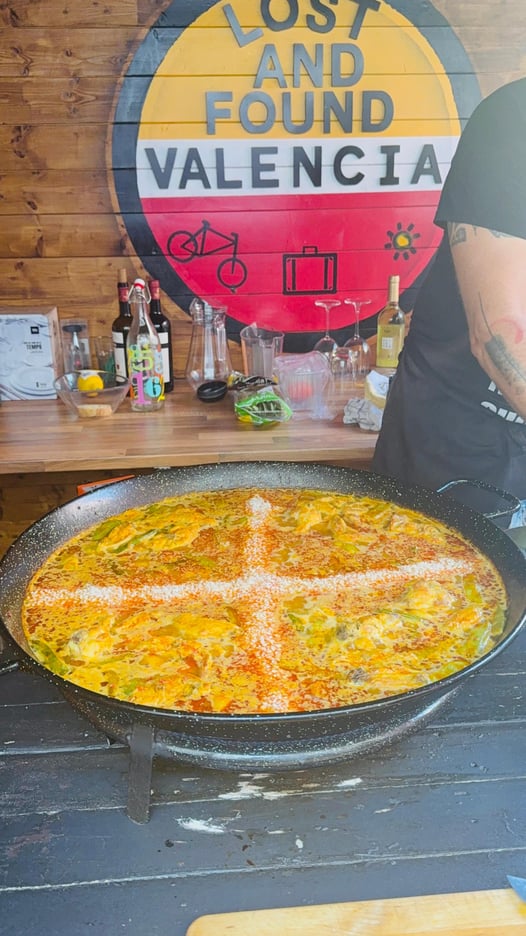
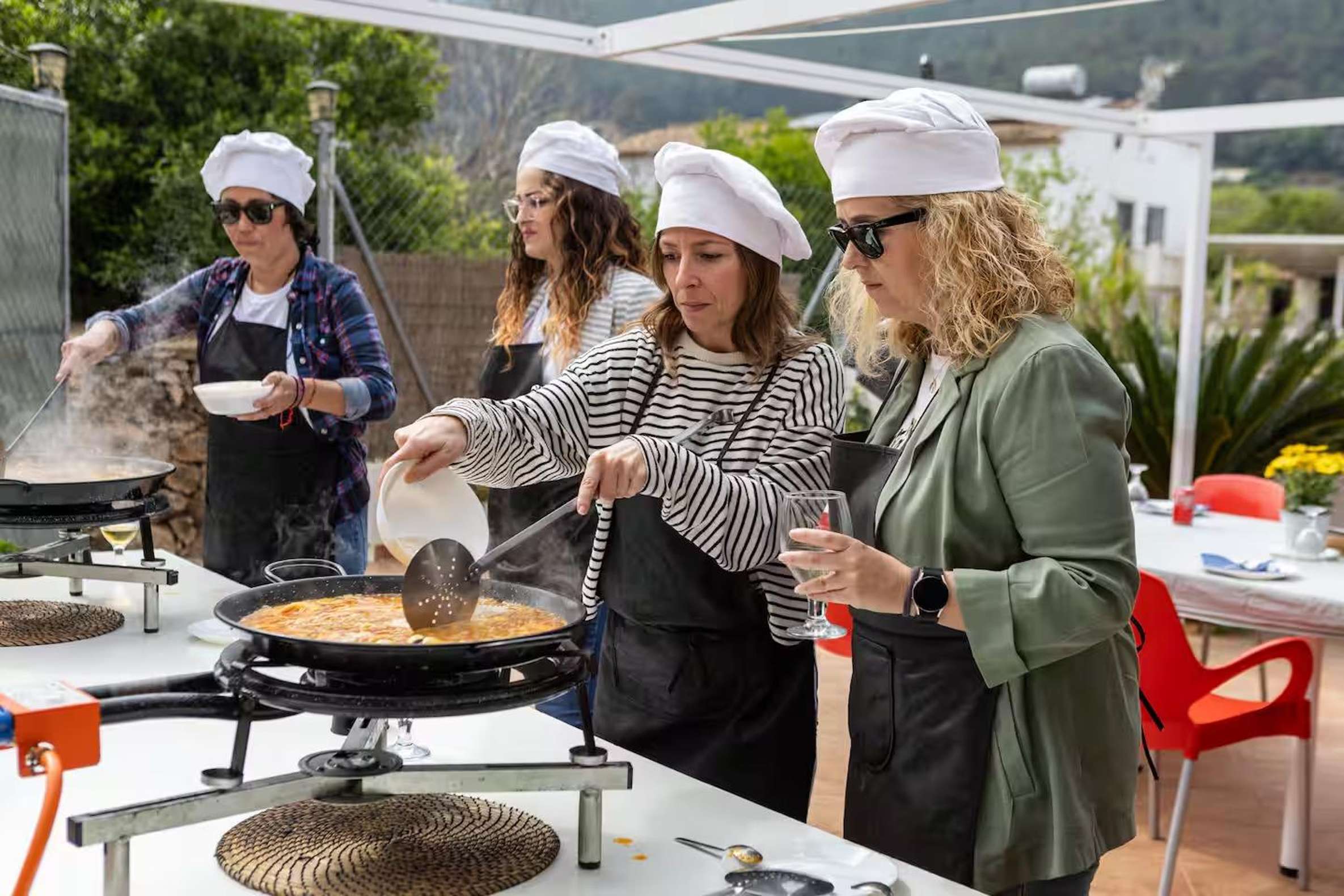
The rice goes in, often poured in a cross or diagonal line, and cooks without stirring. After a hard boil and a slow simmer, the pan rests off the heat before everyone sits down to eat with wine, tapas or dessert.
The morning, hour by hour
1
Market
Browse the stalls with your chef
Fresh produce, beans and meat chosen on the spot
2
Prep
Work at your station
Grate tomato, shell garrofó, snap green beans
3
The build
Brown, sofrito, simmer
Meats sealed, saffron and rosemary in the stock
4
The wait
Rice sets undisturbed
A hard boil, then low heat, then a rest off the flame
5
The table
Eat what you cooked
Local wine, tapas, salad or dessert alongside
The Valencia: Paella Cooking Class with Central Market Tour runs this exact arc over about 4 hours, with the market trip for morning shifts Monday to Saturday.
Tour for this
Valencia: Paella Cooking Class with Central Market Tour5.0★ (1,260) · 4 hours · Free cancellation
Morning or evening, and which month for authentic paella
In Valencia paella is a lunchtime meal, and the city is built around that fact. Top authentic paella venues open strictly for midday service; order the dish late in the evening outside a dedicated workshop and you may well be eating something reheated.
For a class, the same rule decides your slot. Municipal markets run Monday to Saturday from 7:30 am to 3 pm, so market visits happen on mornings only, and a Sunday or holiday closure simply turns a 3.5-hour session into 3 hours of extra kitchen time.
Evening workshops skip the stall walk entirely and start from pre-sourced ingredients; standard evening sessions can hold up to 20 people unless a small-group format is chosen.
Season matters too. July and August push daytime highs past 31°C beside open burners, which is when an air-conditioned kitchen earns its keep, while spring and autumn sit around 20 to 24°C. Bookings quiet down in summer and peak in September and October, when one tour operator also pauses its Algiros Market stop for August.
How busy it gets, month by month
September: 5 out of 5 for how busy it gets.
HighestApr to May, Sep to Oct
In betweenMar, Jun to Aug, Nov
LowestDec to Feb
Darker: a higher how busy it gets score, out of 5
Tap a month to read it.
If the market walk matters to you, pick a midweek morning in spring or autumn and the whole day falls into place.
Tour for this
Only for You, Private Paella Class ..(Also at your home)..5.0★ (35) · 2.5 hours · Free cancellation
Choosing your authentic class - market, terrace or evening
The formats divide cleanly once you know what to look at. A market-to-table class runs mornings Monday to Saturday and folds a stall visit into the session.
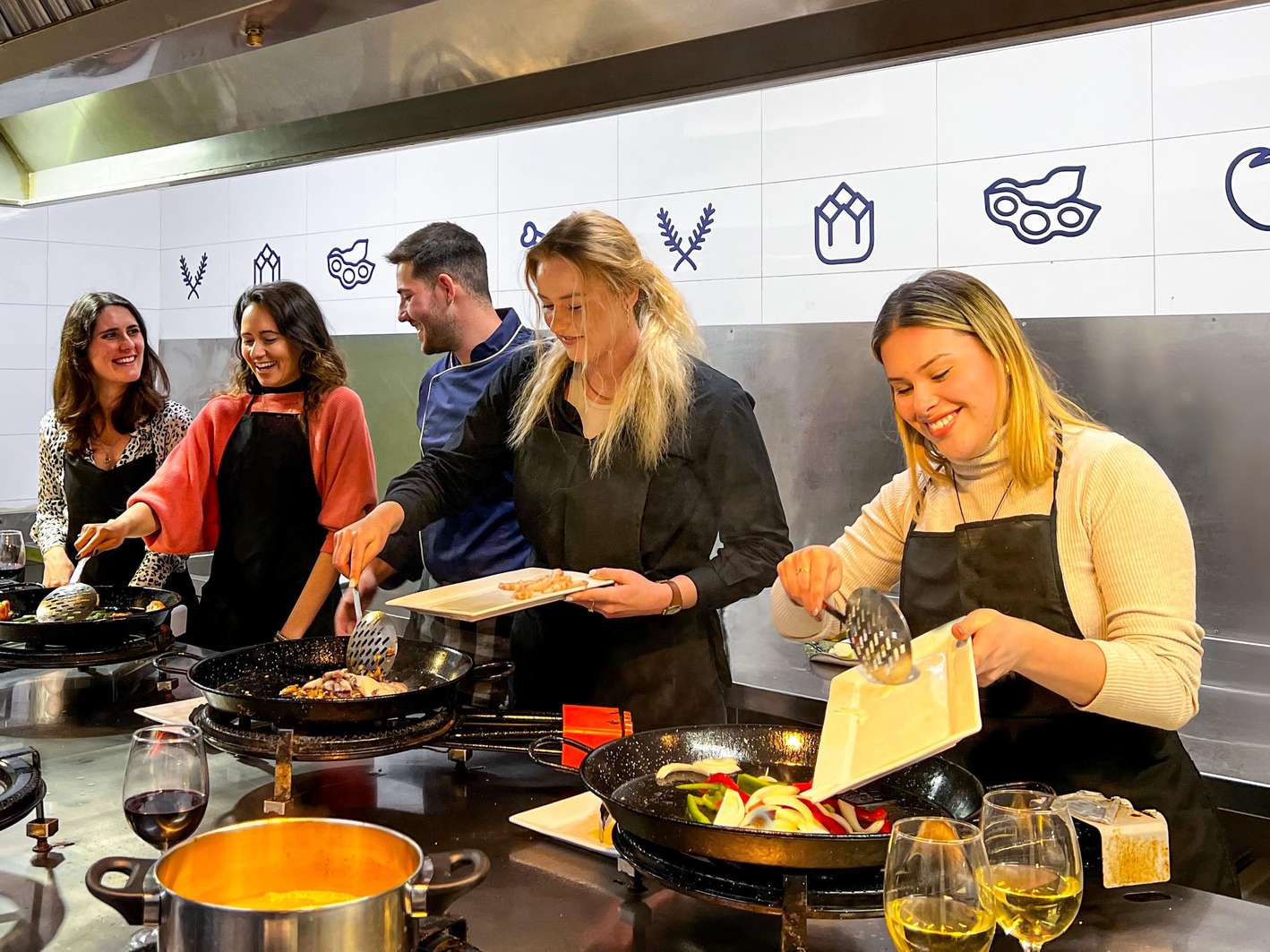
An evening class starts in the kitchen with ingredients already bought, and trades the market for tapas and sangria before dinner. Between them sit small-group classes on terraces and a countryside session outside town among orange groves and rice fields.
Compare them on three things: length, who shares the pan, and what pours while you cook.
Authentic formats side by side
Market-visit morning class
Small-group hands-on class
Evening tapas workshop
Length
About 3.5 to 4 hours with the market walk
About 4 hours
About 3 hours
Market
Yes, mornings Monday to Saturday
No
No, pre-sourced ingredients
Group size
Small, stations of 1 to 3 cooks
Small-group format by design
Can reach 20 unless small-group chosen
Drinks
Wine and tapas with the meal
Unlimited wine, beer and soft drinks while you cook
Sangria, beer, wine and soft drinks
Market-visit morning class
Length
About 3.5 to 4 hours with the market walk
Market
Yes, mornings Monday to Saturday
Group size
Small, stations of 1 to 3 cooks
Drinks
Wine and tapas with the meal
Small-group hands-on class
Length
About 4 hours
Market
No
Group size
Small-group format by design
Drinks
Unlimited wine, beer and soft drinks while you cook
Evening tapas workshop
Length
About 3 hours
Market
No, pre-sourced ingredients
Group size
Can reach 20 unless small-group chosen
Drinks
Sangria, beer, wine and soft drinks
One more check before you book: read the description for the words hands-on and for how many people share a station.
The Real Paella Cooking Class with its Ruzafa Market visit is the market-to-table format at its purest, 3.5 hours from stall to socarrat with local chefs who grew up making the dish. Many public workshops run bilingually in English and Spanish, so language rarely decides the choice.
Nobody has to eat rabbit. Workshops across Valencia offer vegetable or vegetarian paella on request, and classes that split the group let one half cook the classic Valencian version while the other takes seafood or vegetables, all from the same kitchen.
Allergies need one direct step. Shellfish allergies rule out the seafood sessions, so the fix is to book the land-meat or vegetarian alternative instead, where the pan never touches shellfish.
For anything stricter, a gluten or legume intolerance against a shared traditional broth, say so to the school before you pay; that is the one conversation worth having in advance.
Two small local notes travel well. Clòchinas, the Valencian mussels, are a seasonal thing, on the stalls from May to September, and they want a thorough scrub outside to wash off the sea salt before they ever reach a pan.
The reassurance is simple: the authentic recipe bends on protein, never on method. The browning, the sofrito and the socarrat stay the same whatever sits in the pan.
Tour for this
Valencia: Paella Cooking Class with tapas (small groups)4.9★ (61) · 4 hours · Free cancellation
Kids and quieter cooks at an authentic paella workshop
Families fit, with one look at the age rules first.
Workshops accept children across several age bands, from the youngest groups through ages 4 to 11 and up to 12 to 17, but they do not all agree: some classes bar children aged 4 and younger, and a few are unsuitable for anyone under 2 or under 10.
One class with a vegetarian option on request sets its line at age 2. Check the small print before you promise the kids anything.
For anyone who cannot stand for three hours, the news is better than expected. Several central Valencia cooking schools have wheelchair-accessible facilities, and the accessible workshops near Town Hall Square go further: step-free rooms, lowered preparation tables with knee clearance, and the option to cook seated.
There is a third seat at the table too. Some hosts let guests simply watch the cooking, so a companion who came for the meal still eats the same paella at the end.
A mixed group, then, splits by appetite and energy, and nobody stays home.
Getting to the authentic class - old town or Russafa
Meeting points for market-to-kitchen classes cluster in the Old Town, Ciutat Vella, which is charming and slightly awkward: the metro trains never enter its interior.
You ride to a perimeter stop such as Xàtiva, Colón, Ángel Guimerá or Plaça d'Espanya and walk the rest, or take an EMT bus straight in; lines 4, 11, 27, 31, 32, 60, 62, 70 and 73 all cross the historic center.
Russafa studios are easier. Walk from Colón, Xàtiva or Plaça d'Espanya, hop Metro Line 10, or catch EMT bus 6, 14, 18, 40 or C3.
How each way in ranks
Walking from a perimeter metro stopXàtiva, Colón or Plaça d'Espanya put most studios inside a short stroll
Easy
EMT bus into Ciutat VellaLines 4 to 73 drop you inside the old town without a transfer
Easy
Metro Line 10 to RussafaOne ride, or walk it from Colón in about the same time
Easy
Driving into the old townNarrow streets and scarce parking; nobody needs the car for this
Difficult
Whichever studio you book, build in a few spare minutes for the last walk, because old-town streets do not run in straight lines.
Tour for this
Valencia: Traditional Paella Cooking Class and Dinner4.9★ (58) · 2 hours · Free cancellation
The kitchen runs on open gas burners, and hot oil spits when meat hits the pan. That single fact writes the dress code.
Closed-toe shoes are the non-negotiable, protecting your feet from splatters and dropped tools while you stand at the ring. Long pants or jeans shield your legs from the same spitting oil, and a fitted top without loose sleeves keeps fabric away from open flame.
Choose casual clothes in fabrics you do not mind washing, because olive oil, tomato sauce and saffron all leave their mark.
Long hair goes back in a tie, well clear of the pans. Aprons come from the school, so that is one thing you leave at the hotel.
What to wear for cooking around open burners
Closed-toe, non-slip shoesProtects your feet from hot oil splatters and dropped kitchen tools while standing near open gas flame burners.
Long pants or jeansShields legs from spitting hot oil when frying meat and sofrito vegetables over wide burner rings.
Fitted top with modest coverageAvoids dangling fabric near open gas flames while keeping arms protected from popping oil.
Casual, stain-tolerant fabricsOlive oil, tomato sauce, and saffron easily stain clothing, so select everyday garments you do not mind washing.
Hair tie or bandSecures long hair away from gas flames and cooking pans during hands-on kitchen preparation.
Dress for a working kitchen, and the burners stop mattering within the first ten minutes.
Every other step has a recipe; the socarrat has a sound. Rice spreads in a thin layer about a centimetre deep, gets roughly three times its volume in broth, and then the pan is left alone. Stirring after the first five minutes leaches starch and turns dinner into porridge.
From there you listen. The boil softens into a gentle crackling once the broth is gone, and those 30 to 90 seconds of medium-high heat decide everything.
You want a toasted, nutty smell and amber edges; the moment the scent turns acrid, the pan comes straight off the flame to escape the residual heat, then rests a few minutes. True socarrat is a delicate crisp crust across the base, never a burnt layer or hard raw grains.
The rice itself changes how forgiving the pan is. Senia turns mushy if you blink, Bomba holds firm and separate, and Albufera takes Senia's flavor absorption with Bomba's resistance to overcooking.
What nobody tells you
The sound tells you
The shift from boil to crackle, not the clock, marks when the socarrat starts.
Ten minutes of rest
Off the heat, the liquid settles and the rice finishes setting before serving.
Rice choice is insurance
Albufera forgives an inattentive cook where Senia punishes one.
Dry is the goal
Paella ends with separate grains and no liquid left, never soupy.
Once you have heard the crackle once, you will know it forever, which is rather the point of the class.
Small classes live and die by headcount, and the rule is honest about it: a traditional workshop generally needs a minimum of 2 participants, sometimes 2 per specific paella type, before it will run.
If the threshold is not reached on your day, you are not stranded. Operators give you the choice to reschedule to another date or time, transfer to a different session such as a morning class, or take a full refund.
All three paths are standard, so the worst case costs you a different day, and never the money.
The practical move is yours to make: book early in your trip rather than on your last afternoon, and a reschedule costs you nothing but an hour of replanning. Free cancellation up to 24 hours in advance applies across the board, so a changed itinerary never turns into a fee.
If the numbers fall short
If this happens
What happens then
Minimum of 2 not reached
Reschedule to an alternative date or time
Your paella type short of 2 people
Transfer to a different session, such as a morning class
Neither option suits you
Take the full refund
Plans change beforehand
Cancel free up to 24 hours in advance
Booked sensibly, the minimum rule is a footnote, and the day stays yours.
After class - nearby sights and taking authentic paella home
Class ends mid-afternoon with portions often generous enough that takeaway boxes appear for the leftovers, and the detailed recipe leaves with you so the dish can happen again in your own kitchen.
Step outside and the old town is already underfoot. La Lonja de la Seda sits a 4-minute walk from the Central Market, with Valencia Cathedral, the El Miguelete tower and Plaza de la Virgen about 7 minutes from either point, and the Torres de Serranos and the ceramics museum within a 10- to 15-minute stroll.
The list above splits neatly: the cathedral and the silk exchange fill an hour after lunch, and the drive-time spots wait for a day with a car.
For the pan itself, plan luggage space or shipping: a wide carbon-steel paella pan and a matching burner ring are the home kit, and a standard domestic stove cooks the edges unevenly without one. Valencia short-grain rice is the other thing worth carrying back.
RecommendedWhat to ask for before you leave: Ask your instructor for printed recipe cards and exact measurements while you are still in the kitchen, then look for a fideuà, the noodle cousin from nearby Gandia, or a single-portion paella bar in Russafa before you fly out.
The pan, the rice and the written recipe travel home together, and the next socarrat you hear can be in your own kitchen.
An authentic Valencian paella class beats sitting in a restaurant that wanted your order by morning. Book a midday session Monday to Saturday for the market walk, wear closed shoes, and trust the crackle when it comes.
The dish you take home is the recipe, the pan and the sound of a socarrat starting.
Go ifYou want the original chicken and rabbit recipe, kept free of tourist adaptationsYou travel alone and refuse to face a two-person pan minimumYou can book a midday class Monday to Saturday
Skip ifYour only free slot is a Sunday morning and the market walk is the whole pointYou want a demonstration to watch, with no pan of your ownYou cannot stand near an open flame and your chosen studio is not one of the accessible ones
The things travelers ask before booking a traditional Valencian paella class.
Valencia2026
The rice cracked softly at the bottom of the pan and everyone leaned in. Wear closed shoes and come hungry.
What goes into a real Paella Valenciana?
Chicken, rabbit, sometimes snails, and local broad flat beans, with saffron and browned meat for color. Seafood, chorizo, and a default wedge of lemon all stay out. Locals call seafood rice arroz de marisco and treat it as a separate dish.
Why do Valencians refuse to add chorizo to paella?
Heavy cured meats change the profile and break the traditional rice method, so people here see mixing chorizo, seafood, and chicken in one pan as a culinary offense. Purists keep the original recipe to land meats and local beans.
Is paella really a lunchtime dish in Valencia?
Yes. Authentic paella is a midday meal, and the top venues open strictly for lunch. Order it late in the evening at an ordinary restaurant and you often get reheated food, which is why evening classes exist as their own format.
What is socarrat and how do I get it right?
It is the delicate, crispy toasted crust across the base of the pan. Rice simmers in about three times its volume of broth for 40 to 45 minutes, and after the first five minutes you stop stirring entirely.
Listen for the boil to shift into a gentle crackling, give it up to two minutes more, then take the pan off the heat.
Why does the chef tell us not to stir the rice?
Stirring after the initial boil leaches starch out and turns the pan into porridge. Spread the grains evenly, stir only in the first five minutes, and leave the pan alone.
Which rice should I use at home?
Valencia short-grain rice, not long-grain. Senia has a narrow window and turns mushy if you look away, Bomba stays firm and separate, and Albufera absorbs broth like Senia while resisting overcooking like Bomba. A wide carbon-steel pan and a matching burner ring complete the kit.
Can I cook paella on a normal kitchen stove?
A wide pan over a standard burner leaves the outer edges undercooked, because the rice needs even heat across the whole pan diameter. Get a burner ring that matches the pan, or cook in smaller batches.
Will I get the recipe to take home?
Hosts share the detailed paella recipe after the workshop so you can cook the dish at home. Portions run generous too, and classes often hand out takeaway containers for leftovers.
Are sangria and wine served during the class or only at the meal?
It depends on the workshop. Many pour tapas, appetizers, wine, and free-flowing sangria throughout the cooking session, while some serve water, beer, soft drinks, and wine with the seated meal.
Can I choose a vegetarian paella in the same class?
Most workshops offer vegetable or vegetarian versions on request, and classes that split the group let each person pick classic Valencian, seafood, or vegetarian. If you have a shellfish allergy, skip the seafood paella sessions and book a land-meat or vegetarian alternative.
Do classes run if too few people book?
Traditional workshops need a minimum of two participants, and some operators want two people per paella type. If the number is not reached, you choose between rescheduling, moving to another session such as a morning class, or a full refund.
Is a class better than just booking a good paella restaurant?
For many travelers, yes. Restaurants often require you to pre-order your rice dish by the morning of the visit and enforce a two-person minimum per pan. A class gets you freshly cooked paella with no pre-ordering and no minimum, even if you travel alone.
Keep cooking - more classes for authentic paella in Valencia

 Your best match