- 1
Book a morning shift, Monday to Saturday: the market trip only runs then, and the market is closed by 3 pm.
- 2
Pick Tuesday to Friday over Saturday, when the aisles pack up between 10 am and 3 pm.
- 3
Wear closed-toe shoes and trousers; open gas burners and oil splatter are part of the kitchen.
Why travelers rate this Central market paella class
Nearly all forty reviewers praise the hosts by name, calling them patient, passionate and full of stories about Valencia.
Most reviewers did not expect the wine, cava and tapas to keep flowing, and several say their glasses were never empty.
Several couples wished they had picked the morning session so they could see the market with their guide.
 ★★★★★
Amazing experience! Pau knew Valencia and paella inside out, learned from his grandma.
Rachel · United Kingdom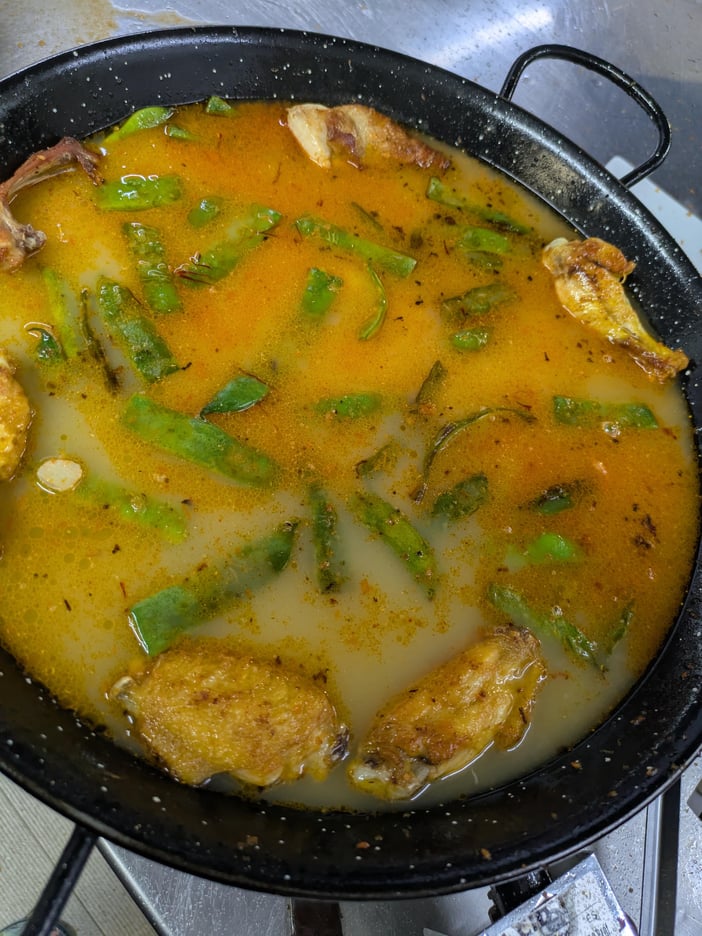 ★★★★★
One of the best things I booked. Learned Valencia's history through paella with charismatic Valero, from market tour to cooking. As a solo traveler I felt comfortable and engaged. Wine tastings were a bonus.
Kodie · United Kingdom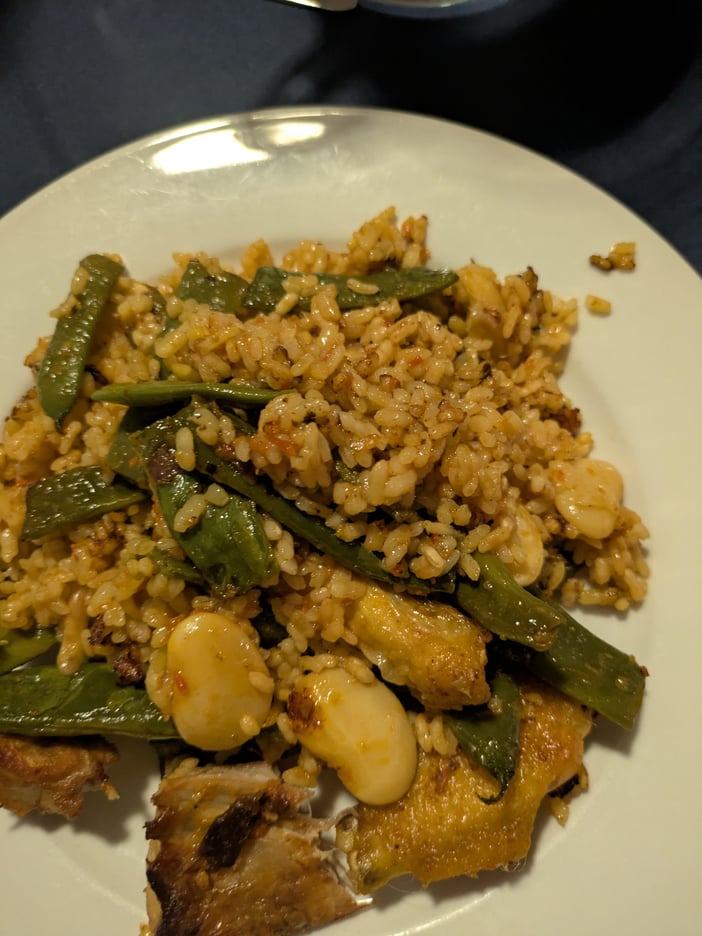 ★★★★★
Emma and Danny were knowledgeable and friendly, using the freshest ingredients. Wine and olives on arrival, tapas while cooking. The commercial kitchen was immaculately clean and the small group made it fun.
Paul · Australia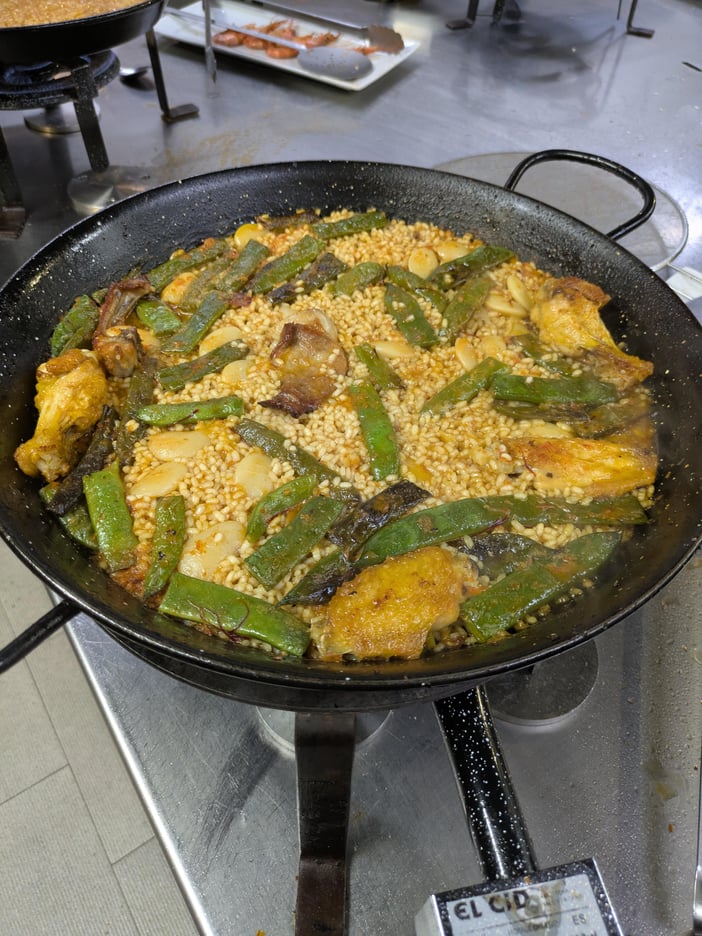 ★★★★★
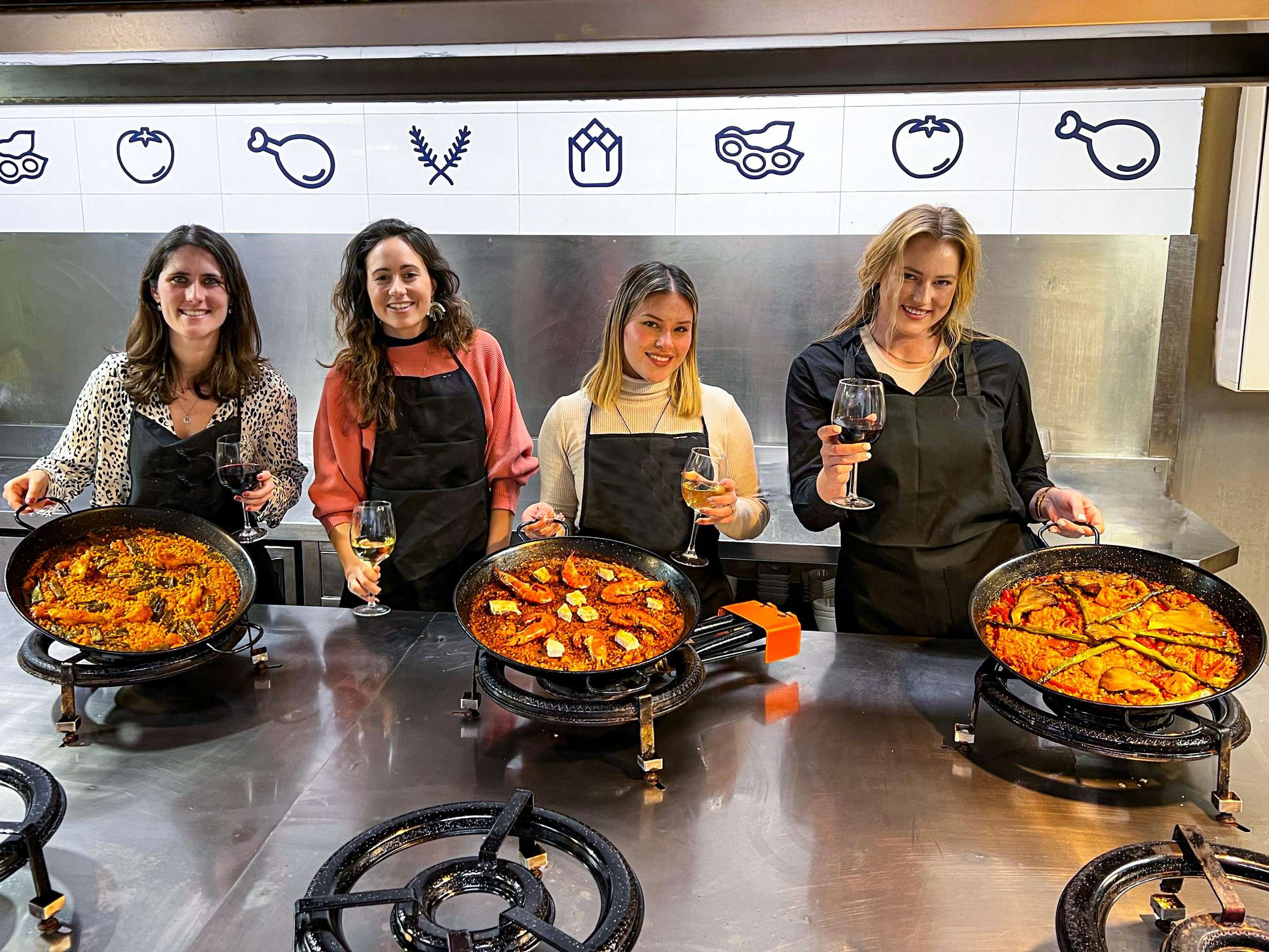
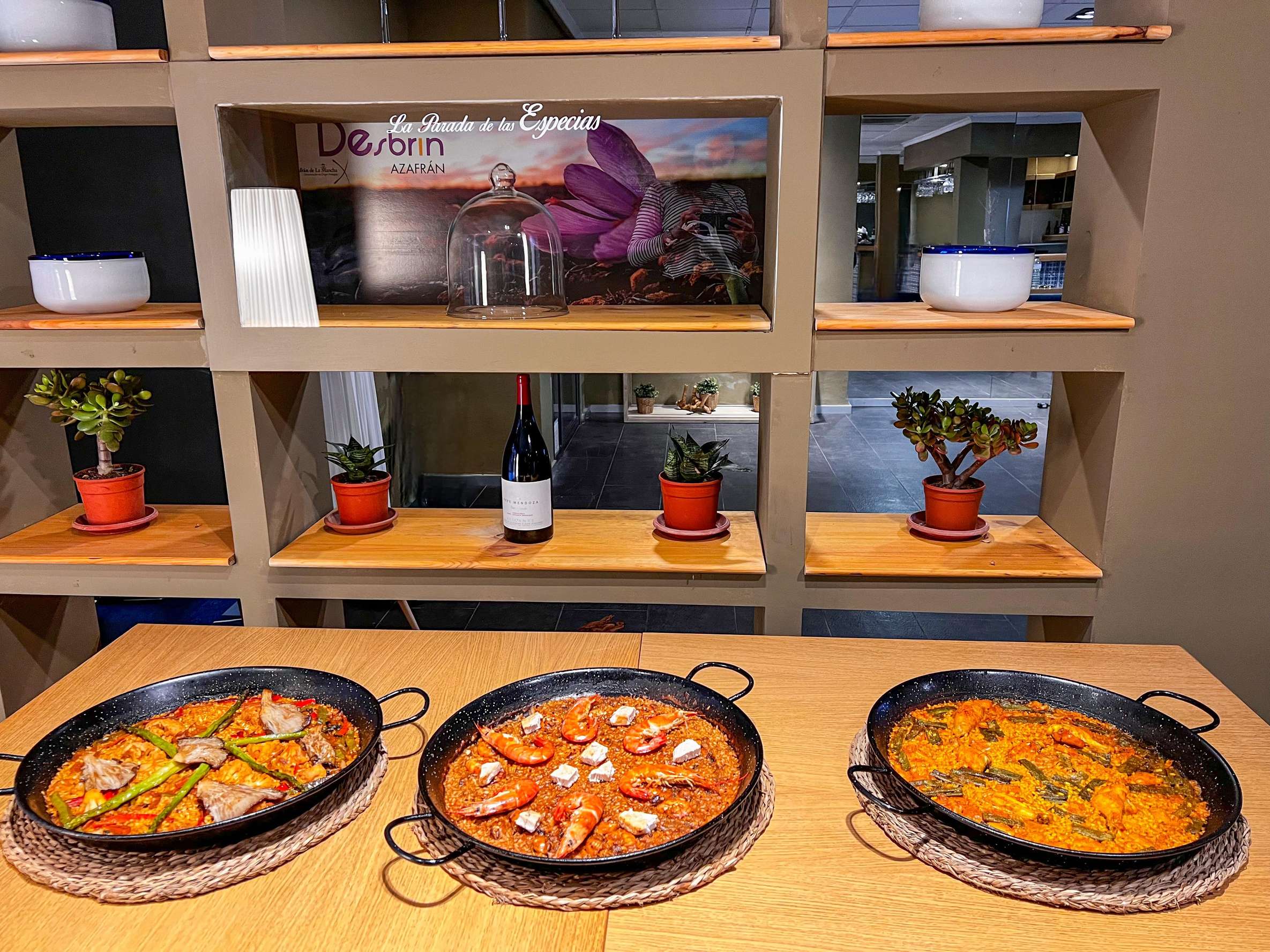
Daniel and Emma were so welcoming, with a lovely relaxed group. Clean, spacious kitchen. You choose traditional, seafood or vegetarian paella, all delicious as we shared dinner and tasted each other's.
Vicki · Netherlands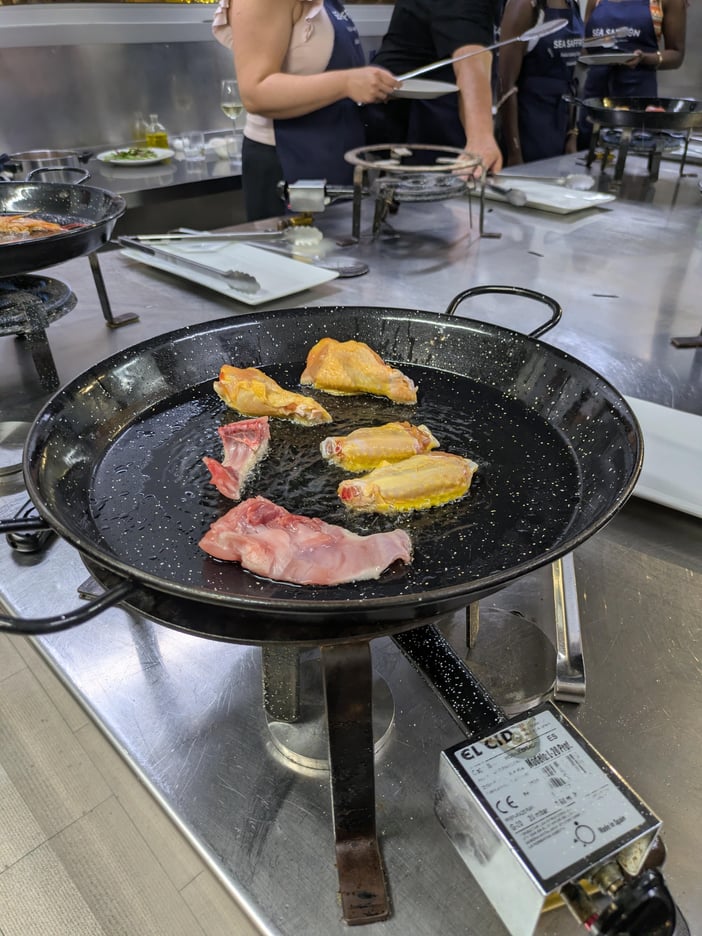 ★★★★★
Daniel and his assistant were informative, patient, thorough. Loved cooking myself under chef instruction rather than watching.
Cindy · Canada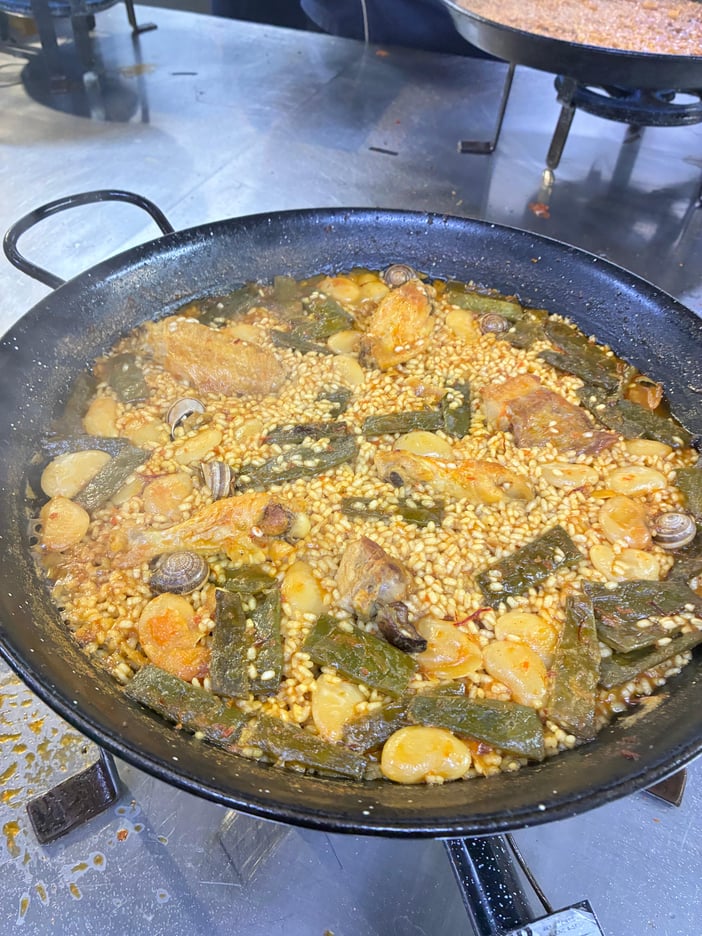 ★★★★★
Loved the paella course with market tour. Daniel and his co-host were knowledgeable and friendly. Delicious wines, tapas and our paella masterclass. Highly recommend to anyone visiting Valencia.
Leonie · United Kingdom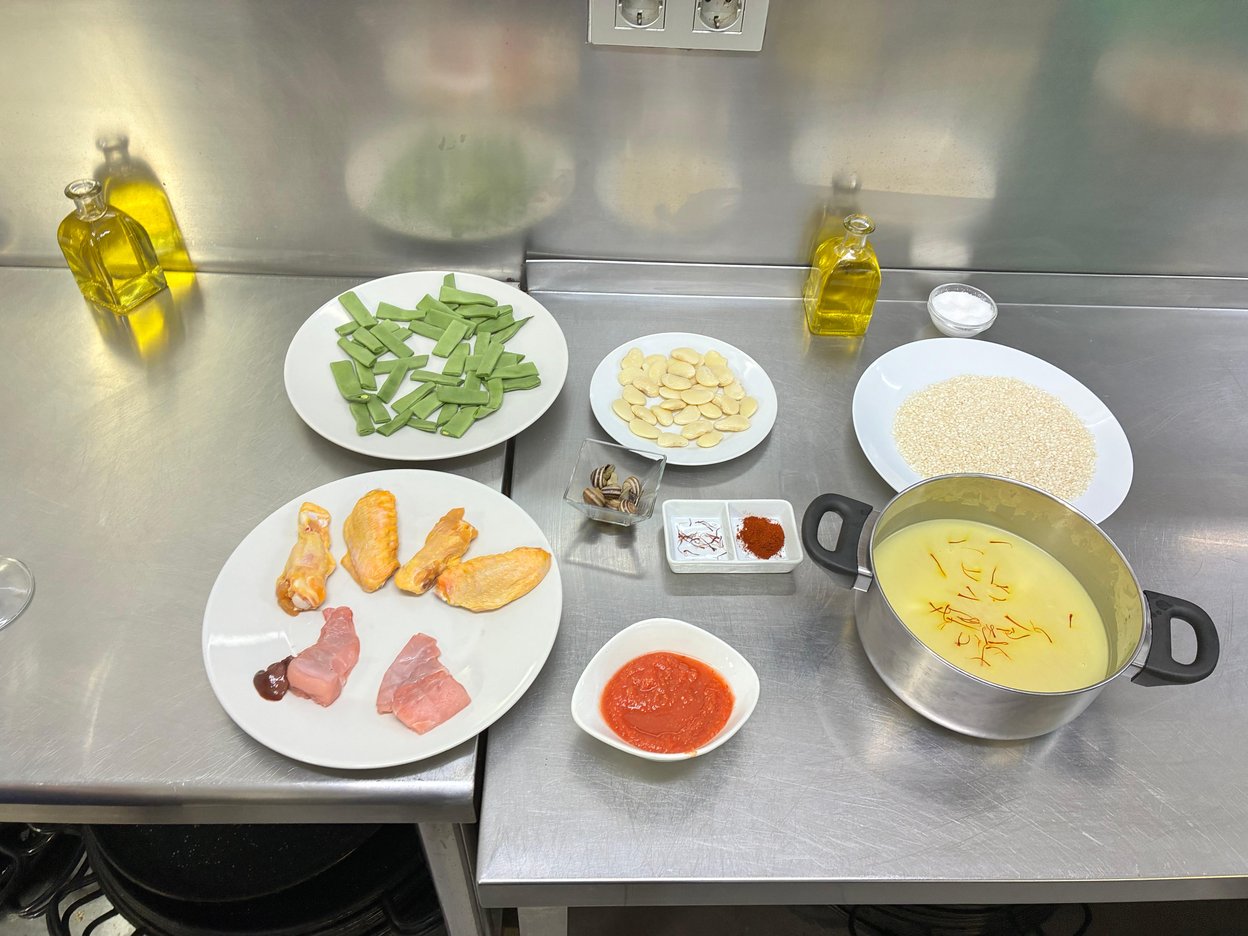 ★★★★★
Daniel was knowledgeable, professional and attentive. The paella was amazing and the food and history info felt like two tours in one. The highlight of our Valencia trip.
A traveler · Canada
Is a paella cooking class worth the splurge?
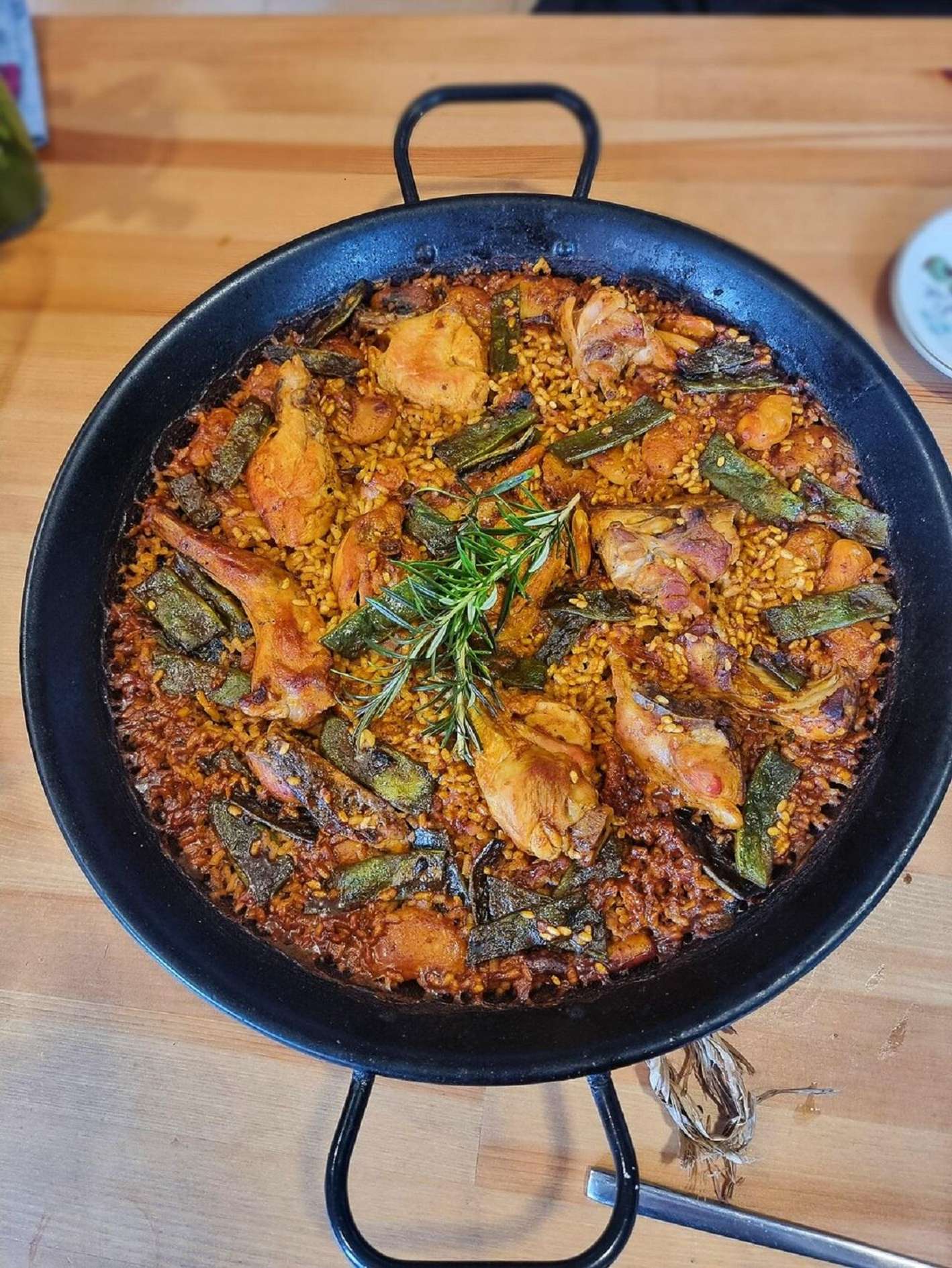
The tiled dome of Mercado Central is where the argument about paella begins, because in Valencia the dish is a matter of local honor. Purists hold that a true Paella Valenciana contains land meats and local beans: chicken, rabbit, sometimes snails, and the broad flat garrofó. Nothing else carries the name.
Ask for seafood in a Paella Valenciana and a Valencian will correct you: that dish is arroz de marisco, a separate thing entirely. Add chorizo or bacon and some locals will call it a culinary offense.
This is why a class taught by a Valencian chef gives you something a restaurant menu cannot: the reasoning behind every ingredient, told by someone who grew up with it.
In Valencia it is a cultural ritual, and the ingredients carry local pride with them
Purists define it strictly as land meat and beans, and call seafood versions arroz a marisco
Locals treat adding chorizo, bacon or mixed meats to a Paella Valenciana as a culinary offense
That pride is the reason the class earns its keep. A chef who grew up with these rules walks you through each ingredient at the stall and again at the pan, so you leave knowing why the dish tastes the way it does in its home city.
When is the best time to experience Valencian cooking?
Paella is a midday meal in Valencia, cooked and eaten when the sun is high, and the market hours enforce it. Mercado Central trades from 7:30 am until 3 pm, so any session with a market walk has to be a morning one. Evening classes cook with pre-sourced ingredients instead.
Within the week, the days are not equal. Tuesday to Friday between about 9:30 and 11:30 am are the calm hours, when stallholders have time to talk and a group can move down an aisle in one piece. Here is how the whole week compares.
The lesson in that table: aim for a Tuesday-to-Friday morning shift. Saturdays work, but from 10 am to 3 pm you are shoulder to shoulder with local shoppers, and Sundays the market is dark, so the walk drops out of the class.
What nobody tells you
Paella is traditionally a substantial midday meal, and only morning sessions can shop the market before the stalls close at 3 pm
Between 9:30 and 11:30 am on Tuesday to Friday the aisles are calm and stallholders have time to talk
September and October are the busiest booking months, while summer classes quiet down
The season changes the kitchen too. July and August push daytime highs past 30 degrees, and a gas burner adds to it, which is why travelers prize air-conditioned kitchens in summer. Spring and autumn sit in the low twenties, comfortable for standing at a stove.
What you wear matters as much as when you go, because the market floors get washed down and the burners throw oil.
- Cushioned sneakers with rubber treadMarket floors can become slick when vendors wash down stalls, and classes require extended standing beside hot stoves.
- Breathable cotton or linen shirtGas burners generate intense heat at cooking stations, so lightweight natural fabrics keep you cool.
- Trousers or longer pantsStandard aprons do not cover legs, leaving exposed skin vulnerable to occasional hot cooking oil splatters.
- Roll-up sleeves or fitted topsFitted or rollable sleeves stay out of the way around open flames and broad, simmering paella pans.
- Crossbody bag or small toteA compact bag keeps your hands free in crowded aisles and avoids catching on cooking stations.
- SunscreenOutdoor terrace kitchens expose cooks to direct sun alongside heat from large gas burners.
Closed-toe shoes and covered legs take care of most of it. The list above is the whole packing problem for the day, and none of it weighs anything.
Navigating Valencia's transit to the heart of the market
The old town defeats the metro by design: no train runs into the interior of Ciutat Vella. You ride to the edge and walk the rest. Xàtiva, outside Estación del Norte, leaves you a 9-minute walk from the market; Colón is about 11 minutes and Àngel Guimerà about 8.
From the airport, metro lines 3 or 5 reach Xàtiva in roughly 20 minutes, so door to door you are looking at about half an hour.
Buses go closer. EMT lines 7, 27 and 73 stop at Mercat Central itself, behind the market building, and lines 60 and 62 drop you two or three minutes away. If your kitchen sits in Ruzafa, walk from Colón or Xàtiva, take Metro Line 10, or catch bus lines 6, 14, 18, 40 or C3.
Whichever way you come, build in a few spare minutes for the last stretch on foot. Classes meet near the old town squares around the market, and the final walk is part of the morning.
Following the market-to-table morning ritual
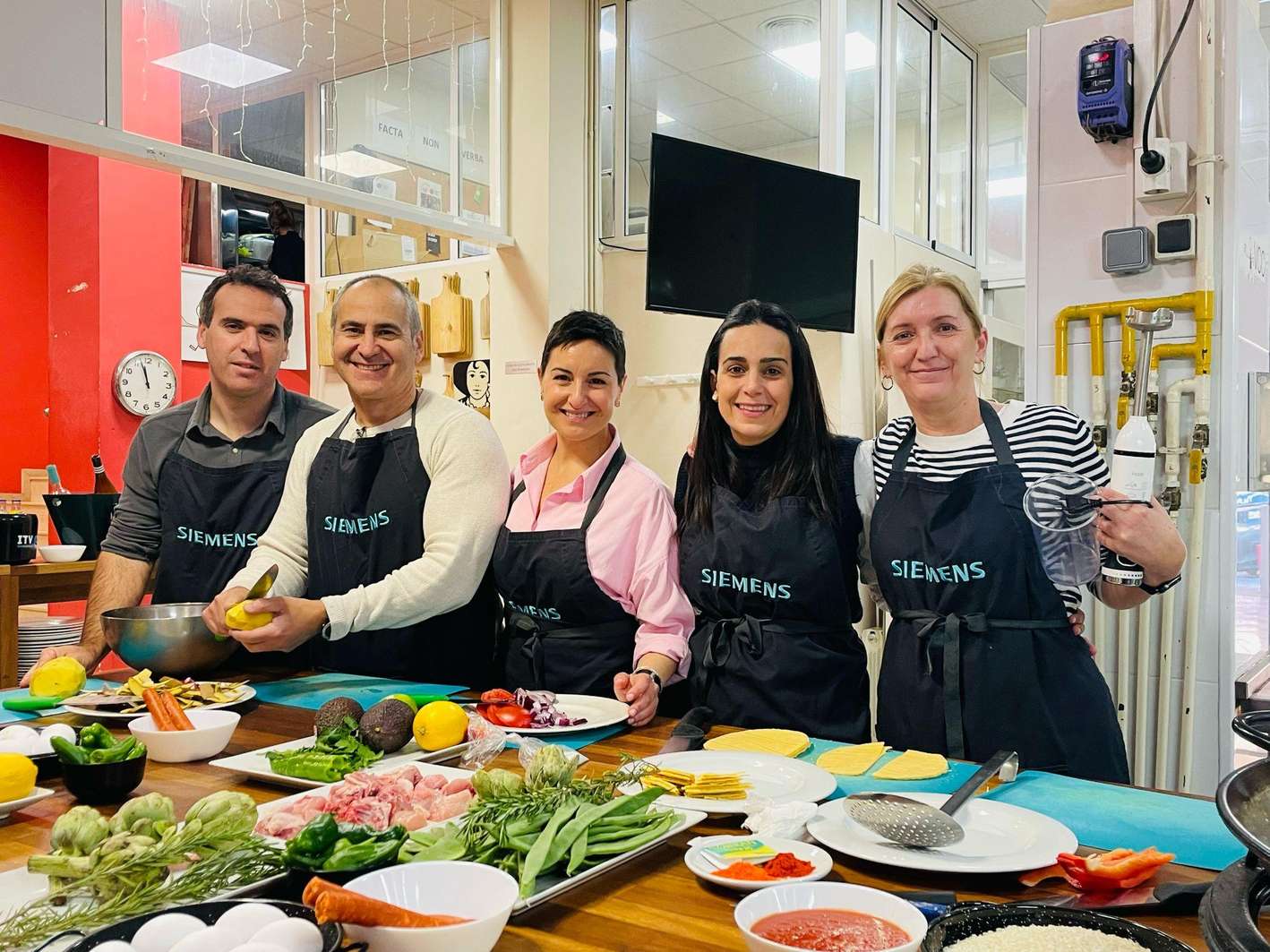
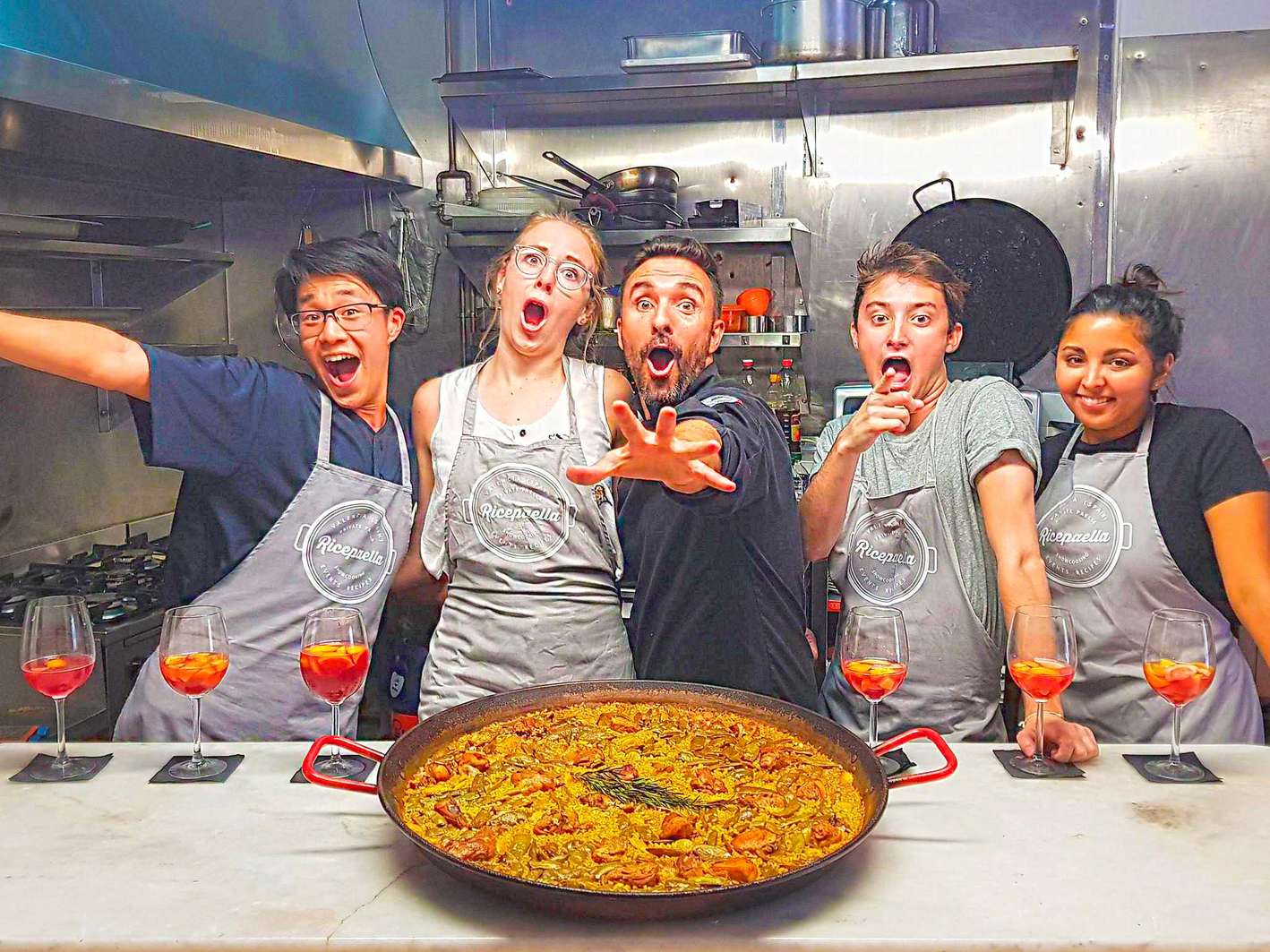
The morning opens among the stalls. With your chef you pick up what the pan will need: beans, meat, vegetables, chosen while the vendor explains what is good that week. Then the group walks to the kitchen, and the ingredients you discussed at the market are the ones that end up in your pan.
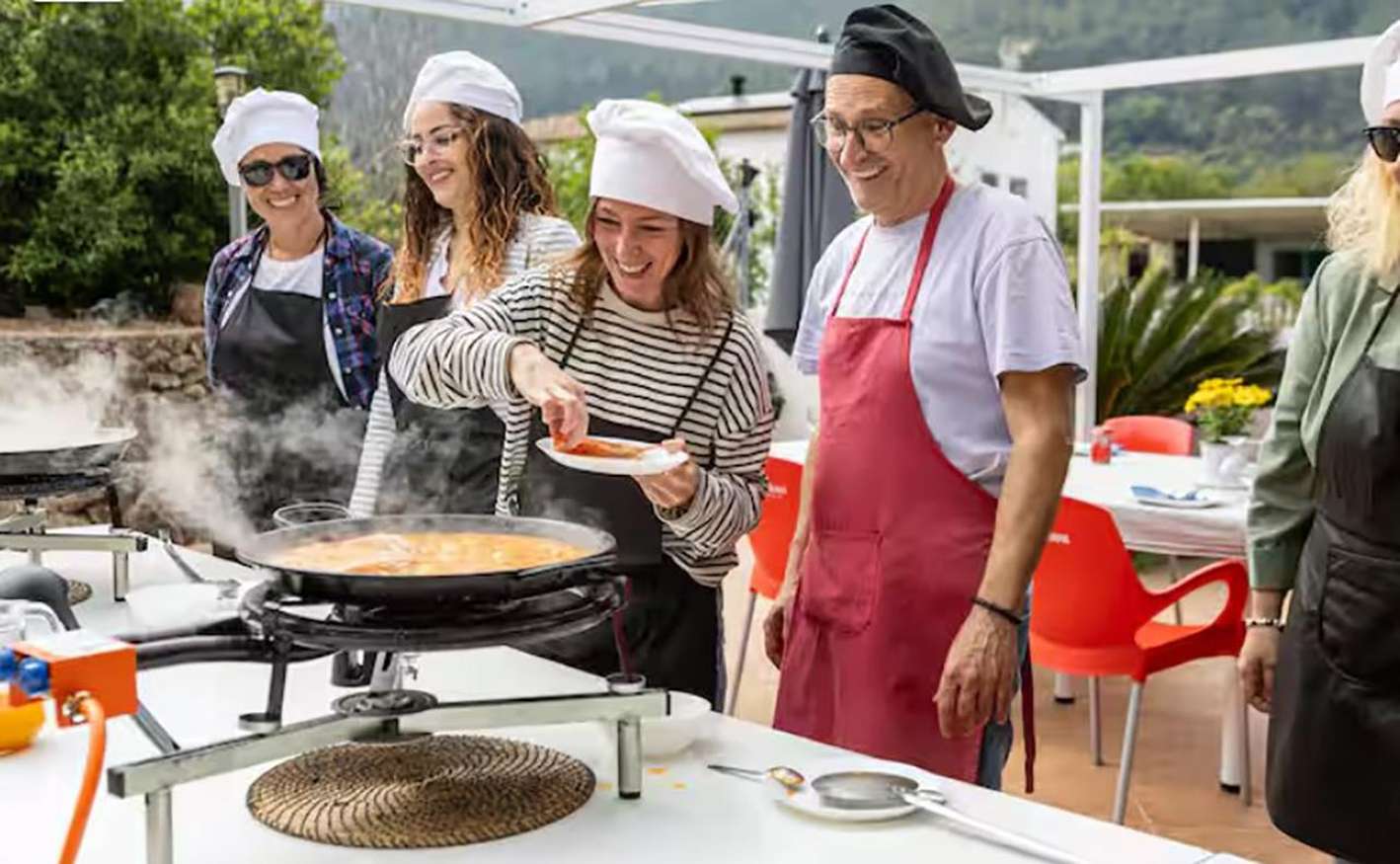
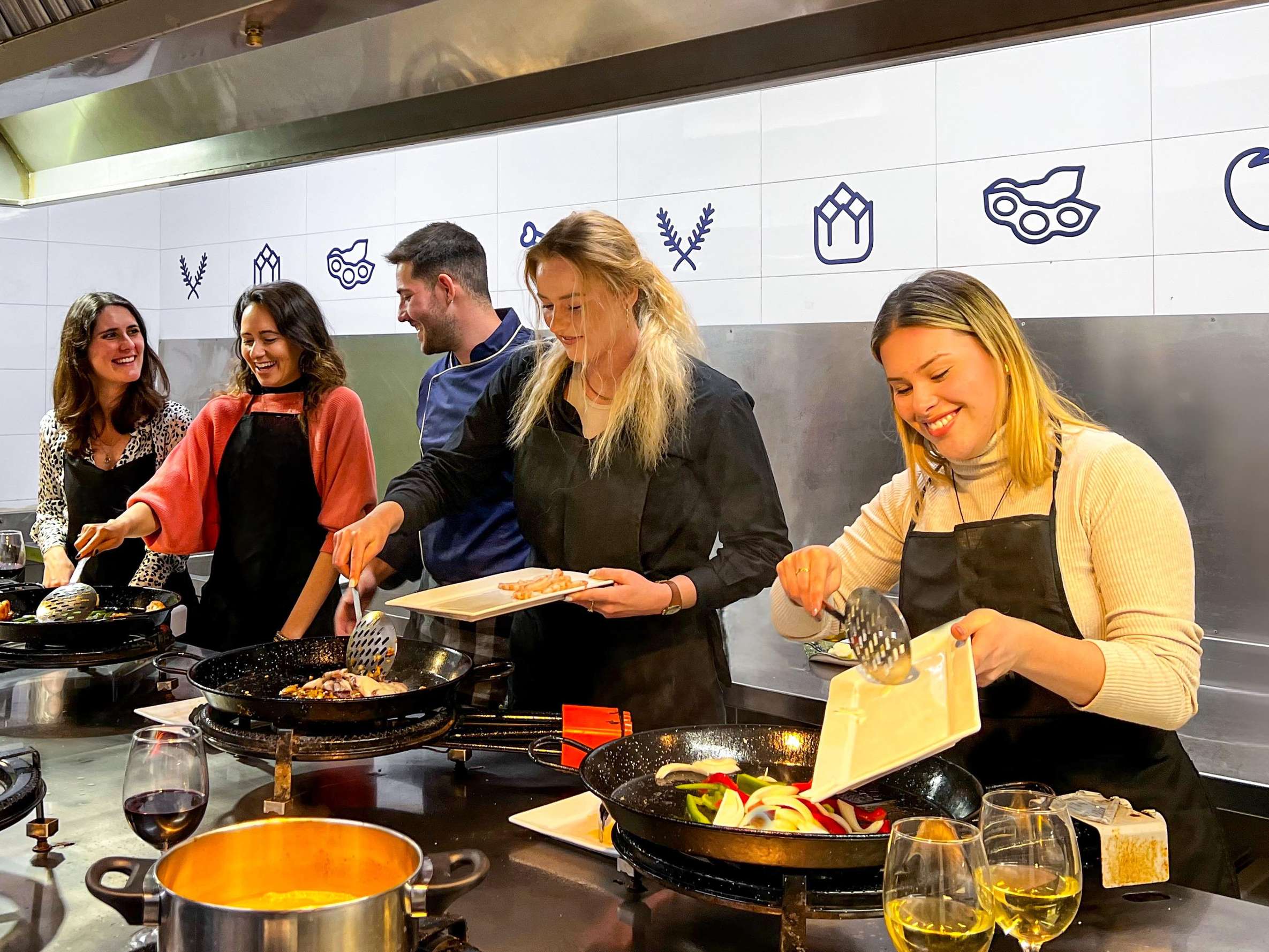
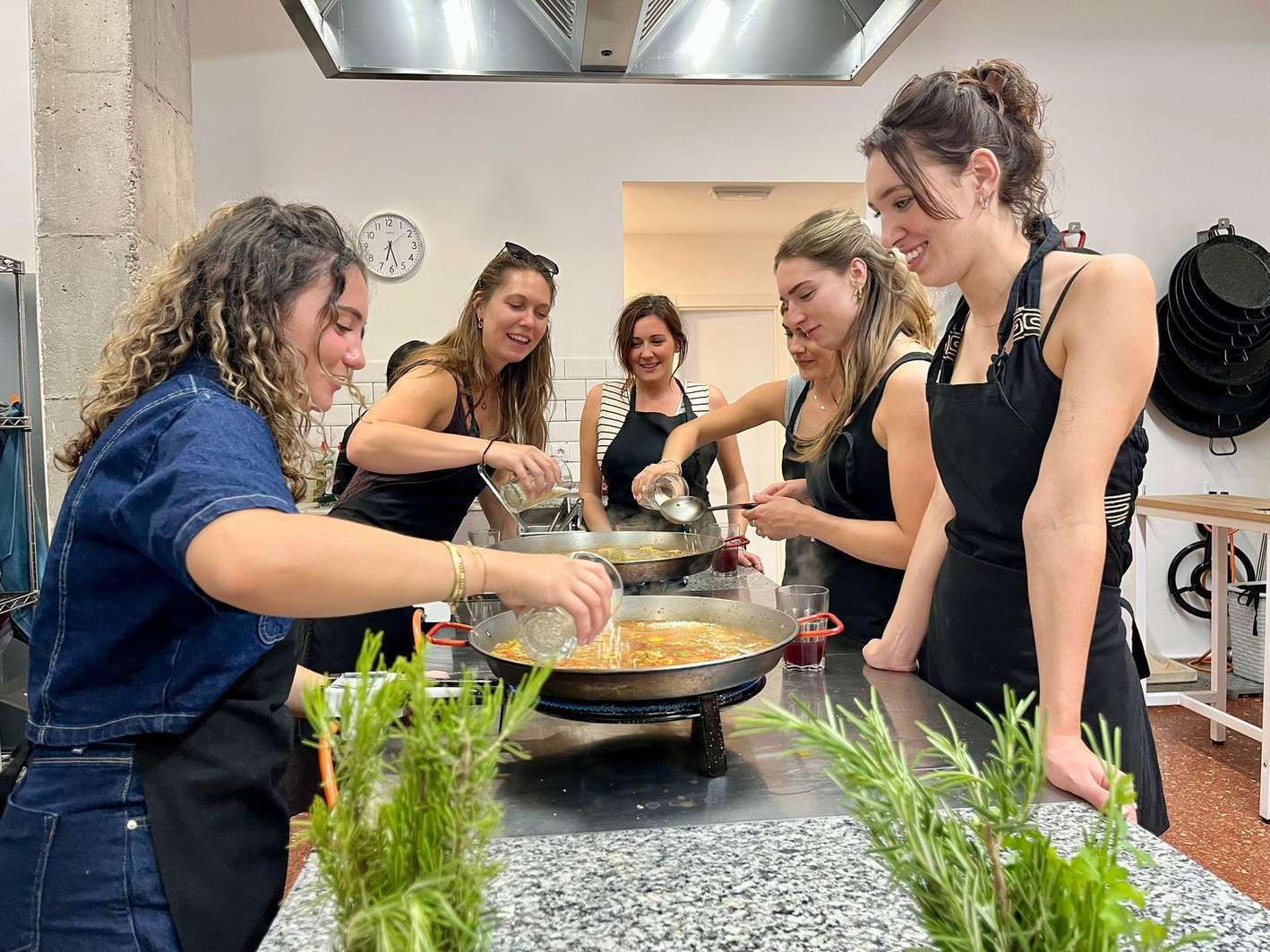
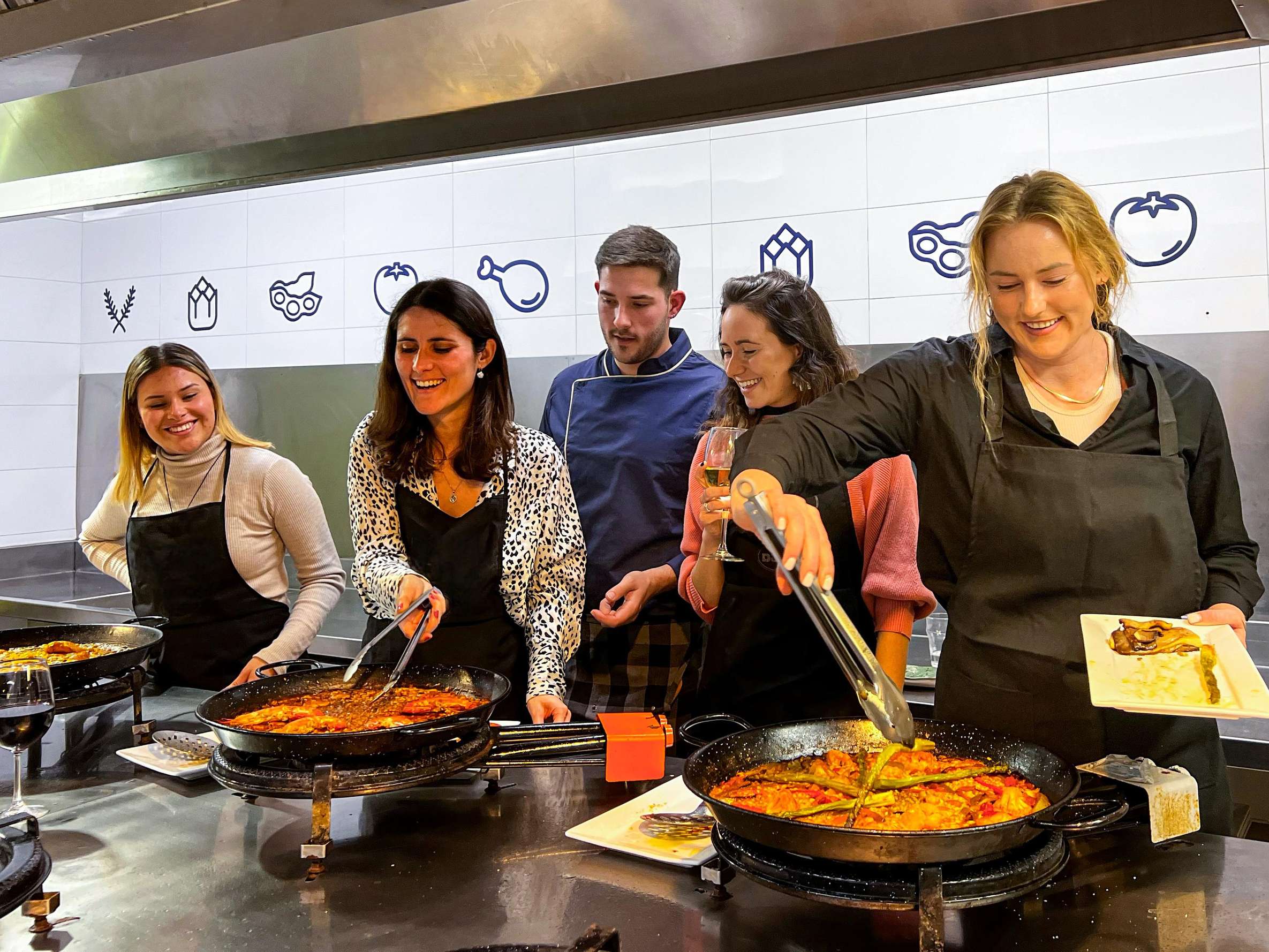
Work starts at your own station. You grate tomatoes for the sofrito, shell garrofó lima beans and snap bajoqueta green beans, and one of the quiet pleasures is that this is real work at a real burner.
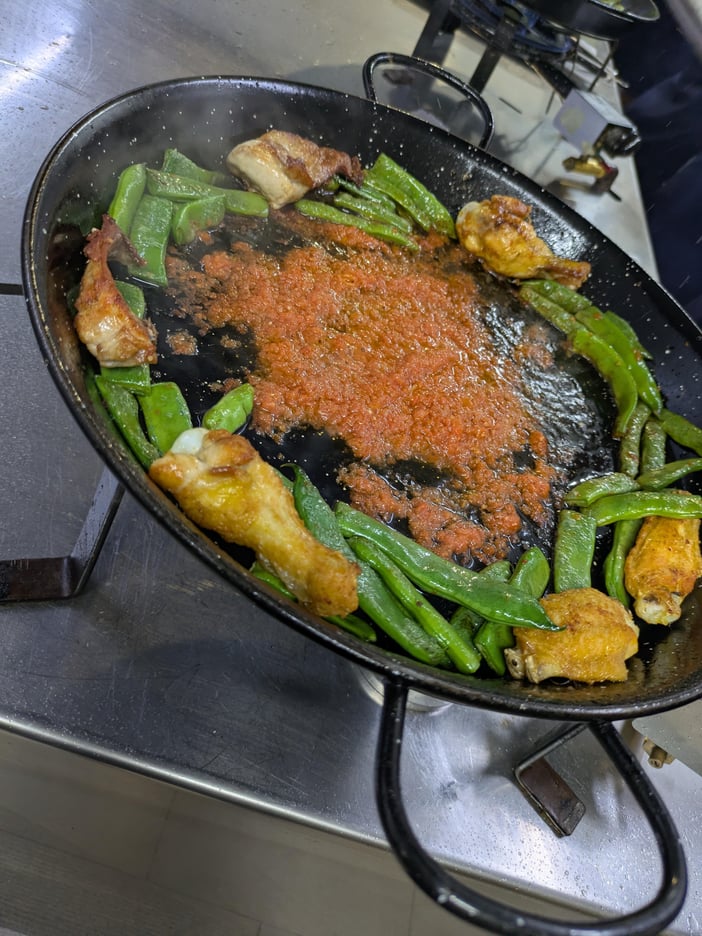
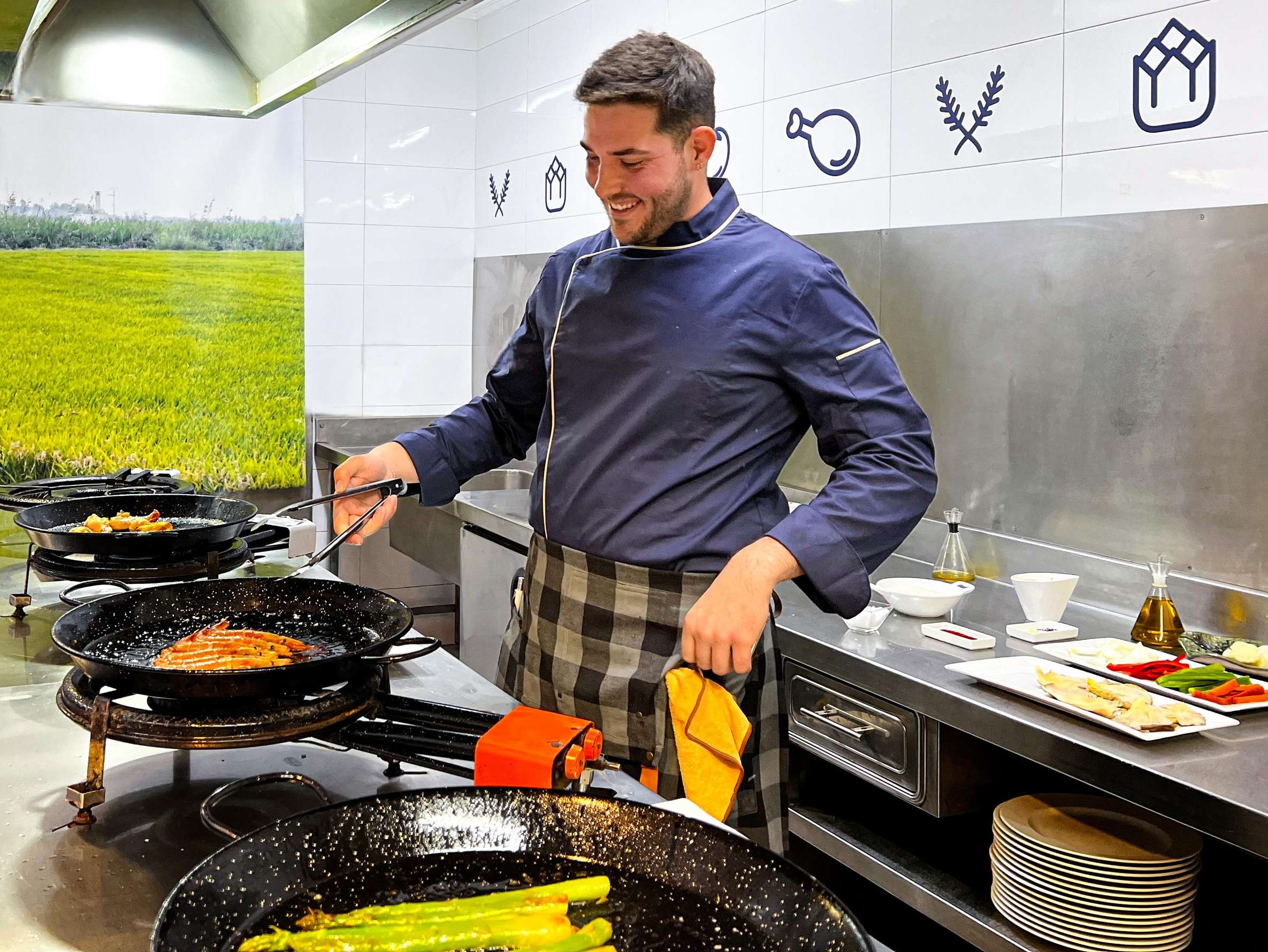
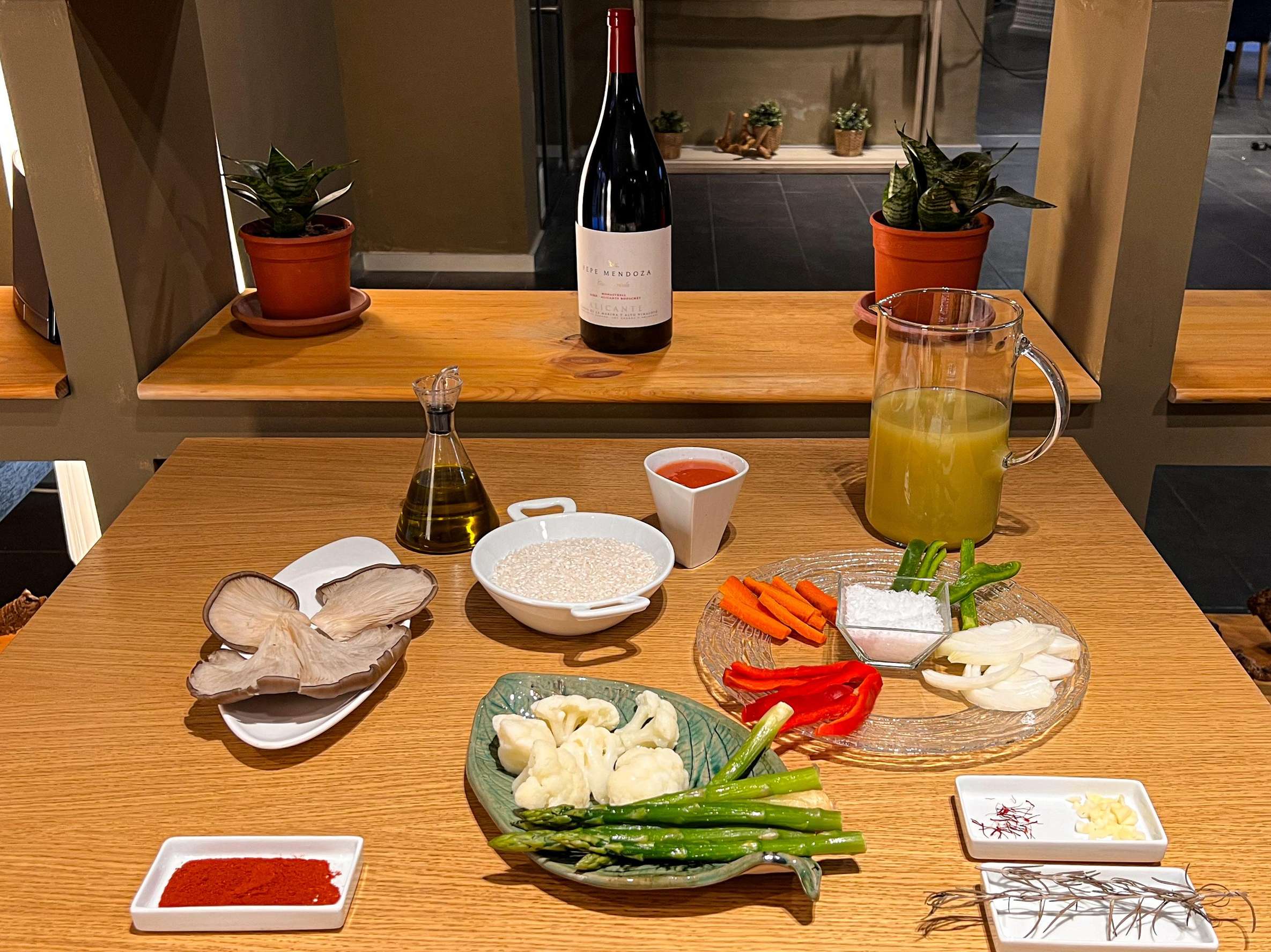
Olive oil goes into the paella pan with salt. Chicken and rabbit get browned hard and pushed to the edges, the beans caramelized in the center, and grated tomato with sweet paprika cooked down into the base.
Water, saffron and a sprig of rosemary follow, and the stock simmers down to the pan's rivets. Rice is poured in a cross or a diagonal line, then left alone: 8 to 10 minutes on a rolling boil without stirring, then low heat until the liquid is gone.
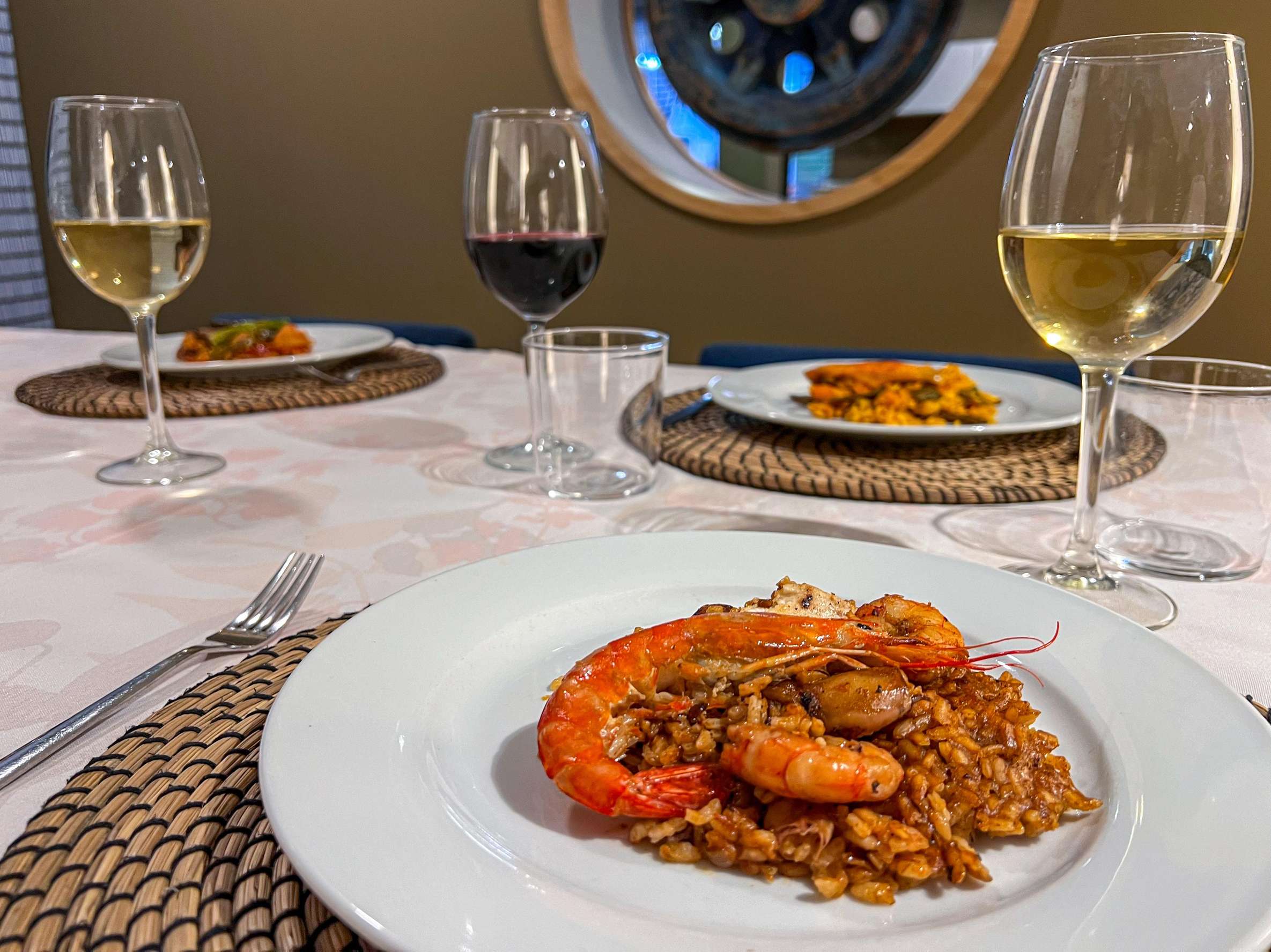
A few minutes of rest off the fire, and everyone sits down to the paella they built, with tapas, wine and dessert alongside.
- 1Market walkYour chef guides you through Mercado Central to buy the day's ingredients
Runs only on morning shifts, Monday to Saturday
- 2Prep at your stationGrate tomato, shell garrofó beans, snap green beans
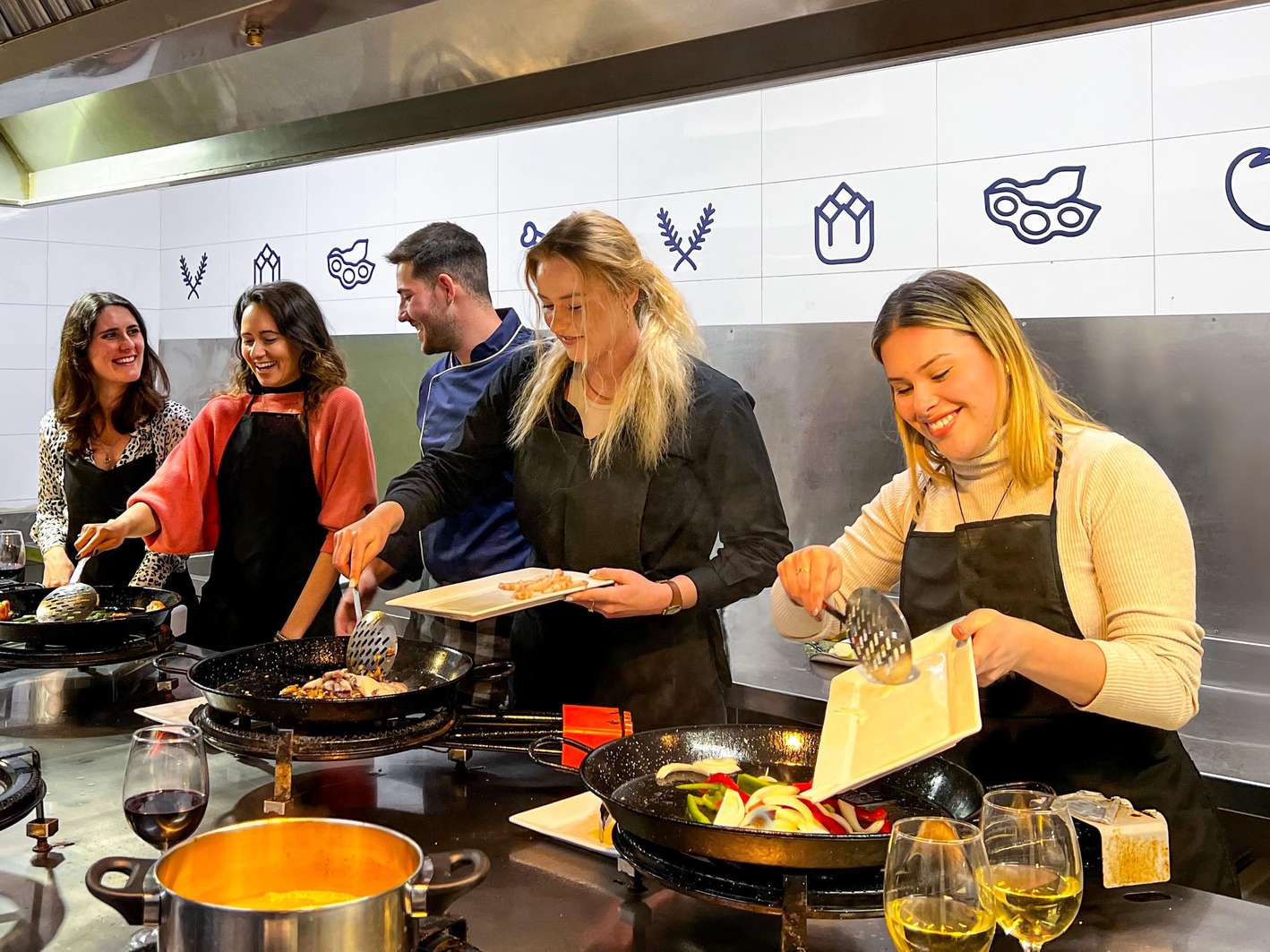
Every group of 1 to 3 people gets its own station
- 3Building the paellaBrown the meat, caramelize the beans, cook the sofrito
A professional chef guides each step
- 4The riceA hard boil without stirring, then a slow simmer until the broth is absorbed
The paella rests off the heat before serving
- 5LunchYou eat your own paella with tapas, wine and dessert
The session ends back at the meeting point
Portions run generous, and hosts hand out takeaway containers for what is left. You also leave with the written recipe, so the dish follows you home.
How to choose your path - guided tour or solo exploration
Doing it alone means finding the stalls, knowing which beans are the right ones, and coaxing a socarrat without a stove built for a pan wider than your hob.
A home burner leaves the outer ring of rice undercooked, because paella wants a flame as wide as the pan. That is the practical case for a guide, and it is a strong one.
Solo travelers have a second reason. Sit-down paella restaurants in Valencia nearly always require two people per pan, so a lone diner struggles to order one. A cooking class sidesteps that minimum entirely: you cook and eat as part of the group.
One booking rule to know: most workshops need at least 2 participants to run, and some need 2 people per paella type. If the numbers fall short, operators offer a reschedule, a transfer to another session such as a morning class, or a full refund.
The Valencia: Paella Cooking Class with Central Market Tour fits this path well: a guided shop at Mercado Central, then a step-by-step class in small stations with tapas, wine and dessert at the end.
Guided class or on your own
| Your chef picks and explains them at the stall | You guess at beans and rice by yourself | |
|---|---|---|
| Technique | A local chef corrects every move | A home stove leaves the pan edges undercooked |
| Solo travelers | No two-person pan minimum, you join a group | Most paella restaurants require two diners per pan |
| Market access | The guide knows the aisles and the vendors | Saturday crowds are hard to navigate alone |
- Technique
- A local chef corrects every move
- Solo travelers
- No two-person pan minimum, you join a group
- Market access
- The guide knows the aisles and the vendors
- Technique
- A home stove leaves the pan edges undercooked
- Solo travelers
- Most paella restaurants require two diners per pan
- Market access
- Saturday crowds are hard to navigate alone
Read that table against your own plans and the choice usually makes itself. A guide covers the ingredients, the technique and the solo minimum in one booking; going alone only pays off if you already cook rice dishes and know the city.
Vetting the experience - what to look for in a cooking class
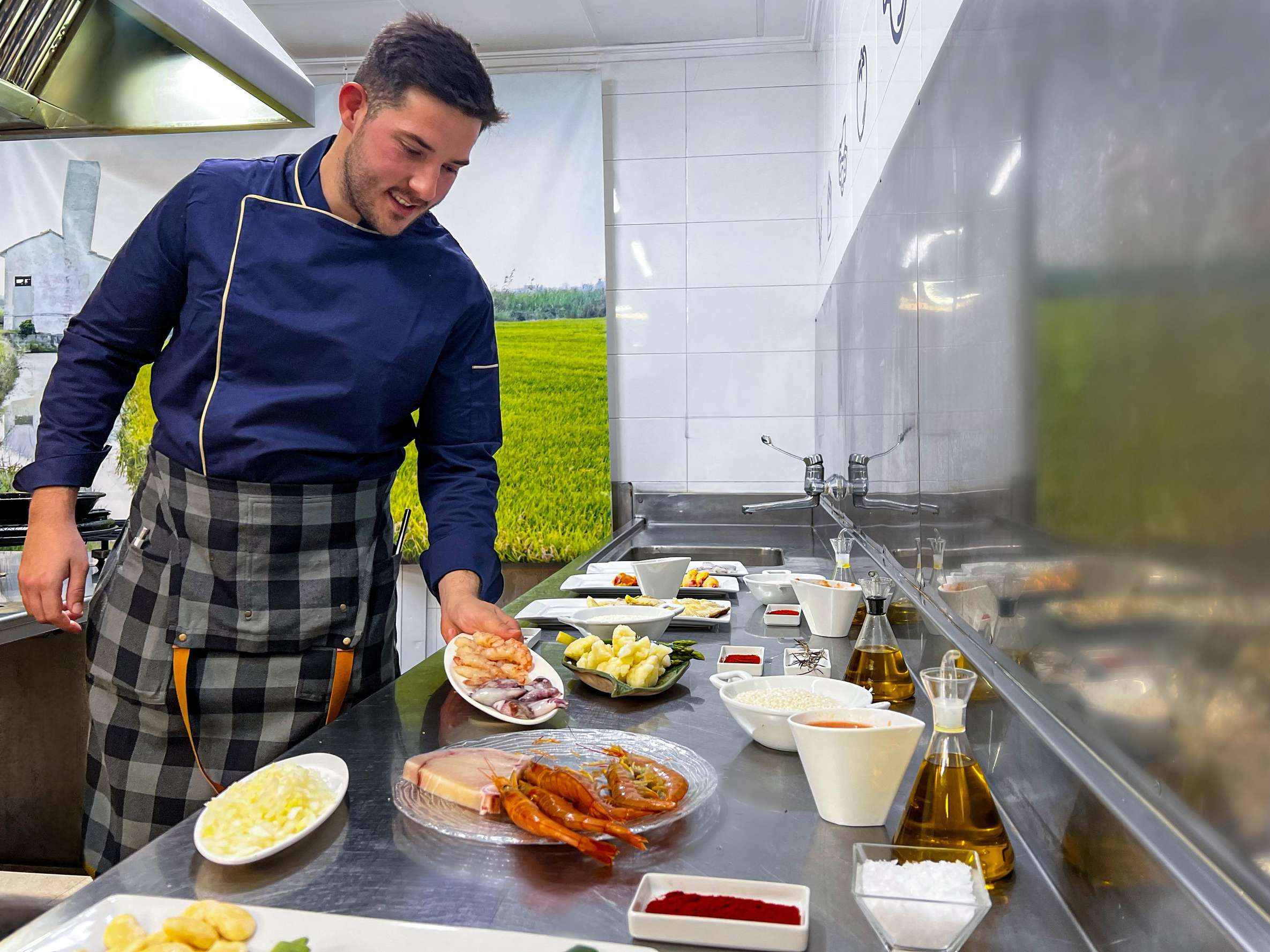
Two questions separate a good class from a watching-a-chef-cook session. First, ask how much cooking you do yourself and which steps you handle.
Second, ask how many people share a station, and whether each guest gets their own tools. A class billed as hands-on should put a knife and a pan in front of you within the first half hour.
Language is the other thing to pin down. Many public workshops run bilingually in English and Spanish, and private English instruction can depend on group size, so it is worth confirming before you book if the class is taught in a language you follow comfortably.
The Valencia: Paella Cooking Class with Central Market Tour answers the checklist cleanly: everyone gets their own cooking station for 1 to 3 people, the chef guides each step live, and the class runs in English.
How to choose a paella cooking class with a market visit
| Check | Why it matters | Our pick |
|---|---|---|
| Hands-on format | Demonstration classes leave you watching instead of cooking | Live step-by-step class with your own cooking station for 1 to 3 people |
| Station sharing | Fewer people per station means more pan time | Stations for 1 to 3 people, everyone cooks |
| Language | A class you cannot follow wastes the morning | Runs in English |
| Market included | Some classes skip the shopping entirely | Guided trip to Mercado Central on morning shifts, Monday to Saturday |
On the practical side, access and flexibility matter too, and the finer points are worth a look before you commit.
- A guide with youInstructor
- Free cancellationCancel up to 24 hours in advance for a full refund
- Book now, pay laterReserve your place and pay closer to the date
- Hotel pickupNo, you meet at the start
- Wheelchair accessibleYes
- Your languageEnglish
Free cancellation up to 24 hours ahead and wheelchair-accessible facilities are both in place on this tour, so the booking can be made early without risk.
Exploring the magic of the historic center
Full of paella and wine, you step out into the old town with the afternoon still ahead of you, and the sights start immediately.
La Lonja de la Seda, the fifteenth-century silk exchange, stands right beside the market, with the Iglesia de los Santos Juanes directly in front of it. You do not plan these two; you trip over them on the way out.
From there the center opens up. Plaza Redonda, a round little square ringed with stalls, sits a few minutes off.
Valencia Cathedral and the Miguelete bell tower, the square Gothic tower every local uses as a landmark, are both within a short walk, and Torres de Quart, the medieval gate still carrying cannonball scars, closes the loop on the other side.
- 1el Lorito Parkpark or garden1 min walkDirections
- 2Construccion Piscinaspark or garden2 min walkDirections
- 3Molí d'Arròsmuseum2 min walkDirections
Show all 10 places
- 4Oficina de Turismo de Almenaramuseum2 min walkDirections
- 5Plaça de l'Esglésiahistoric place2 min walkDirections
- 6Sports Fieldpark or garden3 min walkDirections
- 7Lavadero Público de Almenarahistoric place3 min walkDirections
- 8Antic safareighistoric place3 min walkDirections
- 9Plaça la Fonthistoric place3 min walkDirections
- 10Tenis Almenarapark or garden3 min walkDirections
- 1Torre de Benaviteshistoric place16 min driveDirections
- 2Sagunto Roman theatrehistoric place19 min driveDirections
- 3Ara Christi Charterhousetemple, shrine or church22 min driveDirections
- 4Ermita de Sant Jorditemple, shrine or church22 min driveDirections
- 5Orange Museummuseum29 min driveDirections
None of these need tickets or planning ahead. A slow loop through the old town fills the rest of the afternoon, and every stop on it sits within a short walk of where you ate.
What to know before you book a Central Market paella class
Mercado Central opens for shopping Monday to Saturday, 7:30 am to 3 pm, and closes on Sundays and public holidays. Evening classes can never include the market walk for that reason.
A closed market does not cancel your class. Tours run anyway, skip the market visit and give you extra cooking time in the kitchen instead.
Tuesday to Friday between 9:30 am and 11:30 am is the calm window, with room to move through the aisles and stallholders who have time to talk. Saturday mornings from 10 am get crowded with locals doing their weekly shop.
Market-to-kitchen classes in central Valencia usually meet in the Old Town, near the market. The lead class starts close to Plaza de la Virgen before walking into Mercado Central together.
On the lead class every group of one to three people gets its own cooking station and works through each step with the chef. Check the experience description before booking if you want to know whether pans are individual, paired or shared.
A true Paella Valenciana is chicken, rabbit and local broad beans, sometimes with snails. Many venues happily make it with chicken and no snails, and seafood or vegetable versions are usually possible on request.
Sangria, wine and beer flow throughout the cooking session on most classes, so the glass is already in hand while you cook. Valencian DO wine, beer and mistela often appear with the meal too.
Wear closed-toe shoes with good grip for the wet market floor, plus clothes you do not mind getting messy. Aprons are provided, so roll up your sleeves and keep them fitted around the open burners.
Portions run generous, and hosts hand out takeaway containers so you can carry leftover paella back to your room. You also get the written recipe to cook it at home.
The classes on this page let you cancel up to 24 hours in advance for a full refund. Book early for a weekend morning and you can still change your mind.
Worth it, in the morning
This is the class for travelers who want the shopping as much as the cooking: a chef-led walk through Mercado Central, then your own station and a paella you built yourself. Book a Tuesday-to-Friday morning shift and it delivers exactly what the name promises.
If you land on a Sunday, or you would rather cook in the evening, look at a class without the market walk instead.
Paella cooking class with Central Market Tour - your questions answered
How much time do we actually spend inside Mercado Central?+
The market walk is the first stretch of the class: you meet your guide close to Plaza de la Virgen, shop the stalls for the day's ingredients, then head to the kitchen. Sunday and evening sessions skip the market because it closes at 3 pm, and those run about 3 hours instead of 3.5.
Is the cooking hands-on or do we just watch a chef work?+
You cook. Each small group of one to three people gets its own station, and the chef walks you through every step from sofrito to the final simmer. If you want to confirm the setup for a given class, check whether the description mentions individual stations and pans before you book.
When should I visit the market for the best experience?+
Tuesday to Friday between 9:30 am and 11:30 am brings lighter foot traffic and stallholders with time to talk. Saturday mornings between 10 am and 3 pm are the busiest hours, when locals' weekly shopping overlaps with guided groups in the aisles.
What goes into a traditional Valencian paella?+
Purists keep it to land meats and garden vegetables: chicken, rabbit, sometimes snails, and local broad flat beans like garrofó. Seafood versions exist, but locals call those arroz de marisco rather than paella Valenciana.
Can the class work around what I do not eat?+
Most venues can prepare the traditional paella with chicken and no snails, and vegetable or seafood versions are usually available on request. Mention it when you book so the kitchen plans for it.
Can I join on my own, or is there a two-person minimum?+
Solo travelers book cooking classes without any problem. The two-person minimum applies to sit-down paella restaurants, not to classes, where you cook and eat with the group.
What should I wear to the market and the kitchen?+
Closed-toe shoes with a good grip handle the market's wet floors, and long pants plus fitted sleeves protect against oil splatter beside the open gas burners. Cushioned sneakers are a good call, since you stand for hours. The workshop provides aprons.
What do we drink with the paella, and is food included?+
Classes pour Valencian DO wine, sangria, beer, and mistela, a low-alcohol wine liqueur, with tapas or appetizers served while you cook. Portions run generous, so hosts often hand out takeaway containers for what you cannot finish.
Will I be able to make paella back home afterward?+
Yes. Hosts share the detailed recipe after the workshop so you can recreate the dish in your own kitchen. One thing to know: a wide paella pan needs an even burner matching its diameter, so on a standard home stove the edges may cook unevenly.
Are children welcome at these classes?+
It depends on the class. Some workshops accept children across age bands from 3 and under up to 12 to 17, while others do not permit children aged 4 and younger or are not suitable for those under 2. Check the age rule for the specific session before booking.