- 1
Book a morning class on a Monday-to-Saturday date so the market visit happens; markets shut at 3 pm and close entirely on Sundays and public holidays.
- 2
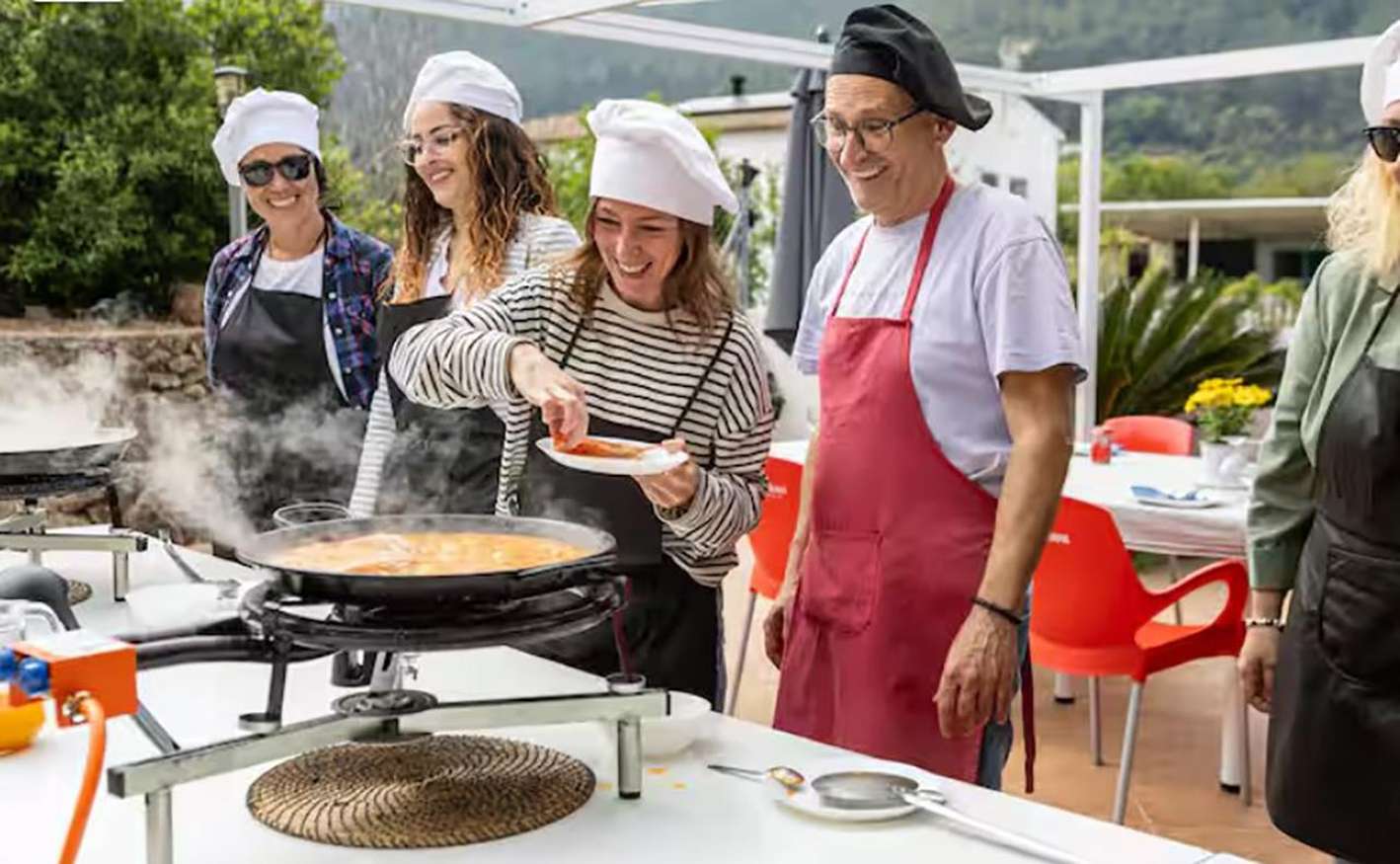
Wear closed-toe shoes and long pants, because you cook over open gas burners with oil that spits; the apron is provided.
- 3
The rice boils unstirred for about 8 to 10 minutes, then simmers 20 minutes in total, and the crackling sound tells you the socarrat has arrived.
Vegetarian paella class in Valencia - what travelers said in reviews
The chefs treated them like family, trading jokes and local stories while everyone cooked.
Many travelers arrived for the paella and left raving about the sangria making, tapas and market stroll.
Several reviewers wished the final meal let everyone taste each group's paella alongside their own pan.
 ★★★★★
Anna was a wonderful chef instructor, charming, funny and knowledgable.
Sandra · Canada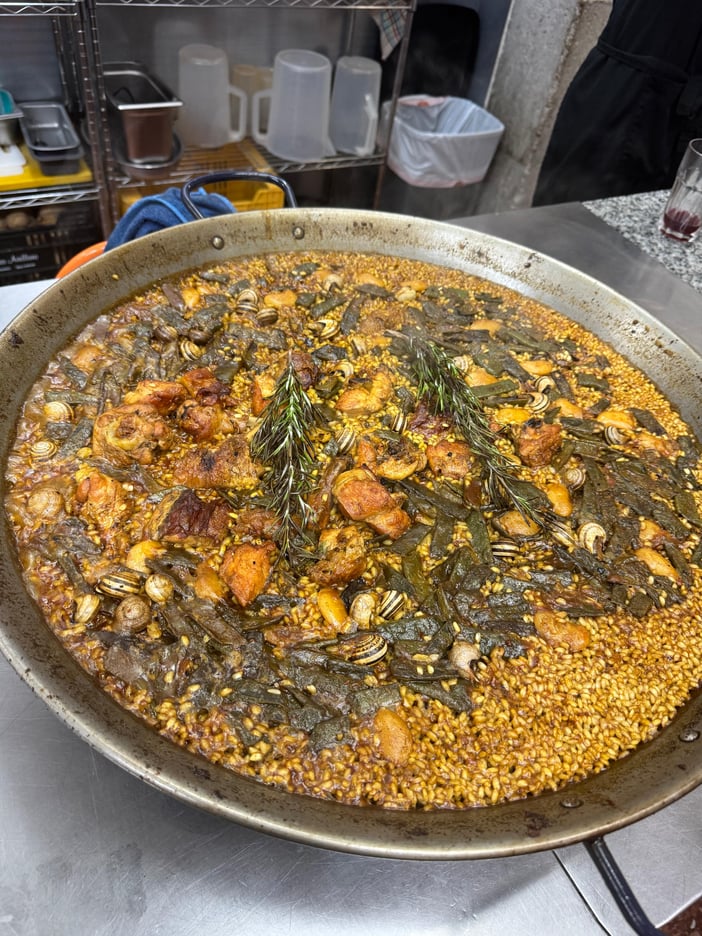 ★★★★★
Perfect experience, highly recommend. Guillermo and Anna were fantastic guides, making the class fun and instructive. Great way to learn authentic Valencian paella, and cooking together as a team was a blast.
Daniel · Netherlands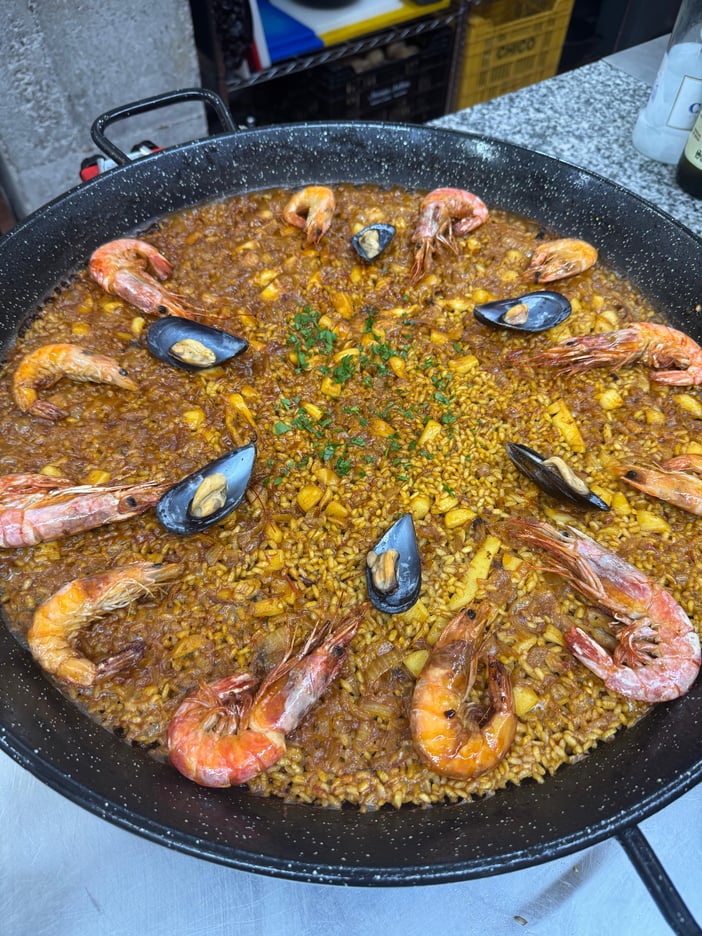 ★★★★★
Fantastic show! The food was delicious and generous, the host was great, and the dancers and guitar players were amazing. So friendly, I'd do it all again. Highly recommend!
Michelle · United States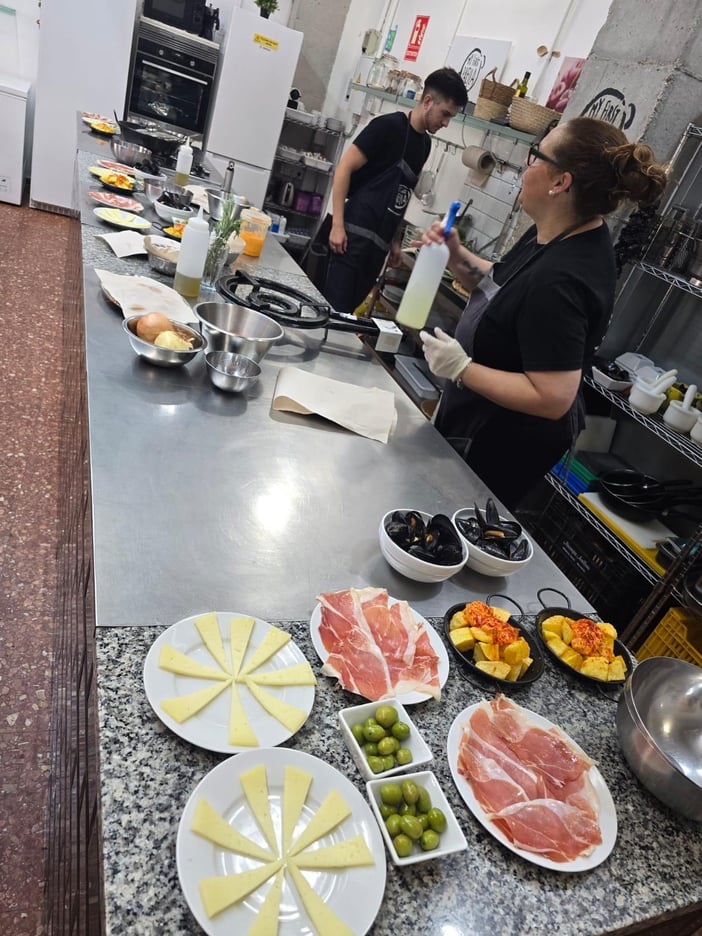 ★★★★★
Jose, Guillermo and Christina were amazing! They made us feel like one big family while exploring the market and preparing our paella, learning the process and traditions along the way. Highly recommend!
Eric · United States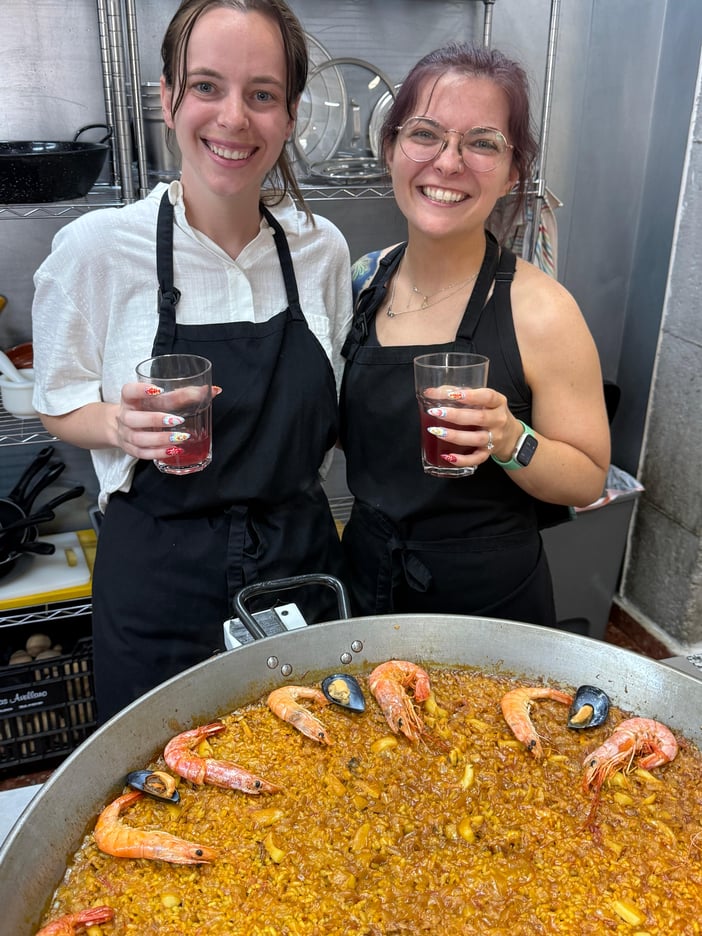 ★★★★★
Loved the staff and fellow attendees, everyone happy and having fun, preparing a very tasty meal together.
Mike · United States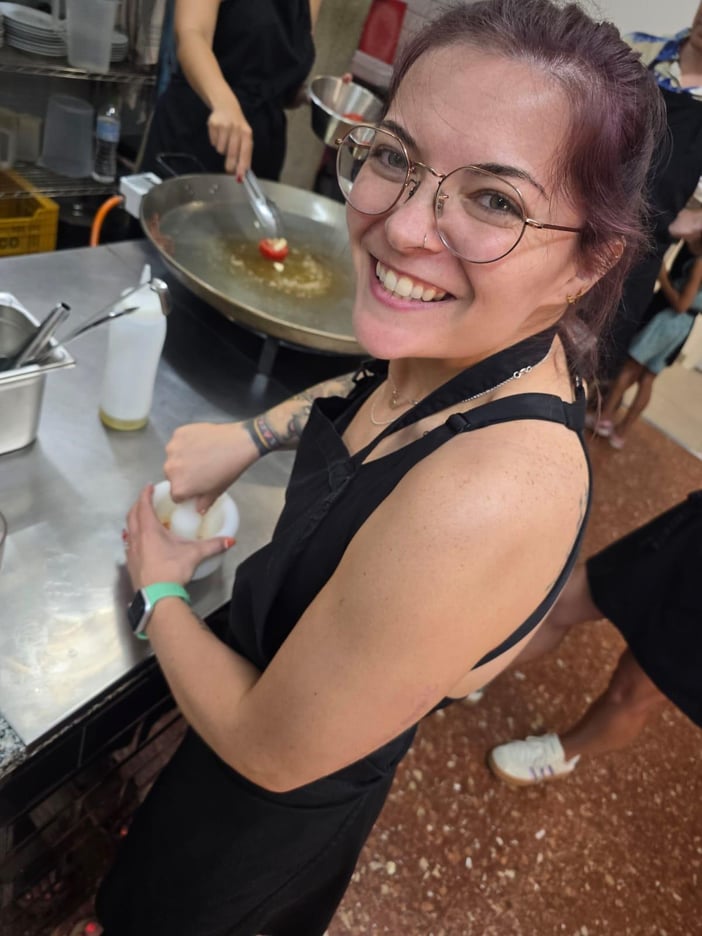 ★★★★★
The whole experience was awesome! Our instructors were knowledgeable, friendly, and their English was great. The food tasted amazing! Thanks Miguel and Joseph :))
Rhonda · Canada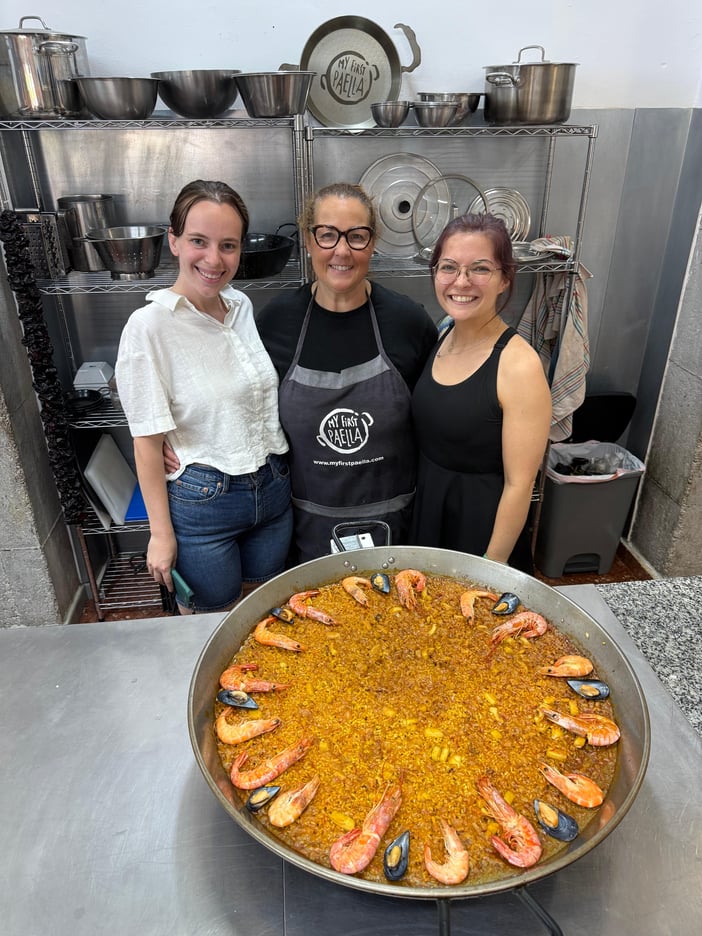 ★★★★★
Amazing experience! We had a great time, learned a lot, and the paella was delicious. Guillermo, Christina, Nico and Miguel were so much fun and knowledgeable.
A traveler · United States
What vegetarian paella in Valencia really is, and why it is worth learning
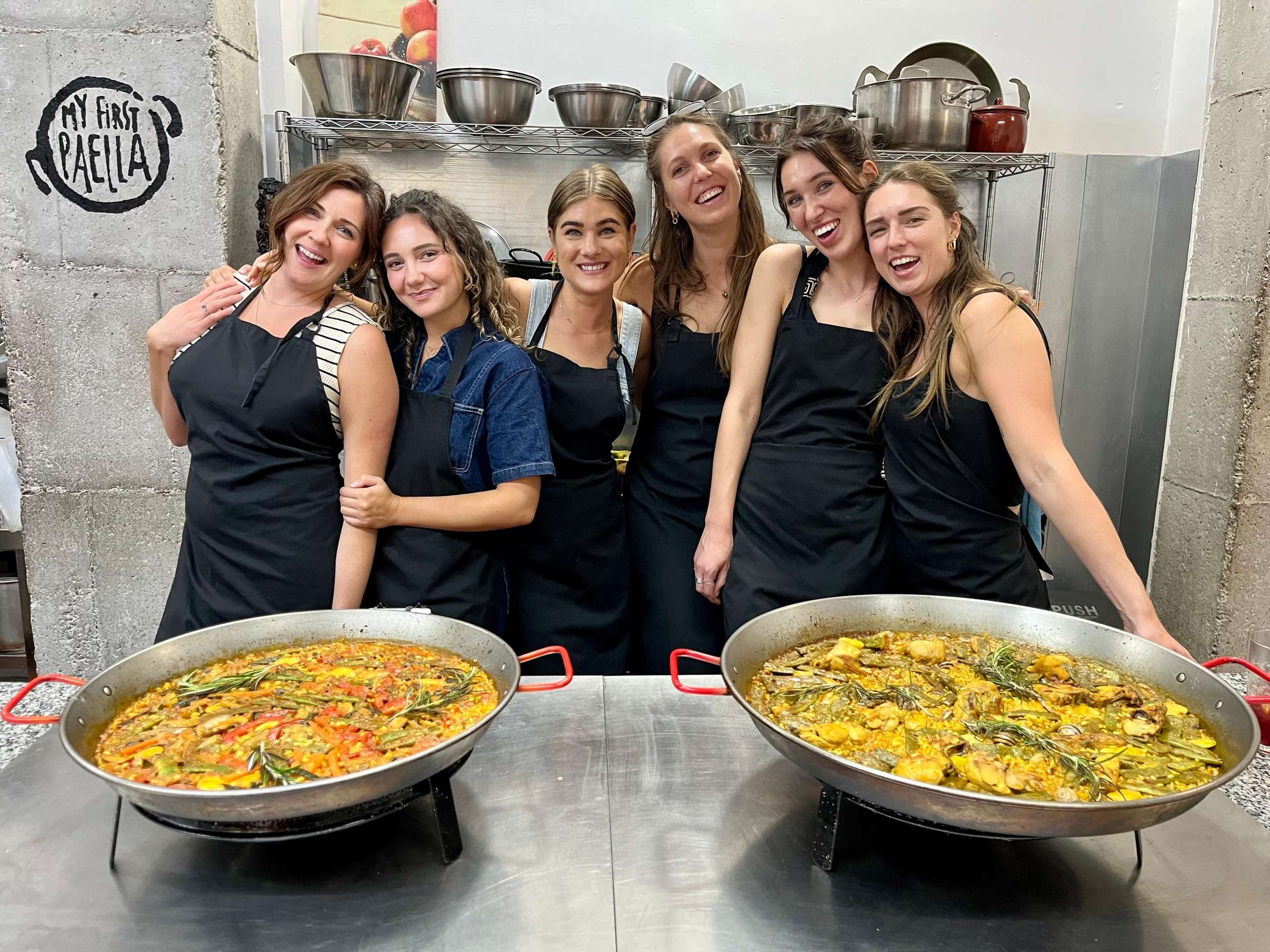
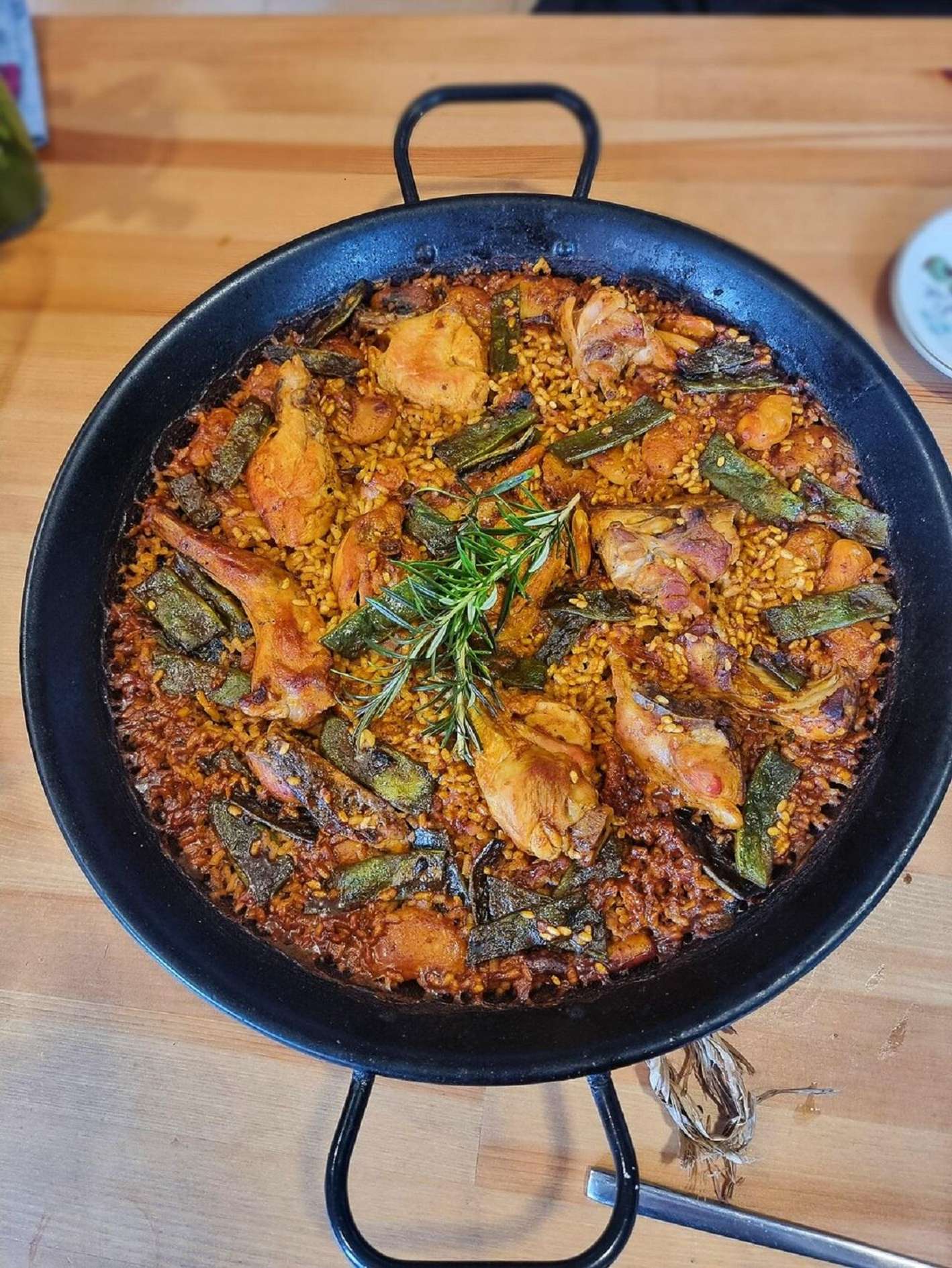
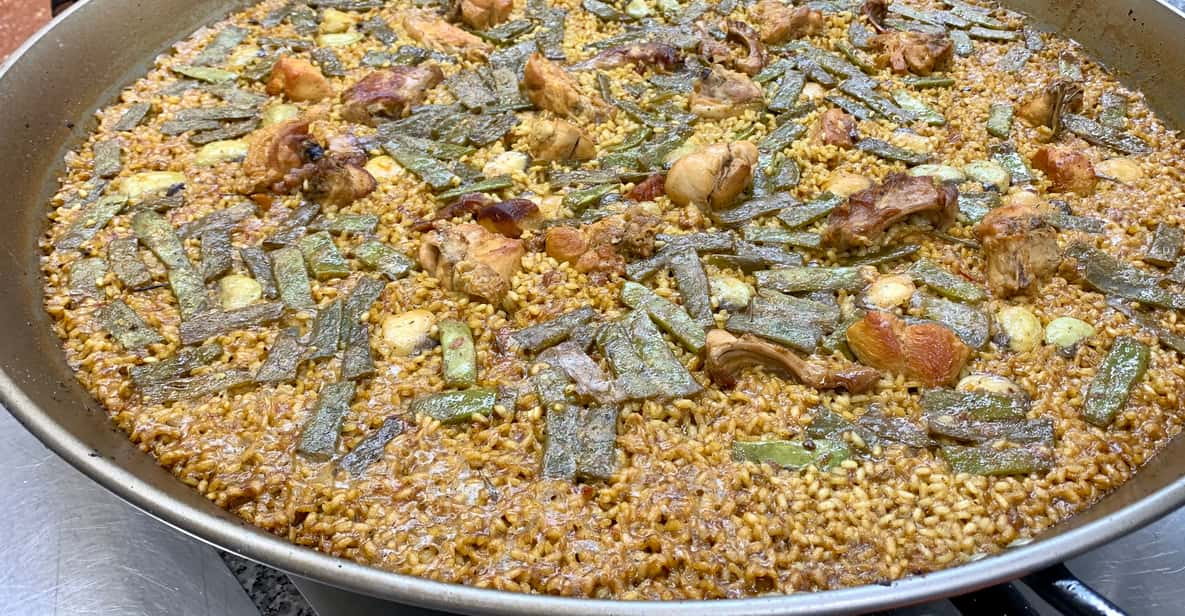
The huerta around Valencia has fed this city for centuries, and its harvest is what fills a proper paella de verduras: flat bajoqueta green beans, big buttery garrofó lima beans, artichokes, grated tomato for the sofrito, and, depending on the season, broad beans, peppers, spinach or Swiss chard.
This dish has its own name and its own rules. It is a regional recipe with history behind it.
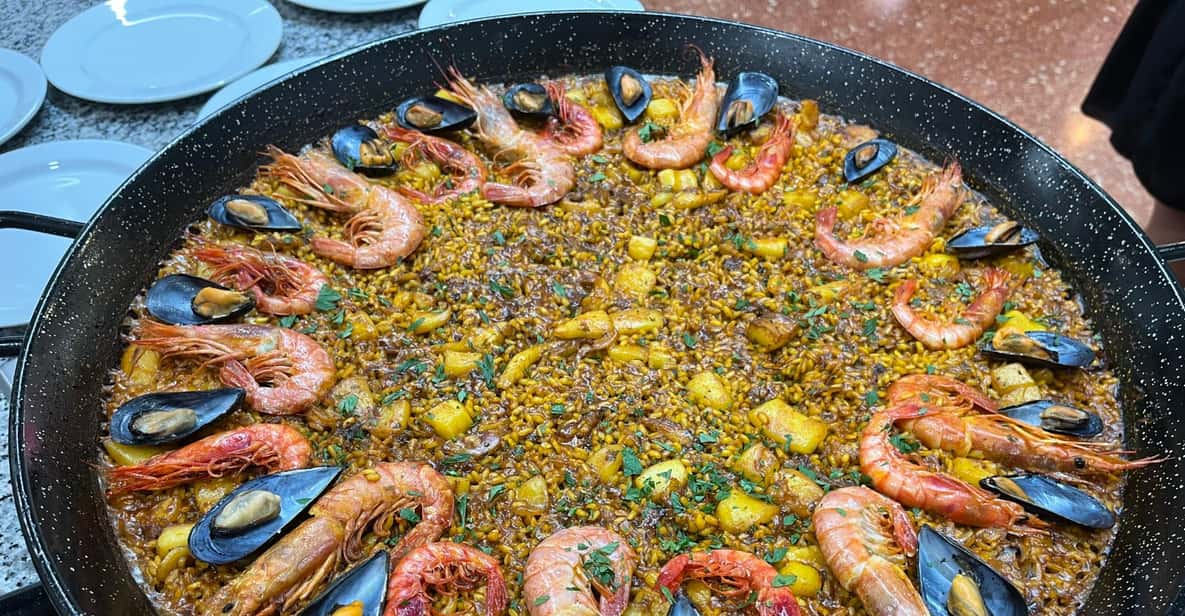
Those rules matter here. Valencians guard the word paella closely. Purists define Paella Valenciana strictly around land meats and local beans, call seafood versions arroz de marisco, and treat a chorizo in the pan as a small culinary crime.
Within that same tradition sits the garden paella, a recipe built on local produce that stands complete in its own right.
That is the point worth an afternoon. You learn a dish Valencians recognize and cook with pride, one that fills the pan the same way the meat version fills it: saffron, sofrito, and the socarrat scraped and shared at the end.
Paella de verduras is its own authentic recipe built on huerta vegetables: beans, artichokes, tomato sofrito and saffron
Valencians consider chorizo, peas and mixed meat-and-seafood pans a departure from regional ingredients
Purists reserve the name for land meat and local beans; seafood versions are called arroz de marisco
Whichever of those you arrived carrying, the pan settles it. Order the vegetable workshop and you spend the day cooking the real thing.
How Valencia cooking classes handle vegetarian and vegan diets
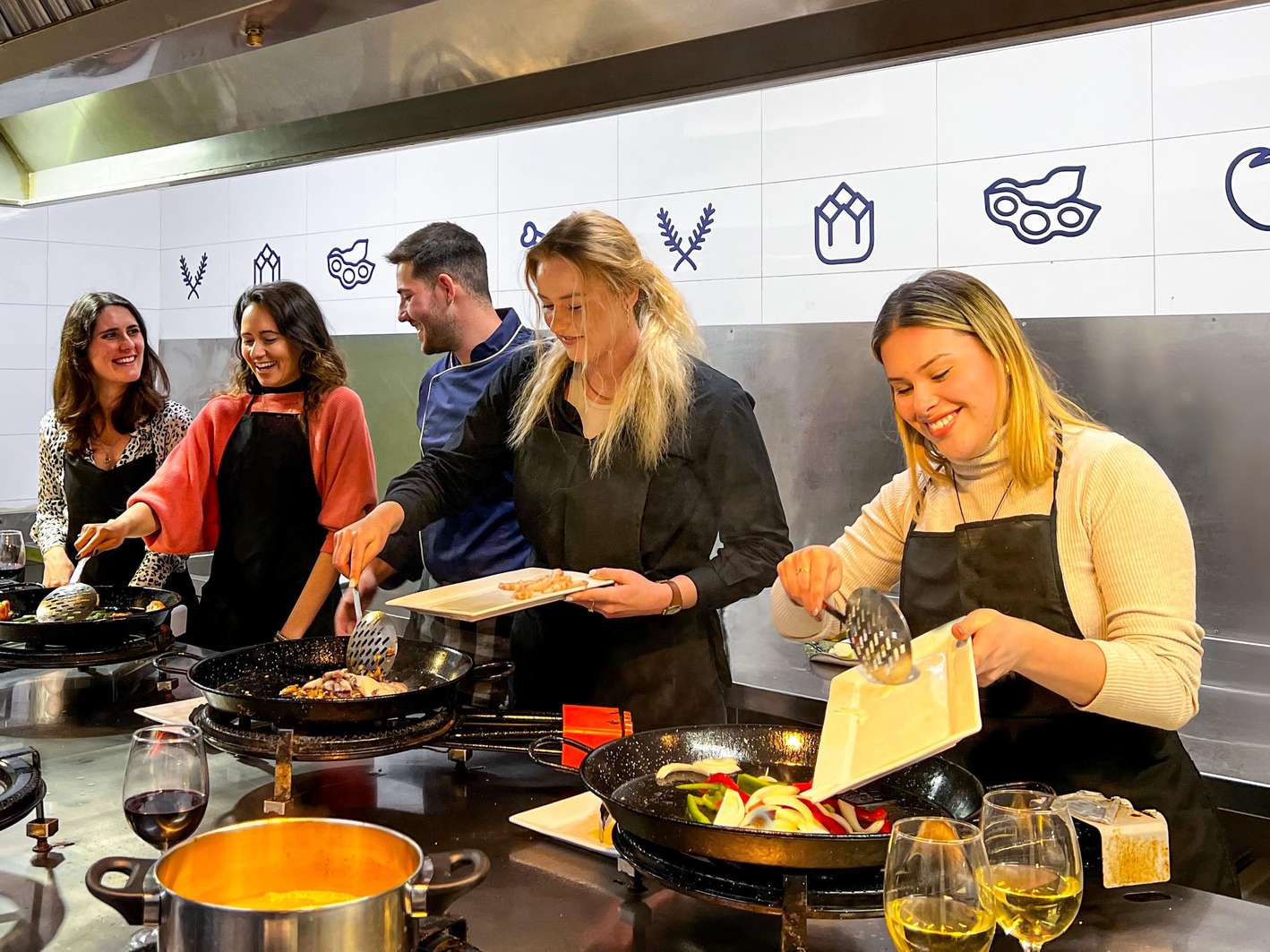
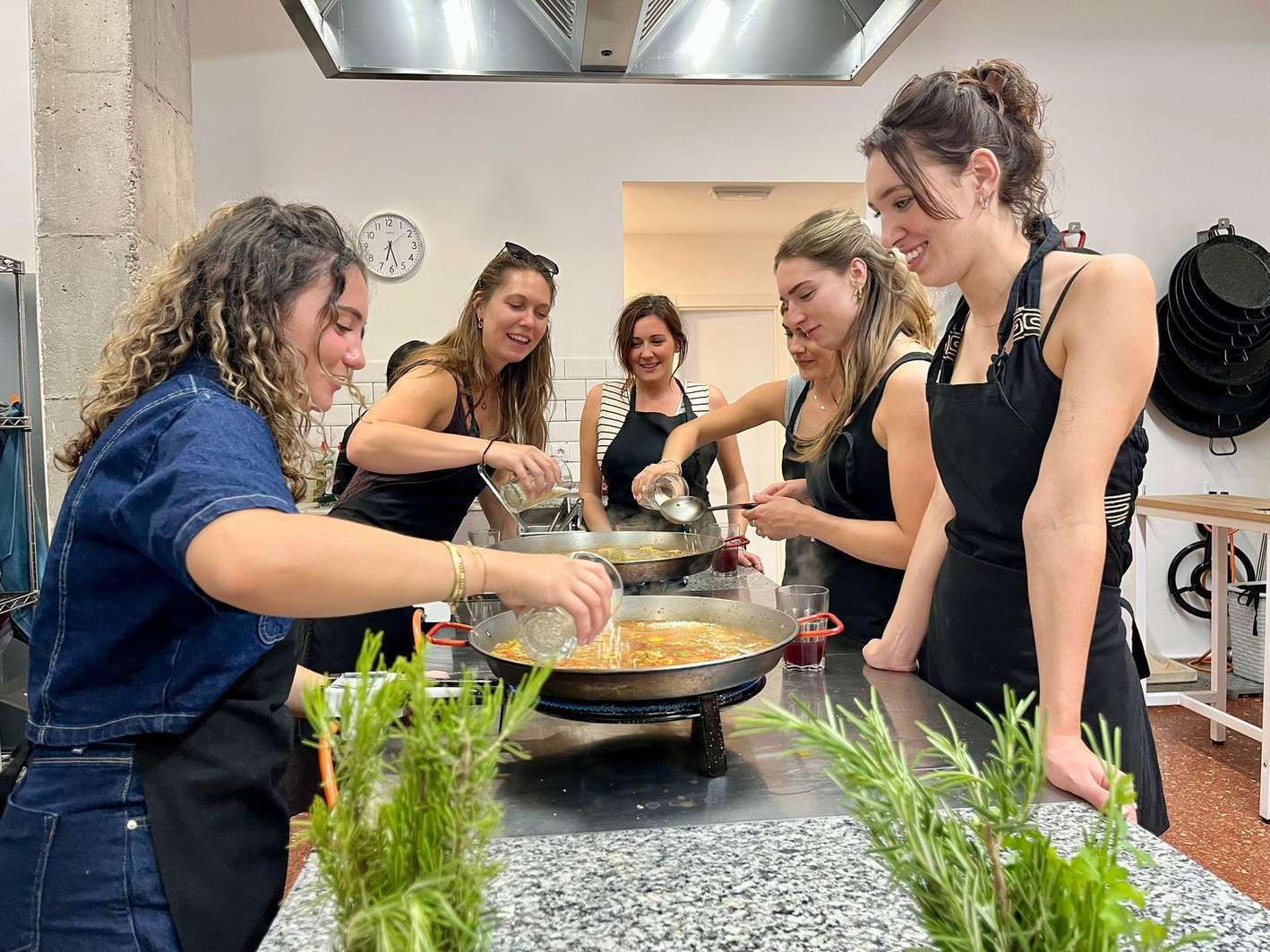
Here is the worry, answered head-on. Many workshops in Valencia run several pans at once and let guests pick their style: classic Valencian, seafood, or vegetarian, cooked in its own pan at its own station.
You cook alongside the meat and seafood eaters, at the same burner line, eating at the same table. Nobody hands you a sad plate of sides.
One question is worth asking before you book: is the broth a vegetable stock, made without any chicken base in it? The dish itself is on your side.
Rice, beans, vegetables, olive oil, saffron and a homemade vegetable broth make a traditional vegetable paella naturally gluten-free; the gluten risk only creeps in through commercial stock cubes and pre-mixed seasonings.
Vegans have a route too. Private groups can set up an entirely plant-based multi-course meal, from vegan tapas through the vegetable paella to a vegan dessert. And language rarely gets in the way: most public workshops run bilingually in English and Spanish.
Perfect experience, highly recommend. Guillermo and Anna were fantastic guides, making the class fun and instructive. Great way to learn authentic Valencian paella, and cooking together as a team was a blast.
That warmth is the norm in these kitchens, and plant-based guests sit inside it. If you want the whole kitchen to yourself, that is where a private class earns its keep.
One chef in the old town runs a 2.5-hour private paella class with five rice dishes to choose from, and once you book he contacts you directly to sort dietary restrictions, so your requirements are agreed before you ever arrive.
When to book your paella class - seasons, mornings and market days
Lunchtime wins, and not by taste alone. Paella is traditionally the big midday meal in Valencia, and the municipal markets shut at 3 pm, so market visits run only on morning departures from Monday to Saturday. Evening workshops skip the market entirely and cook with pre-sourced ingredients.
The season decides what lands in your pan. Winter brings artichokes as the star, alongside chard, cauliflower and broad beans from December to February.
Summer hands you Valencian tomatoes, peppers, aubergines, courgettes and fresh garrofó. Cook in spring or autumn and you get both the mildest kitchen, with daytime highs in the low twenties, and the fullest harvest.
July and August are a different kitchen: highs past 30°C beside the burners, which is when an air-conditioned venue earns its keep. Bookings quiet down in summer and peak in September and October.
Two calendar quirks to know: Sundays and public holidays close both main markets, so classes run kitchen-only and about half an hour shorter, and one neighborhood market closes for all of August.
September: 5 out of 5 for how busy it gets.
Tap a month to read it.
The bars tell you where the crowds sit: September and October fill first, while the quiet winter weeks and midsummer leave studios with room. If your dates bend either way, the quieter months get you the same pan with more of the chef's attention.
Getting to your cooking class in Ciutat Vella and Ruzafa
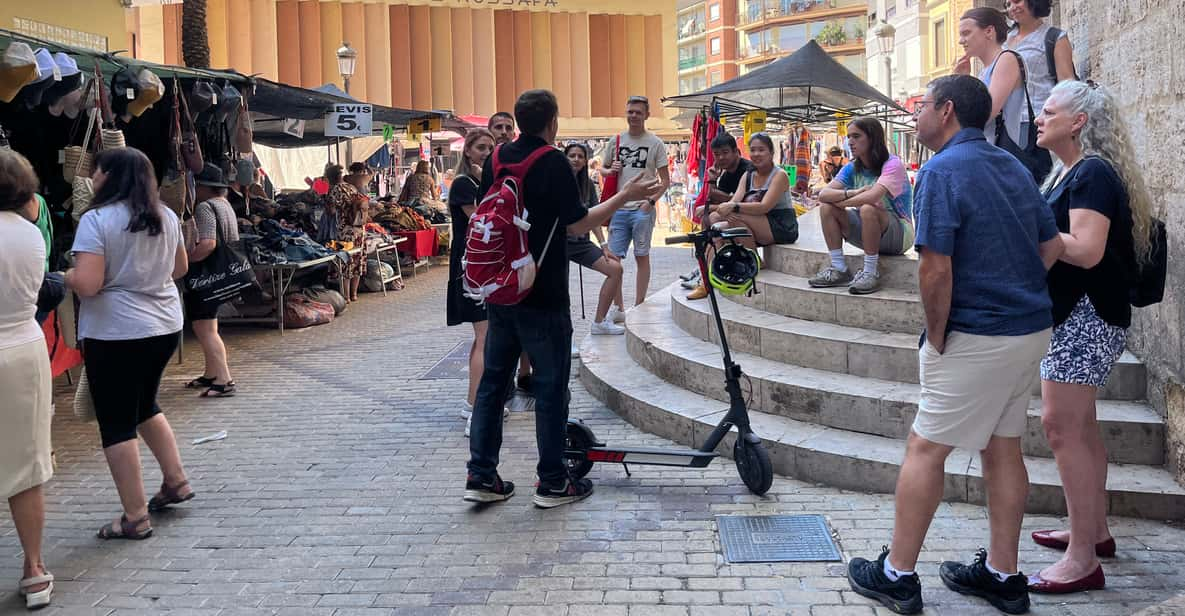
Valencia's metro has one honest quirk: the trains never enter the old town. You ride to a perimeter station, Xàtiva, Colón or Plaça d'Espanya, and walk the last stretch into Ciutat Vella, or take an EMT bus such as lines 4, 27 or 32 straight into the historic center.
For studios in Ruzafa, the walk from Colón or Xàtiva is short, or Metro Line 10 and buses 6, 14, 40 and C3 cover it. Meeting points for market-to-kitchen classes cluster in the old town, so check your confirmation for which side of the center you are aiming at.
Either way, leave twenty minutes of slack. You do not want your first impression of the kitchen to be arriving late and out of breath.
What to wear and bring to a paella cooking class
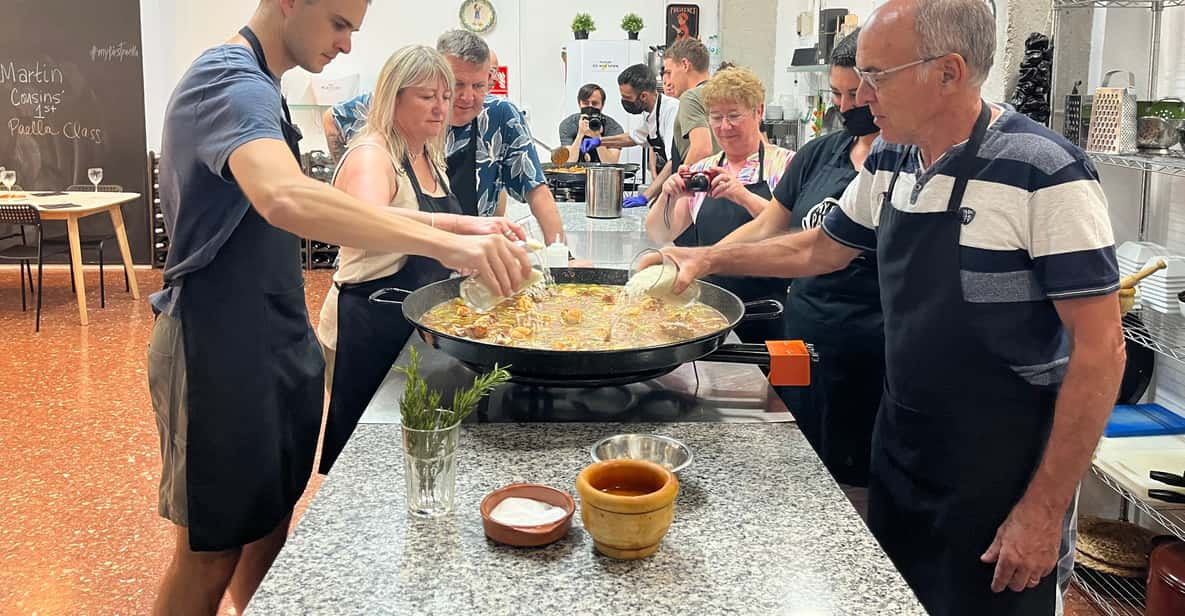
Gas burners and paella pans have opinions about clothing. Oil spits when the sofrito hits the pan, and loose sleeves over an open flame are how afternoons go wrong. The rule the chefs give: closed-toe shoes, long pants, and a fitted top with no dangling fabric.
Keep it casual too. Tomato, olive oil and saffron stain, and you will be grating tomatoes at your own station. Wear something you would happily wash. An apron is typically provided, so you only need to dress sensibly below it.
- Closed-toe, non-slip shoesProtects your feet from hot oil splatters and dropped kitchen tools while standing near open gas flame burners.
- Long pants or jeansShields legs from spitting hot oil when frying meat and sofrito vegetables over wide burner rings.
- Fitted top with modest coverageAvoids dangling fabric near open gas flames while keeping arms protected from popping oil.
- Casual, stain-tolerant fabricsOlive oil, tomato sauce, and saffron easily stain clothing, so select everyday garments you do not mind washing.
- Hair tie or bandSecures long hair away from gas flames and cooking pans during hands-on kitchen preparation.
Long hair wants tying back before the burners light. That is the whole preparation list; nothing else in your suitcase decides the day.
Your paella class step by step, from market stall to socarrat
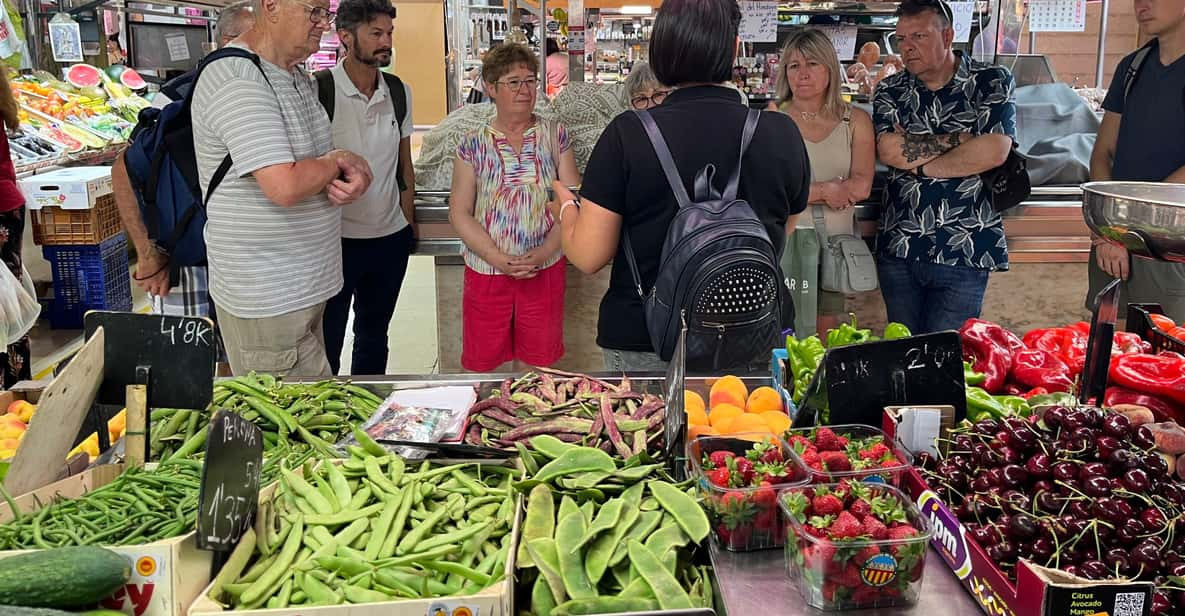
Morning starts at the market. Ruzafa Market is the neighborhood one where locals do their daily shopping, baskets of green beans and garrofó on the stall, your chef choosing with you.
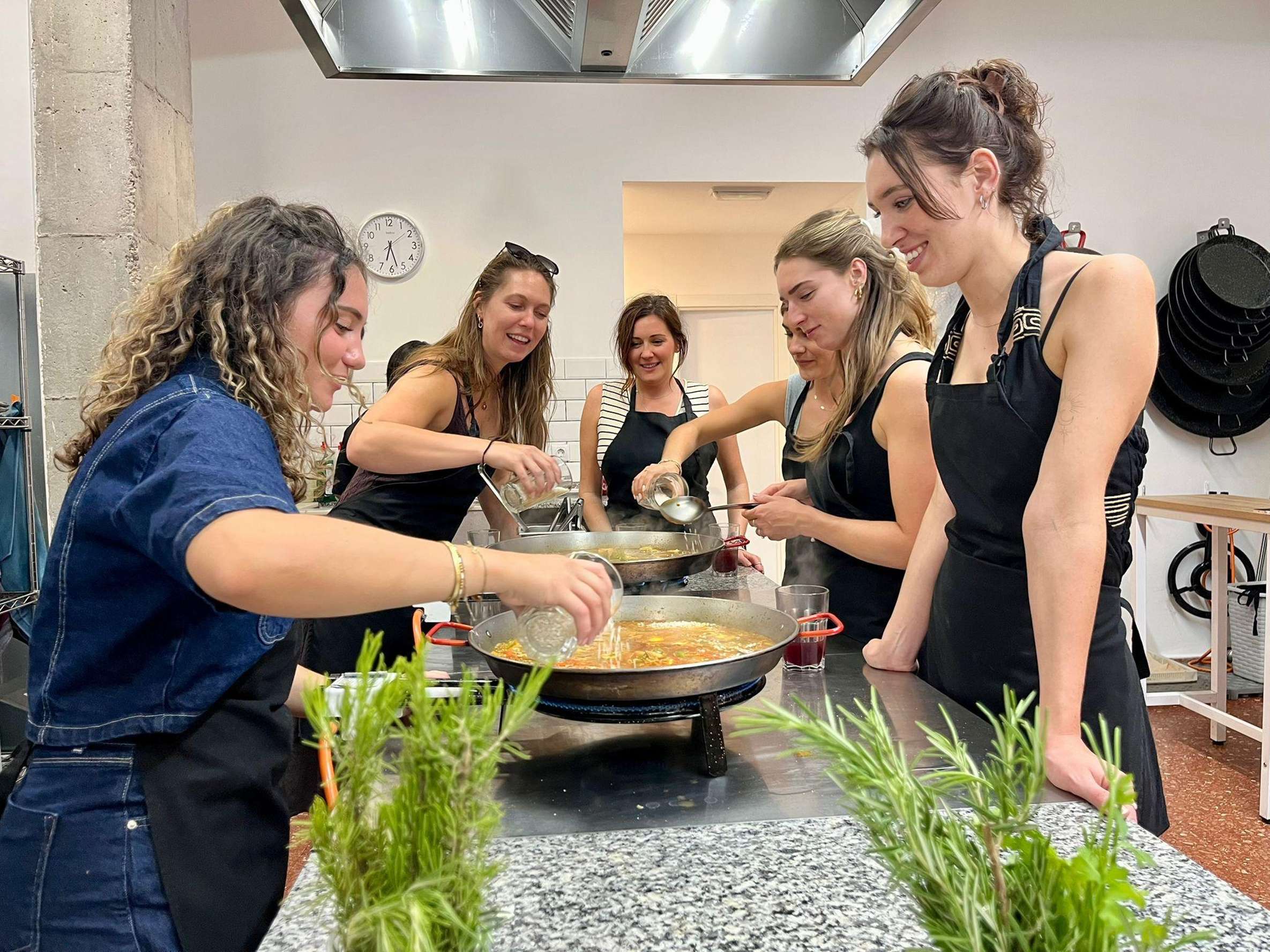
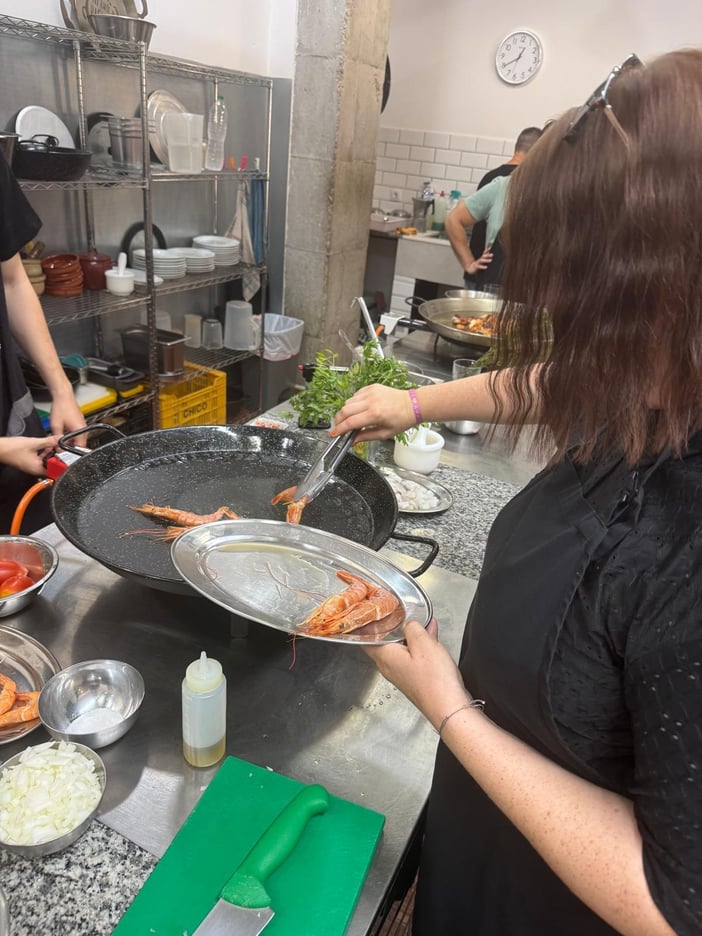
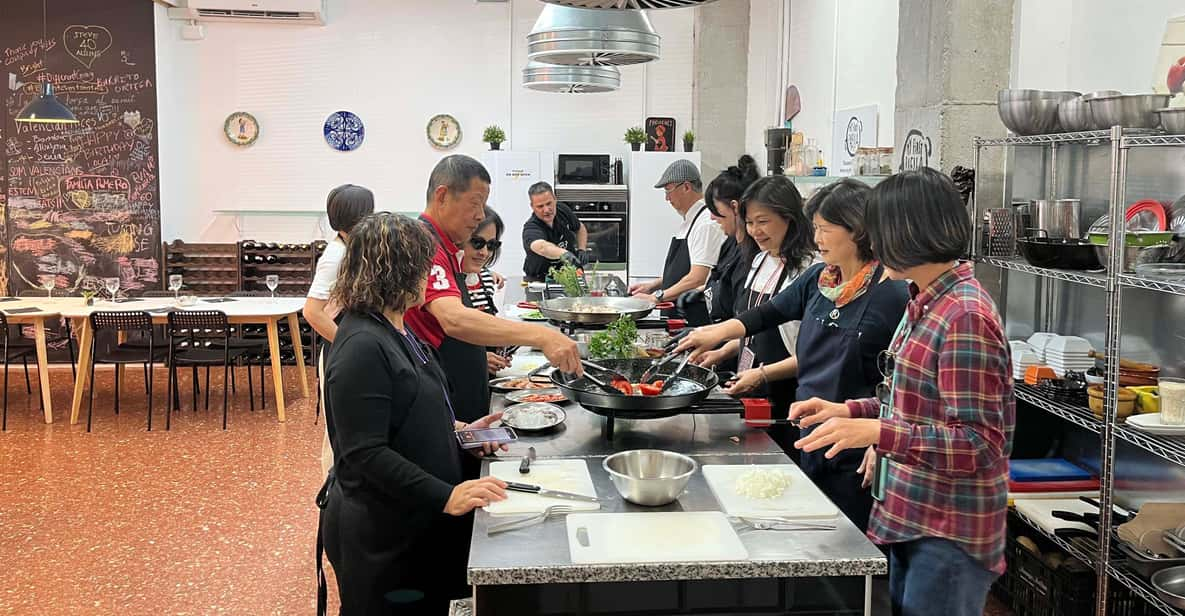
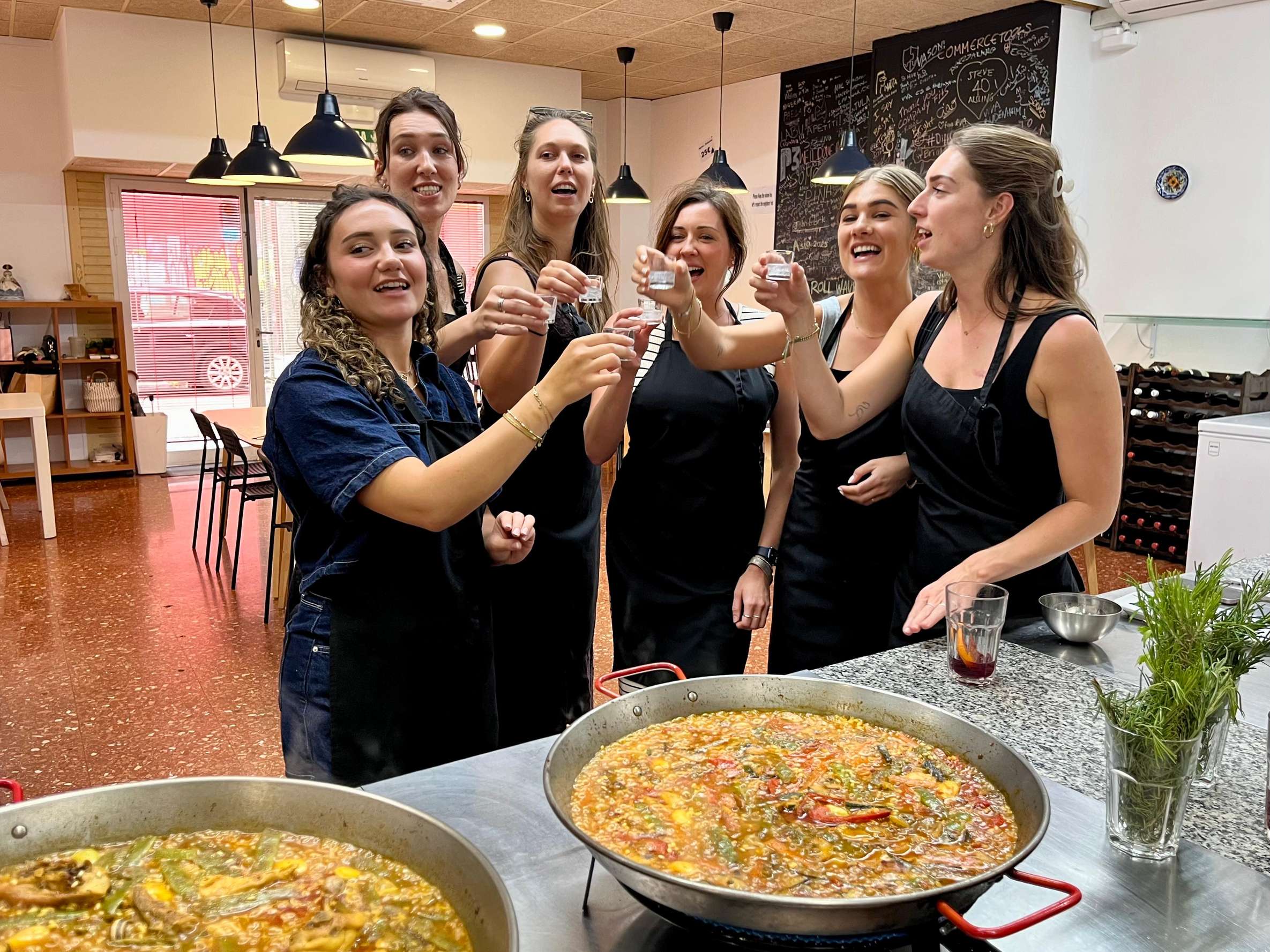
Back in the kitchen, tapas and homemade sangria arrive while you work. You grate tomatoes for the sofrito, shell the garrofó, snap the bajoqueta.
Oil and salt go into the pan, beans caramelize in the center, paprika joins the tomato, then water, saffron and a sprig of rosemary simmer down to the pan's rivets. In a vegetable paella there is no chicken and rabbit to brown; the beans and vegetables carry that step.
The rice goes in and is never stirred again. It boils hard on high heat for about 8 to 10 minutes, then simmers low; the whole absorption takes around 20 minutes. Listen for the boil turning into a gentle crackle: broth gone, socarrat forming, thirty to ninety seconds more, then off the heat.
It rests, everyone sits, and the pan lands in the middle with wine flowing.
- 1Morning, Monday to SaturdayGuided visit to Ruzafa Market to pick the vegetables
The Central Market alternative is touristier; the neighborhood market is where locals shop
- 2At your stationGrate tomatoes, shell garrofó, snap green beans
Tapas, sangria and DO wine while you prep
- 3The simmerSofrito, saffron and rosemary reduce to the pan's rivets
In vegetable paella the beans caramelize where the meat would brown
- 4The last 20 minutesRice in a cross pattern, boiled hard then simmered, never stirred
The crackling sound signals the socarrat is forming
- 5LunchThe pan rests, then everyone eats from it
Eat your own wedge with a wooden spoon and share the socarrat fairly
There is etiquette to the shared pan, and it is friendly once you know it: eat only the wedge in front of you, work inward from the edge, and never spin the pan.
Rest your spoon on the rim when you are done. Portions run generous, takeaway containers appear, and the recipe goes home with you, so the dish survives the trip back to your own kitchen.
Going with a tour or on your own - class, restaurant or home kitchen
Weigh it against the alternatives and the class keeps winning for a plant-based cook. A traditional rice restaurant makes paella to order and usually wants your dish chosen by the morning of the visit, and almost all of them enforce a two-person minimum per pan. A class takes solo diners without a second plate.
At home, the physics fight you. A wide paella pan over a standard stove burner leaves the outer edges undercooked, because the dish wants a burner as wide as the pan. You can cook the recipe afterwards, and hosts send the recipe along, but the real socarrat needs the right flame.
So take the class for the dish itself, done properly at a burner built for it, then take the technique home. If you want a single plate of made-to-order rice instead, the specialized paella bars in Russafa will serve you one.
Solo travelers, kids and anyone who would rather watch than cook
Traveling alone, you are a normal guest in these kitchens. Classes have no two-person minimum, and the small-group format is the sort of room where people talk while the rice simmers.
Children depend on the class. Workshops accept kids across age bands from under-4s to 12 to 17, but the rules vary: some bar children 4 and younger, some are unsuitable under 2 or under 10.
Check the age band for the class you pick, because the burners and the knives set that limit more than the menu does.
Limited mobility is handled more thoughtfully than most travelers expect. Some schools near Town Hall Square have step-free rooms with lowered tables that leave knee clearance, so you can cook seated.
Others let a guest choose between prepping or simply watching the whole cook. Either way, nobody in your party has to stand for three hours to earn lunch.
What to look for in a paella cooking class, and how this one measures up
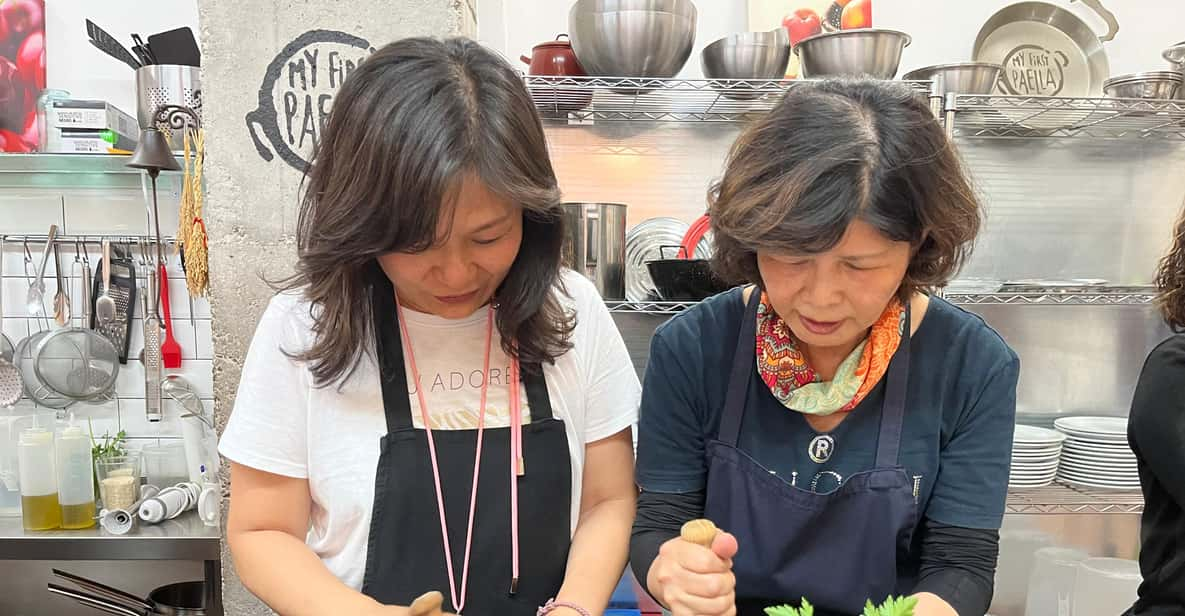
The test is simple: how much rice do you personally touch. Ask which steps you handle, how many guests share a station, and whether the format is hands-on or a demonstration. Check too that you get your own pan; a vegetarian cooking in a shared meat pan is the one thing worth preventing.
The Real Paella Cooking Class, Market Visit and Sangría Workshop answers those points plainly: 3.5 hours, hands-on at your own station, a dedicated Vegetable Paella Workshop option cooked separately, the Ruzafa market visit on weekday mornings, and sangria, tapas and dessert once the pans rest.
How to choose a vegetarian paella cooking class
| Check | Why it matters | Our pick |
|---|---|---|
| Your own pan and vegetable stock | Decides whether your diet is respected or tolerated | Dedicated Vegetable Paella Workshop option cooked separately |
| Real hands-on cooking | Demonstrations teach you nothing you can repeat at home | Step-by-step cooking at your own station with a chef correcting your moves |
| A market visit | Puts the huerta vegetables in your hands before you cook | Guided Ruzafa Market visit on Monday-to-Saturday mornings |
| Free cancellation | Plans change, especially in a busy autumn | Cancel up to 24 hours ahead for a full refund |
A few practical points sit outside the kitchen: how you cancel, whether you pay on the day, and what language the chef teaches in. Lined up against the market-visit class, they look like this.
- A guide with youLive tour guide
- Free cancellationCancel up to 24 hours in advance for a full refund
- Book now, pay laterReserve your place and pay closer to the date
- Hotel pickupNo, you meet at the start
- Your languageEnglish
The row worth planning around is pickup: there is none, you meet at the start, so build the walk into your morning.
What happens if your plans change
The usual wobble is numbers. Standard workshops need a minimum of two participants, sometimes two per paella type, and if the class does not fill, the operator offers you a new date, a different session such as the morning class, or a full refund. You are never left holding a dead booking.
Sundays and public holidays close the markets, so the market walk drops out and the class runs kitchen-only, about half an hour shorter. The class still runs.
And if you cannot make it at all, both featured classes let you cancel up to 24 hours ahead for a full refund, so a change of plans a day out costs you nothing.
What happens if the day changes
| If this happens | What happens then |
|---|---|
| The class does not reach its two-person minimum | You choose a new date, transfer to another session such as the morning class, or take a full refund |
| You book a Sunday or public holiday | The class runs kitchen-only without the market visit, about half an hour shorter |
| You cancel more than 24 hours ahead | Full refund under both featured classes' cancellation terms |
Every path out of a booking ends the same way: a class on another day, another session, or your money back. Booking early carries close to no risk.
What to see and do near your cooking class
Class ends early afternoon, leftovers boxed, and you are already standing in the right part of town. The Mercat Central, a Modernist hall with over a thousand stalls of produce, rice and cured meats, sits on Plaza del Mercado, open Monday to Saturday until about 3 pm, so go before class rather than after.
Directly opposite is La Lonja de la Seda, the Gothic silk exchange, and the round Plaza Redonda nearby keeps traditional stalls and the classic horchata bars. Everything here is a five-to-fifteen-minute walk from the cooking studios around Ciutat Vella.
- 1Galería de Arte Maika Sánchezmuseum1 min walkDirections
- 2Monument a Francesc de Vinateasight1 min walkDirections
- 3Origen del valencianismohistoric place1 min walkDirections
Show all 10 places
- 4Shiras Galeriamuseum1 min walkDirections
- 5Font de la Plaça de l'Ajuntamentsight1 min walkDirections
- 6Plaça de l'Ajuntamenthistoric place2 min walkDirections
- 7Museu Nacional de Ceràmicamuseum2 min walkDirections
- 8Valencia Bus Turístico & Albufera Bus Turístico (Pintor Sorolla)sight2 min walkDirections
- 9Sala d'Exposicions de l'Ajuntamentmuseum3 min walkDirections
- 10Palau de les Comunicacions de Valenciahistoric place3 min walkDirections
- 1Museu de les Ciències Príncipe Felipemuseum14 min driveDirections
- 2L'Umbraclepark or garden15 min driveDirections
- 3Fosses de Paternahistoric place22 min driveDirections
- 4Casa de la Sirenahistoric place23 min driveDirections
- 5Ermita de Sant Jorditemple, shrine or church24 min driveDirections
- 6Ara Christi Charterhousetemple, shrine or church27 min driveDirections
If the pan stirred something bigger, the City of Arts and Sciences with its science museum is a short drive out, and the albufera rice country beyond it is where the grain in your pan grew.
What to know before you book a vegetarian paella class in Valencia
There is no pickup. Market-to-kitchen workshops in central Valencia set meeting points in the Old Town, and the private class starts with a short walk from there to the chef's kitchen.
Municipal markets close every Sunday and on public holidays, and Mercat d'Algirós also shuts for all of August. On those days workshops skip the market walk, head straight to the kitchen and run about half an hour shorter.
Markets shut their stalls by 3 pm, so market visits only run on morning departures Monday to Saturday. Evening sessions cook with pre-sourced ingredients instead of shopping with the chef.
In the small-group class, groups split by paella style, so you cook your vegetable paella at your own station alongside meat and seafood eaters rather than sharing one communal pan.
Wear casual clothes you do not mind splashing and closed-toe shoes, because you cook over open gas burners with hot oil. Long pants and fitted sleeves help, and aprons are provided.
Groups booking the private class can arrange a fully vegan menu with the chef once the booking is confirmed. He contacts you directly to set the recipe and cover any dietary restrictions.
The small-group workshop covers the Ruzafa Market visit, all ingredients, tapas, dessert, coffee, bottomless sangria, beer, wine and mistela. Extra purchases at the market are the only thing you pay for on the day.
The small-group format keeps numbers low, while standard evening workshops elsewhere in the city can hold up to 20 people. Check the class description before booking if size matters to you.
Most workshops need at least two participants to run, sometimes two per paella type. If the minimum is not reached, you choose a new date, move to another session or take a full refund.
Both classes featured here let you cancel up to 24 hours in advance for a full refund, so you can hold a spot while your plans settle.
Worth an afternoon, if you book the morning
The Real Paella Cooking Class with the Ruzafa market visit is the pick for vegetarians who want their own pan, a real vegetable paella and a proper market hour, all inside 3.5 hours. Cook it on a Monday-to-Saturday morning, in autumn if you can.
Traveling as a pair or a small private group that wants the whole kitchen and dietary needs settled in advance? The private class with the old-town chef is the better fit.
Common questions about vegetarian paella cooking class in Valencia
Can I book a vegetarian paella workshop in Valencia?+
Yes. One small-group workshop lists a Vegetable Paella Workshop as its own booking option alongside the meat and seafood versions, and the private class lets you pick your recipe with the chef once your booking is confirmed. Reserve the vegetable option when you book so the kitchen prepares your stock and station for it.
Will a vegan paella cooking class in Valencia work for my group?+
Groups can arrange a fully vegan menu: vegan tapas or starters, a vegetable paella, and vegan desserts. The private class is the easiest route, since the chef contacts you after booking to go through dietary restrictions and recipe choices directly.
What goes into a traditional Valencian paella de verduras?+
It is a real regional dish, built on vegetables from the huerta around the city: flat green beans, garrofó butter beans, artichokes, and grated tomato for the sofrito. Season and region add broad beans, peppers, spinach, or chard. The rice cooks in vegetable broth with saffron and olive oil.
Do vegetarians cook separately from meat eaters in mixed classes?+
Many classes split the group so each person picks a style: classic Valencian, seafood, or vegetarian. You cook at your own station with your own pan, so your version stays meat-free and nobody at the table misses out.
Is vegetable paella gluten-free?+
Traditionally yes. Rice, fresh vegetables, beans, olive oil, saffron, and homemade vegetable broth contain no gluten. The risk comes from commercial stock cubes or pre-mixed seasonings, so mention gluten when you book and ask for pure saffron and a homemade broth.
Which vegetables are in season when I visit?+
From December to February, artichoke leads the pan, with chard, cauliflower, and broad beans. Summer classes from June to August use Valencian tomatoes, peppers, aubergines, courgettes, and fresh garrofó beans.
Is the class taught in English?+
Many public workshops run bilingually in English and Spanish, and some private English sessions require a minimum group size. Check the language listed on the class before you book.
Can I bring children or a non-cooking companion?+
Rules differ by class. One workshop that offers vegetarian paella on request is not suitable for children under 2, while other workshops accept children in separate age bands with their own pricing. If someone would rather watch than cook, some kitchens allow exactly that.
Does the class include a market visit?+
The small-group vegetable paella workshop starts at Ruzafa Market, where you pick fresh produce with your chef before cooking. Morning sessions only, Monday to Saturday: Valencia's municipal markets close at 3 pm and shut entirely on Sundays and public holidays, when classes run with extra kitchen time instead.
What should I wear to cook over an open flame?+
Casual clothes you do not mind getting messy, with closed-toe shoes and long pants. Fitted tops with no loose sleeves protect against oil splatter near the gas burners, and the workshop provides aprons.
What happens at the market visit on a vegetable paella class?+
On the small-group workshop you walk Ruzafa Market with your chef to pick the produce before cooking. Both municipal markets close on Sundays and public holidays, and they shut at 3 pm, so Sunday classes and evening sessions skip the market and use pre-sourced vegetables instead.
Can I eat at the class if I am vegetarian but not cooking?+
Some schools let guests choose between preparing the food or watching the cooking, and a few accessible workshops near Town Hall Square have lowered tables so you can cook seated. Ask about this when you book if someone in your group would rather not stand for hours.