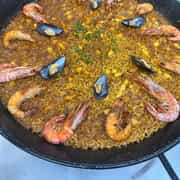
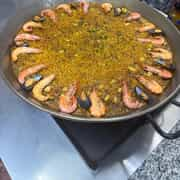
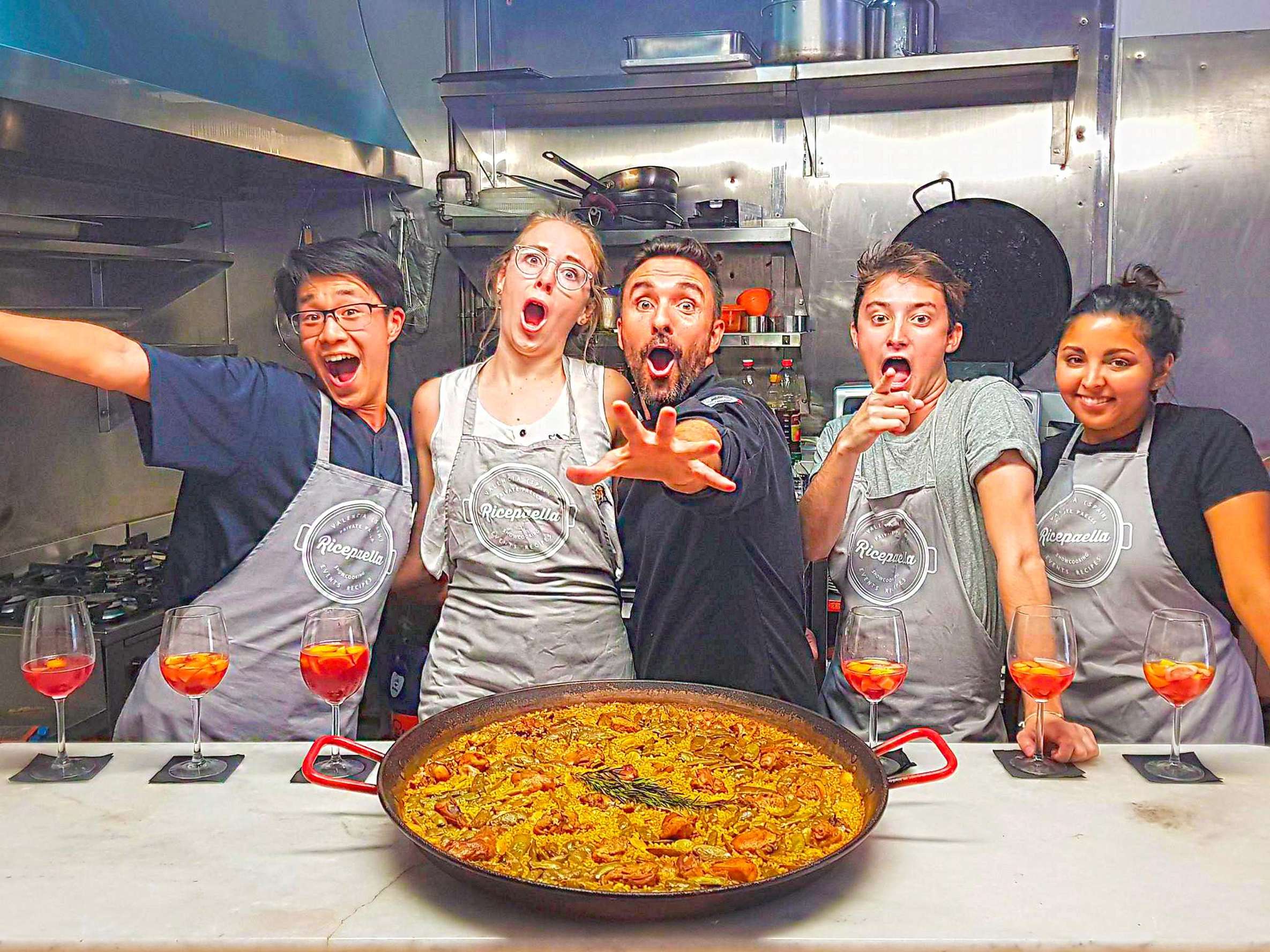
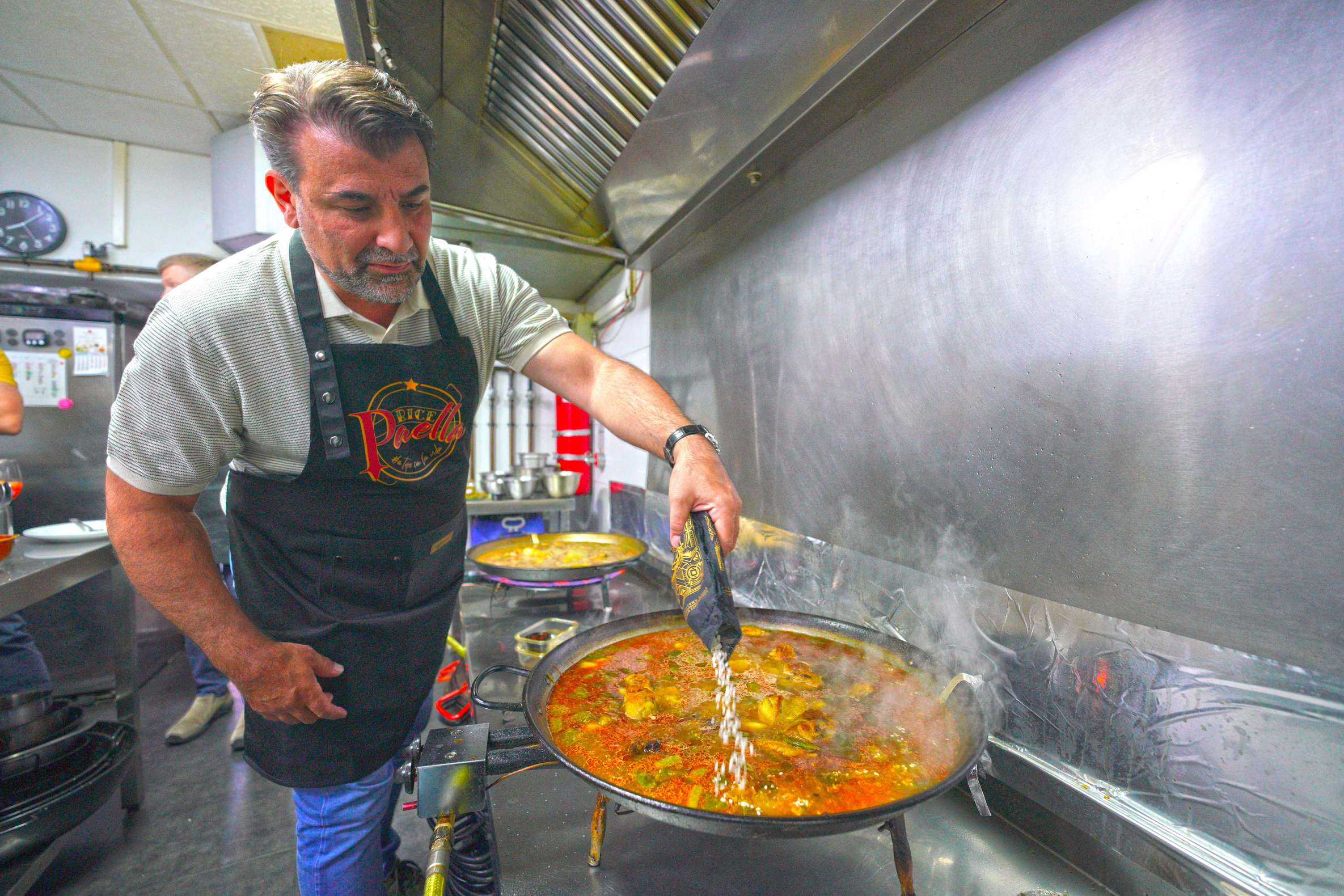
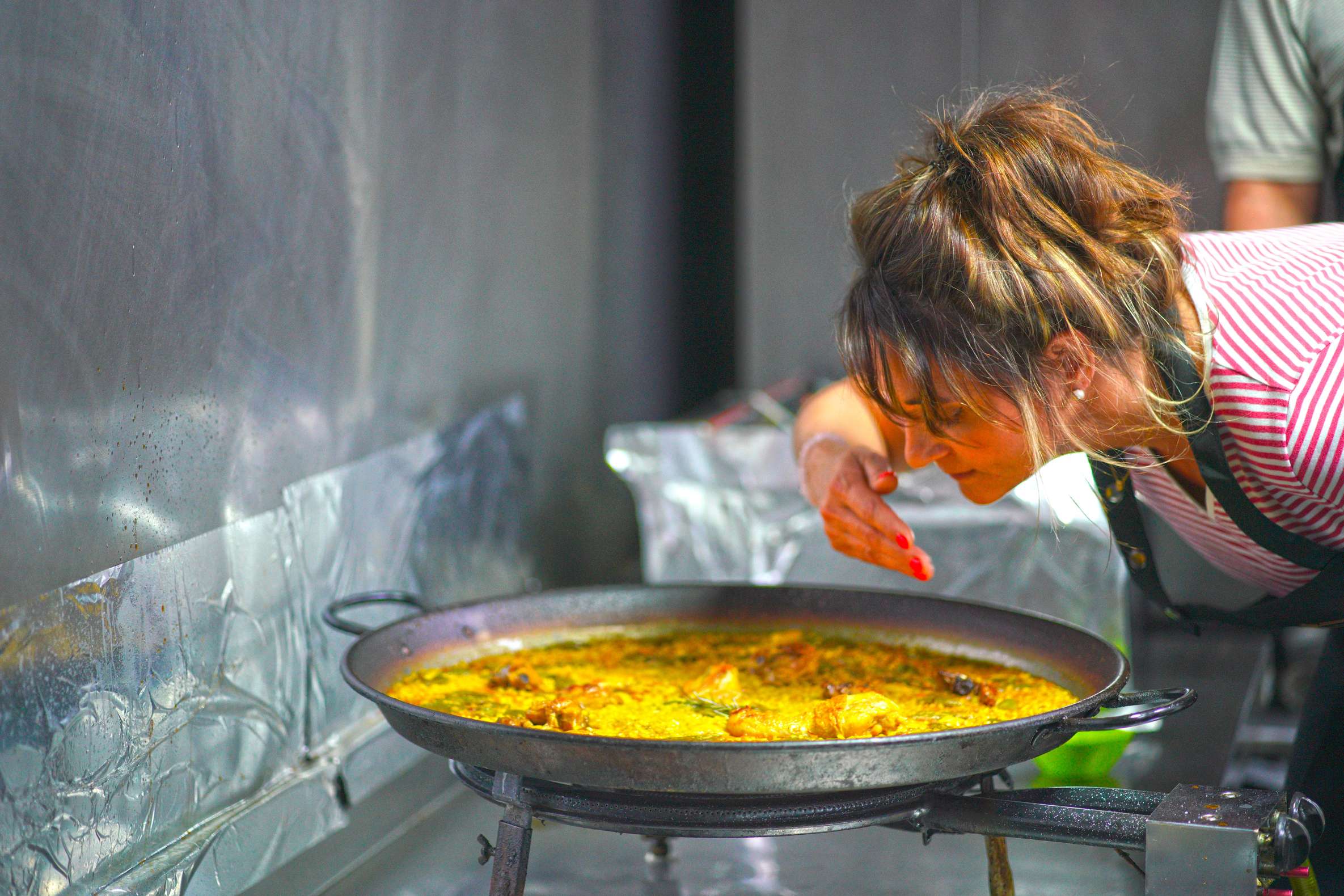
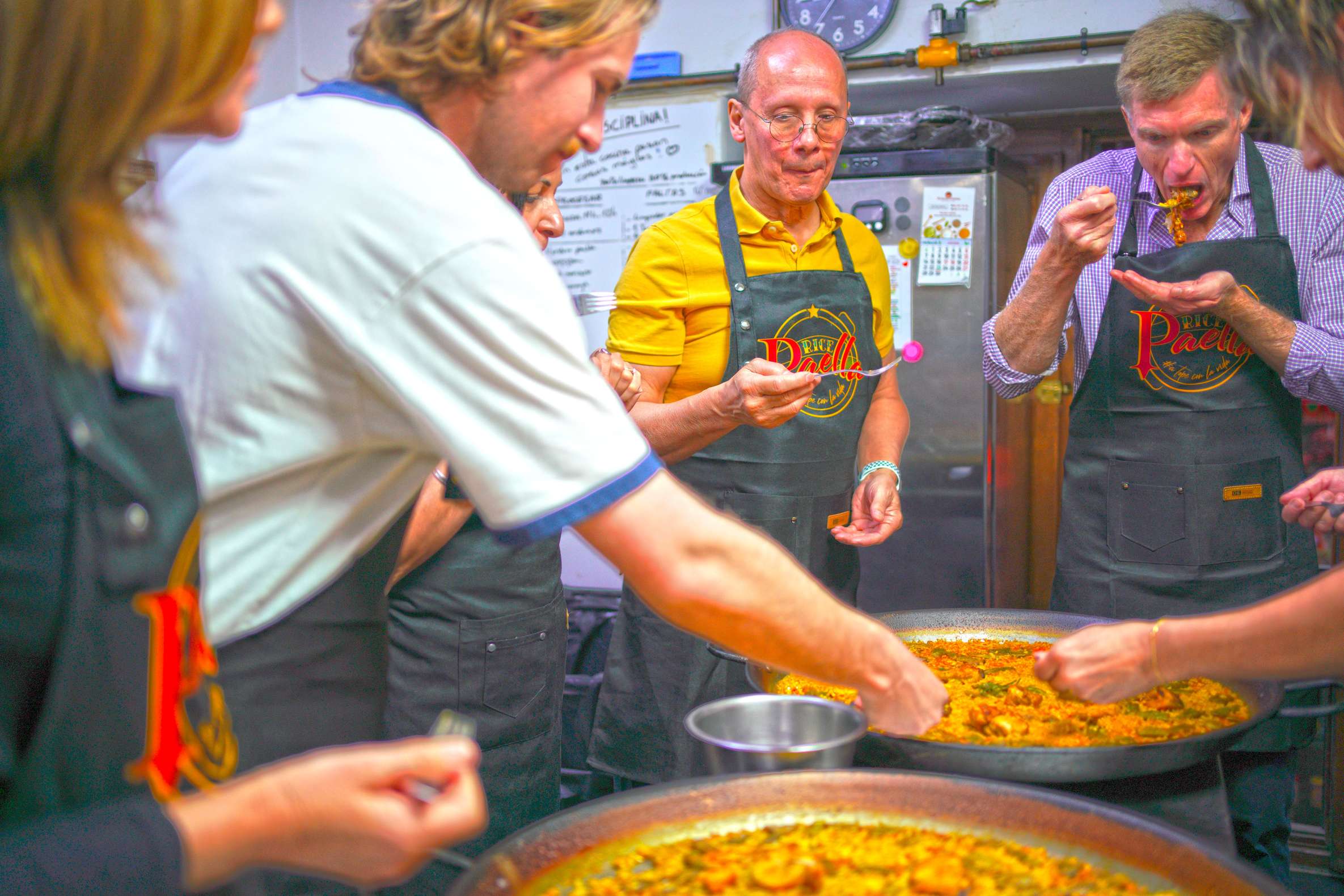
Seafood Paella Cooking Class in Valencia Fresh Fish and Shellfish Recipes
Learn the seafood paella Valencia keeps for itself. Cook prawns, squid and clóchinas with local chefs, master the salmorreta and fish fumet, and feast on your own creation with bottomless sangria. Classes fill fast, so pick a date and book ahead.
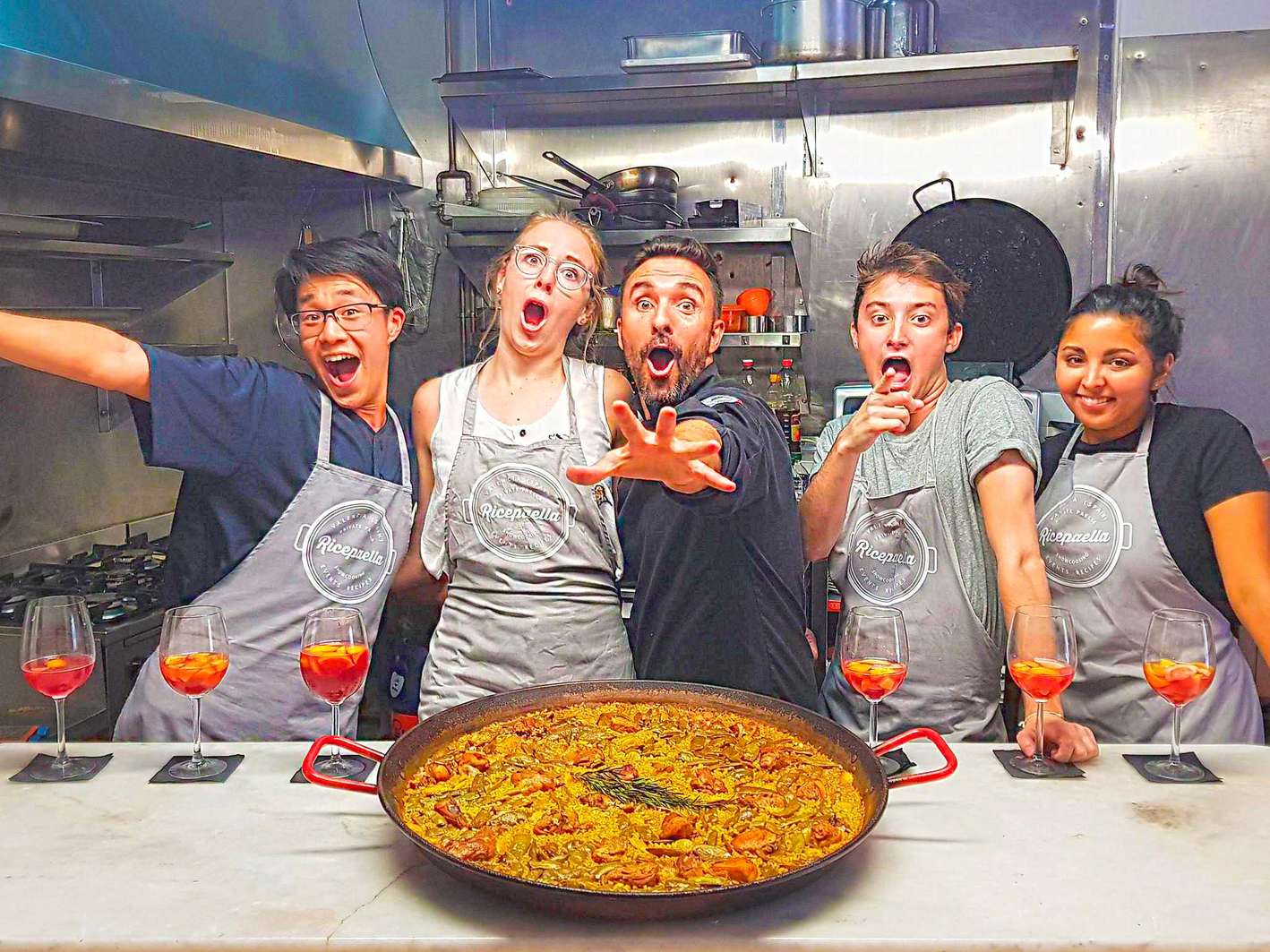
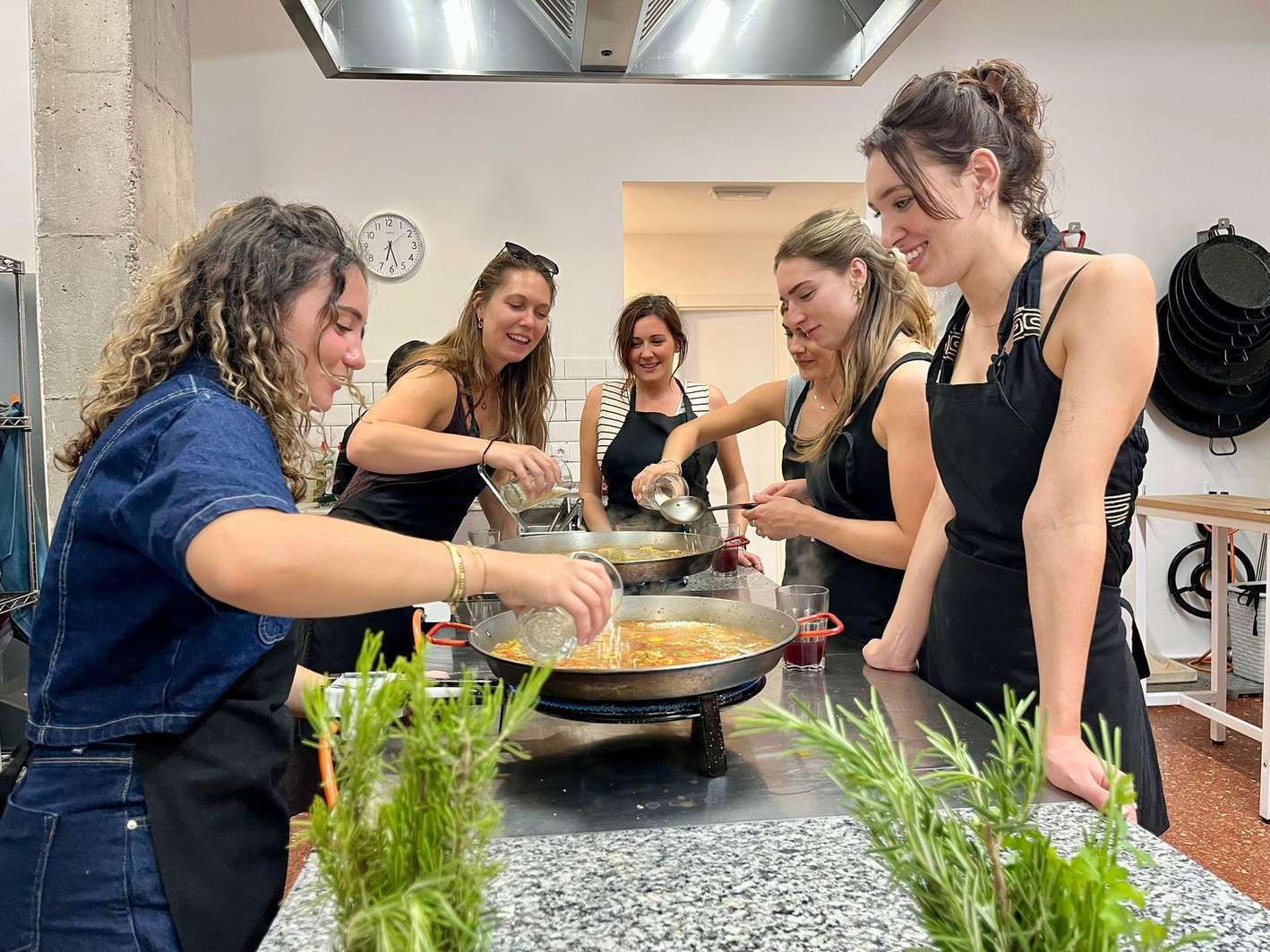
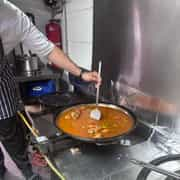
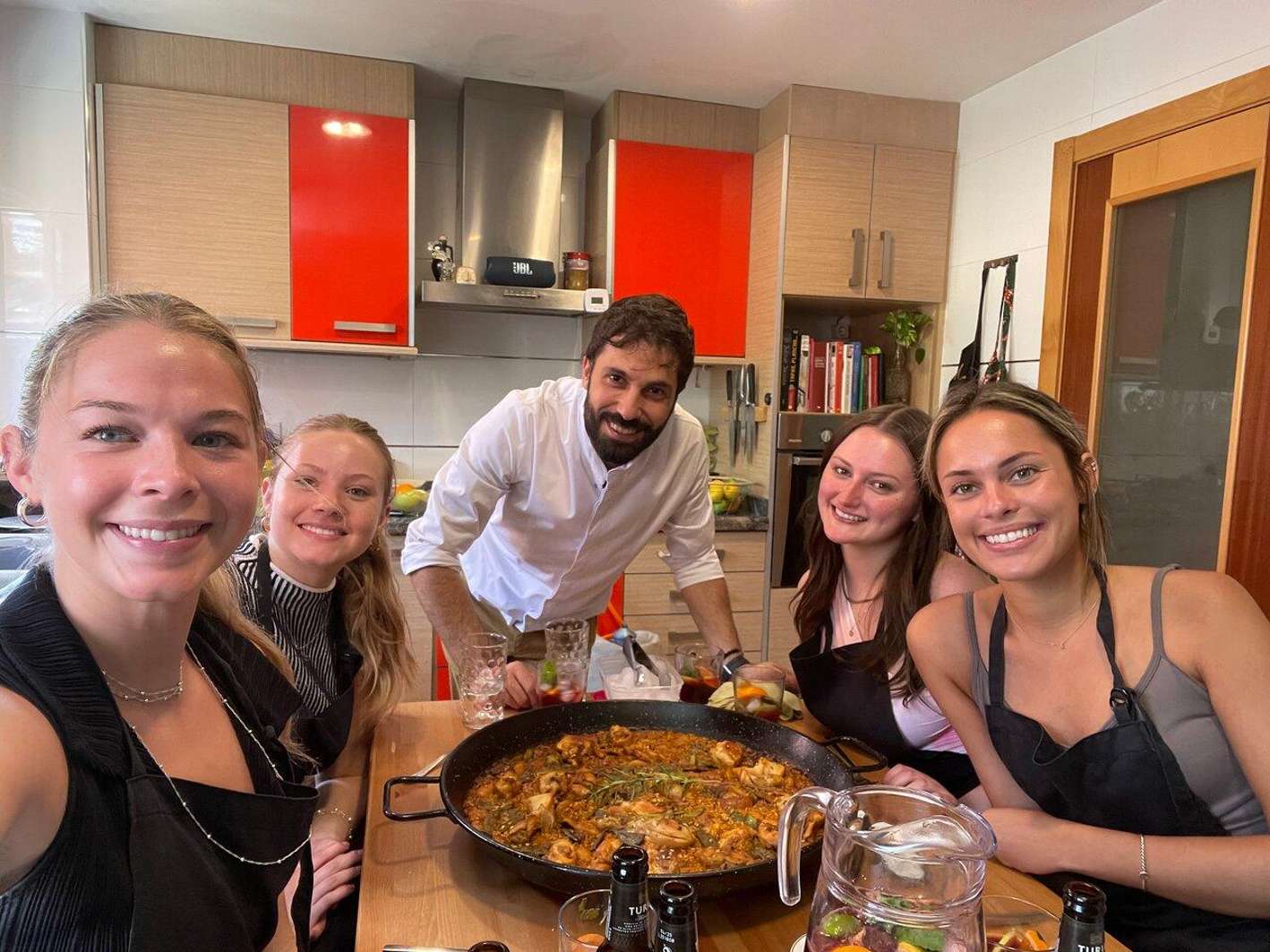
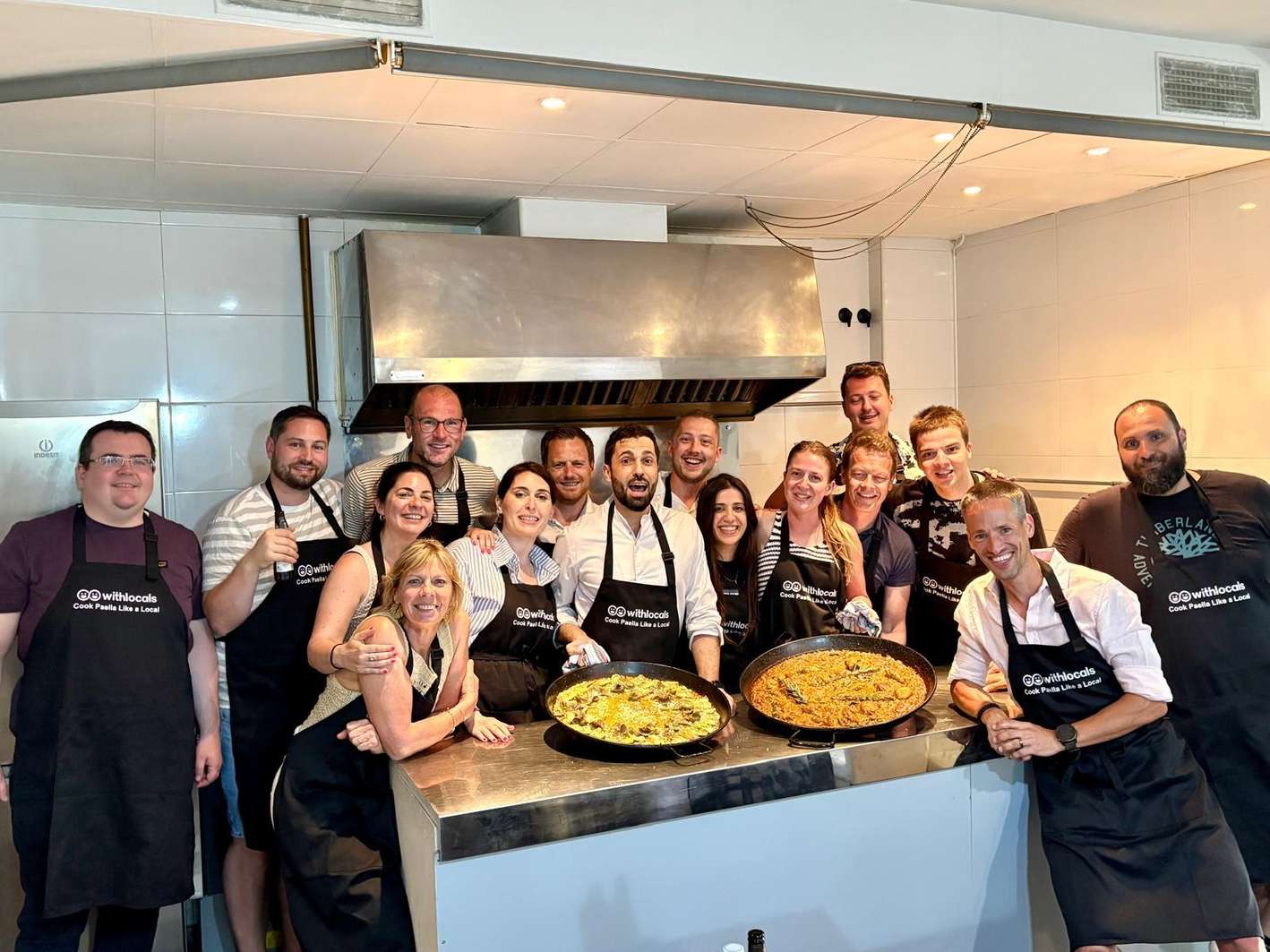
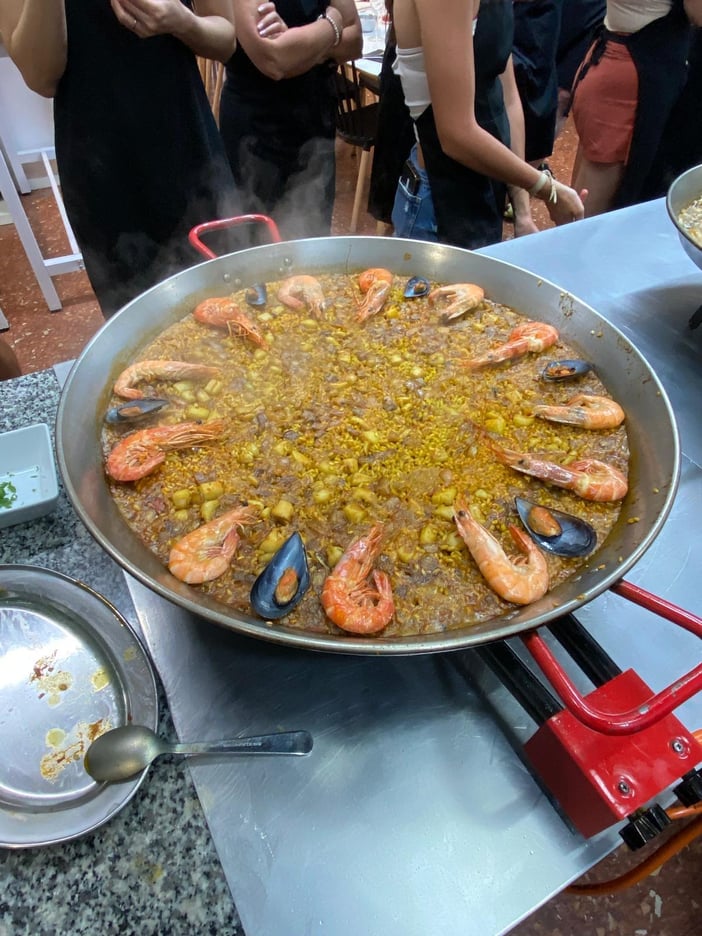
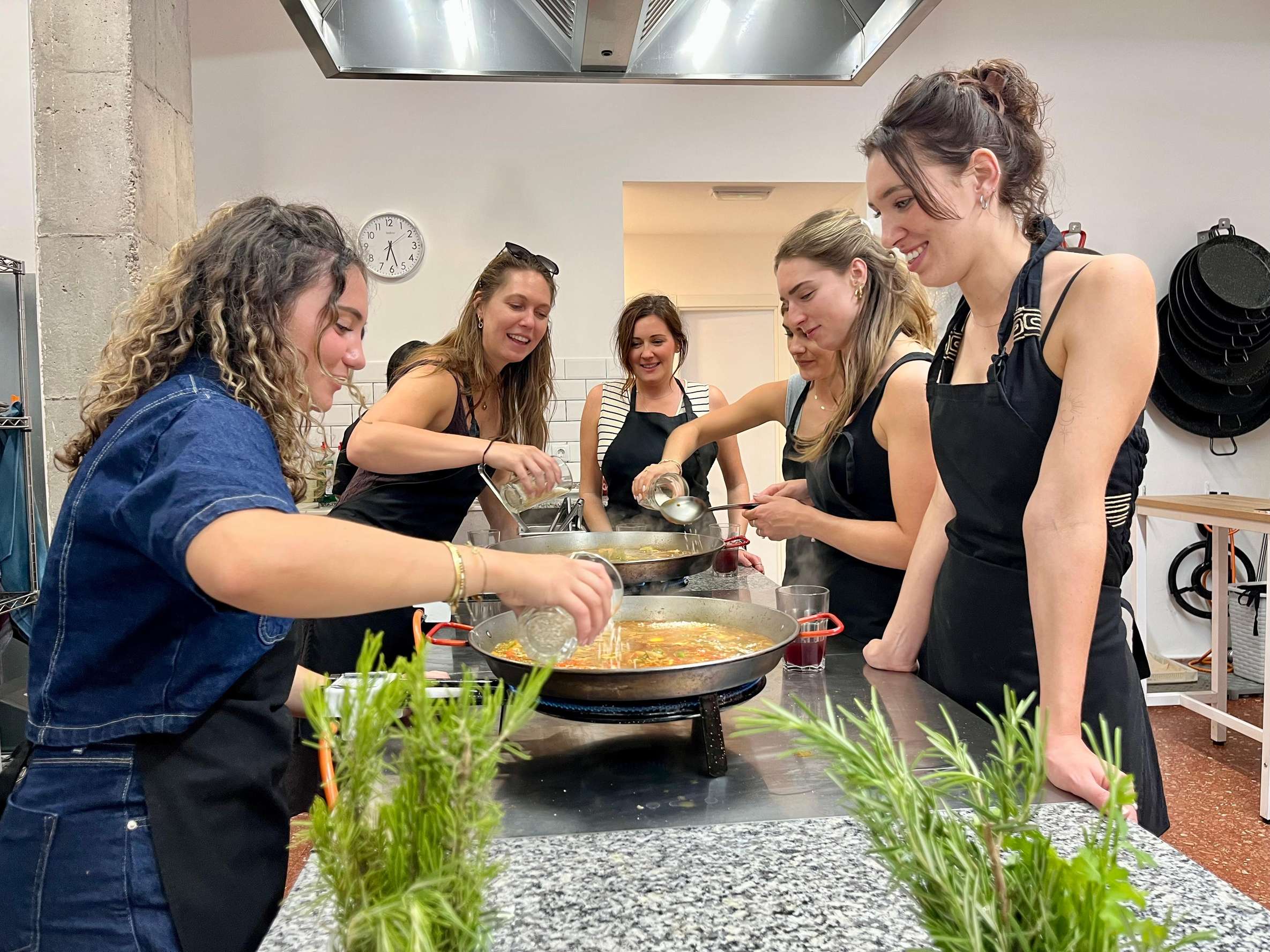
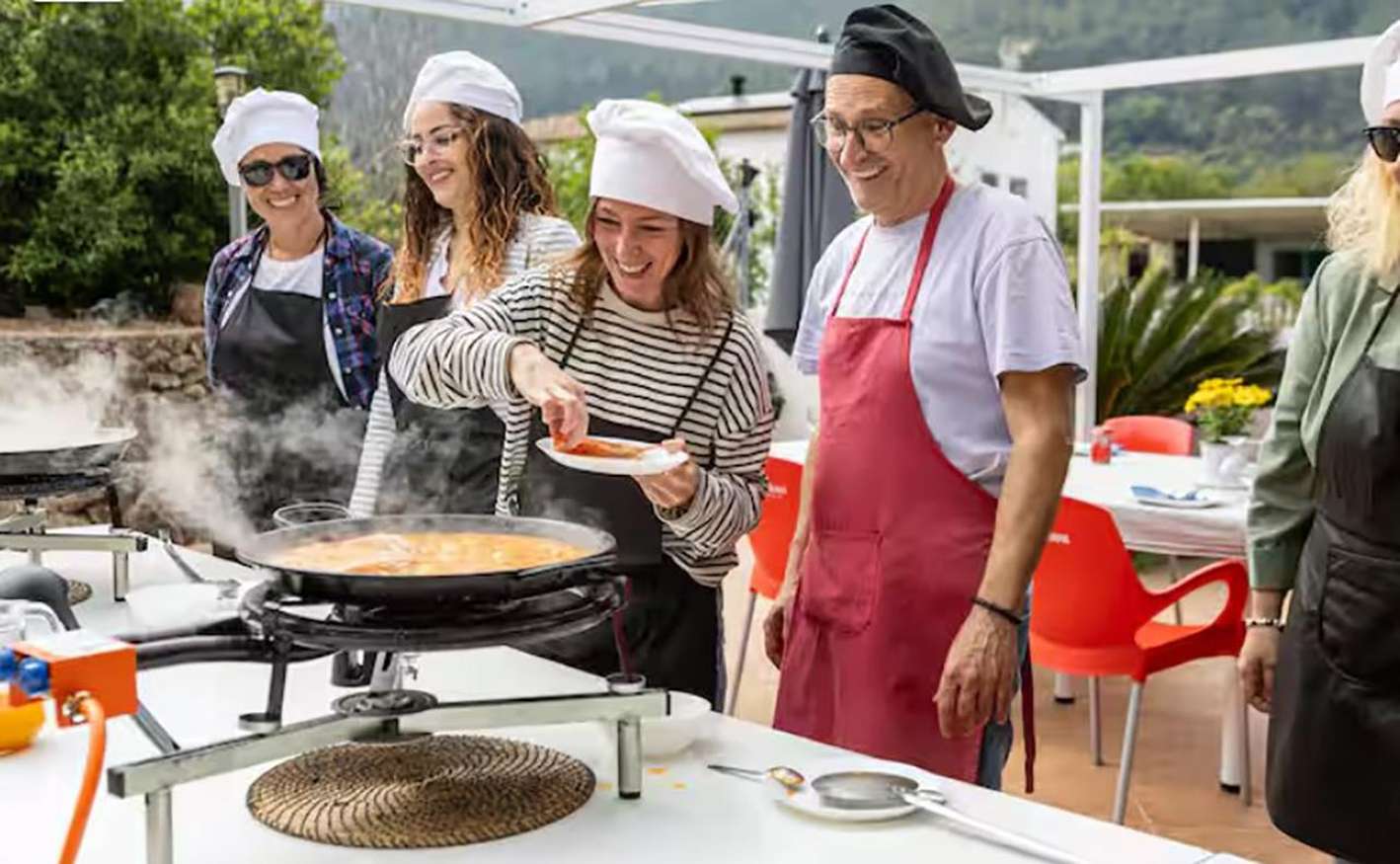
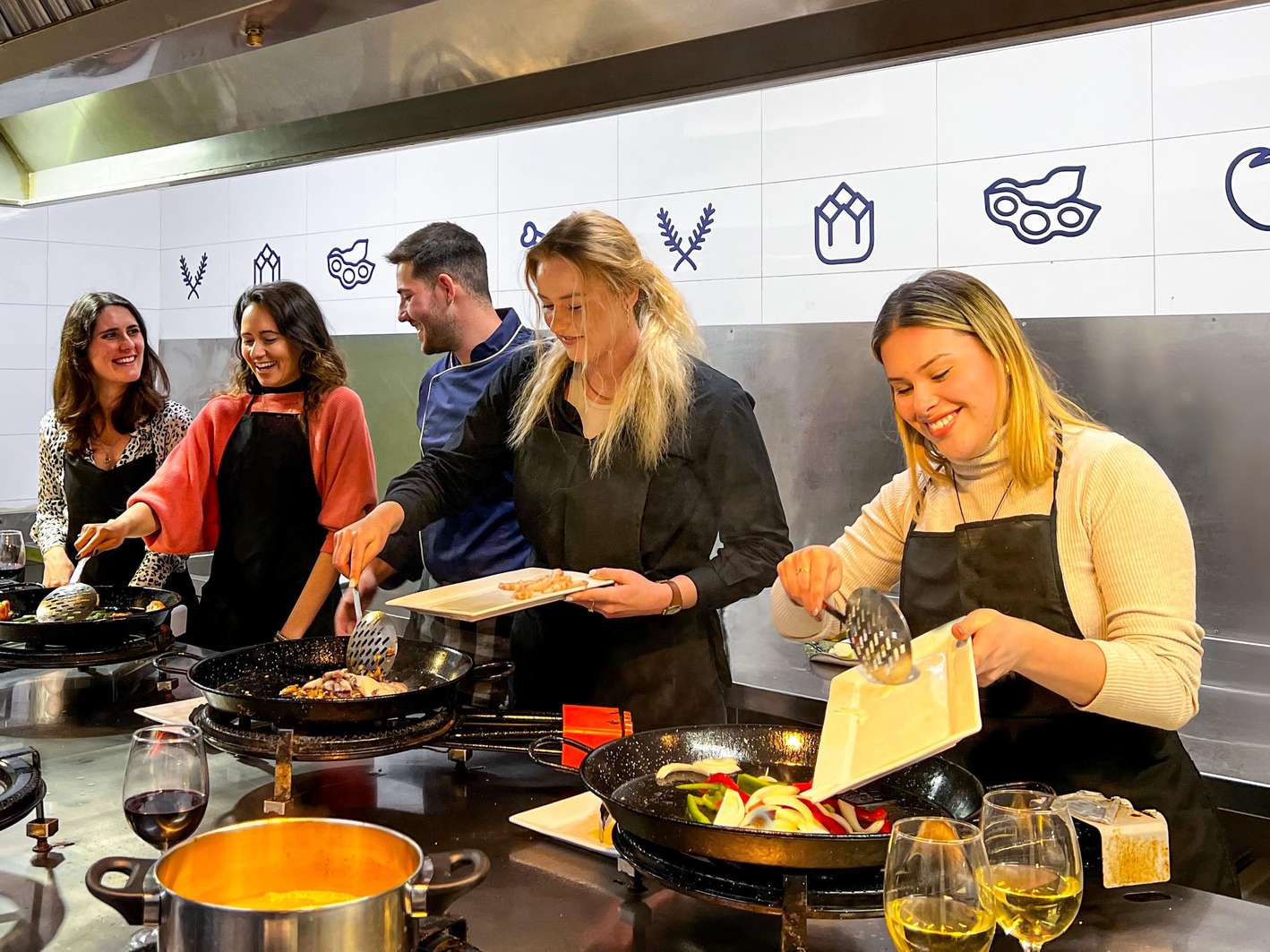
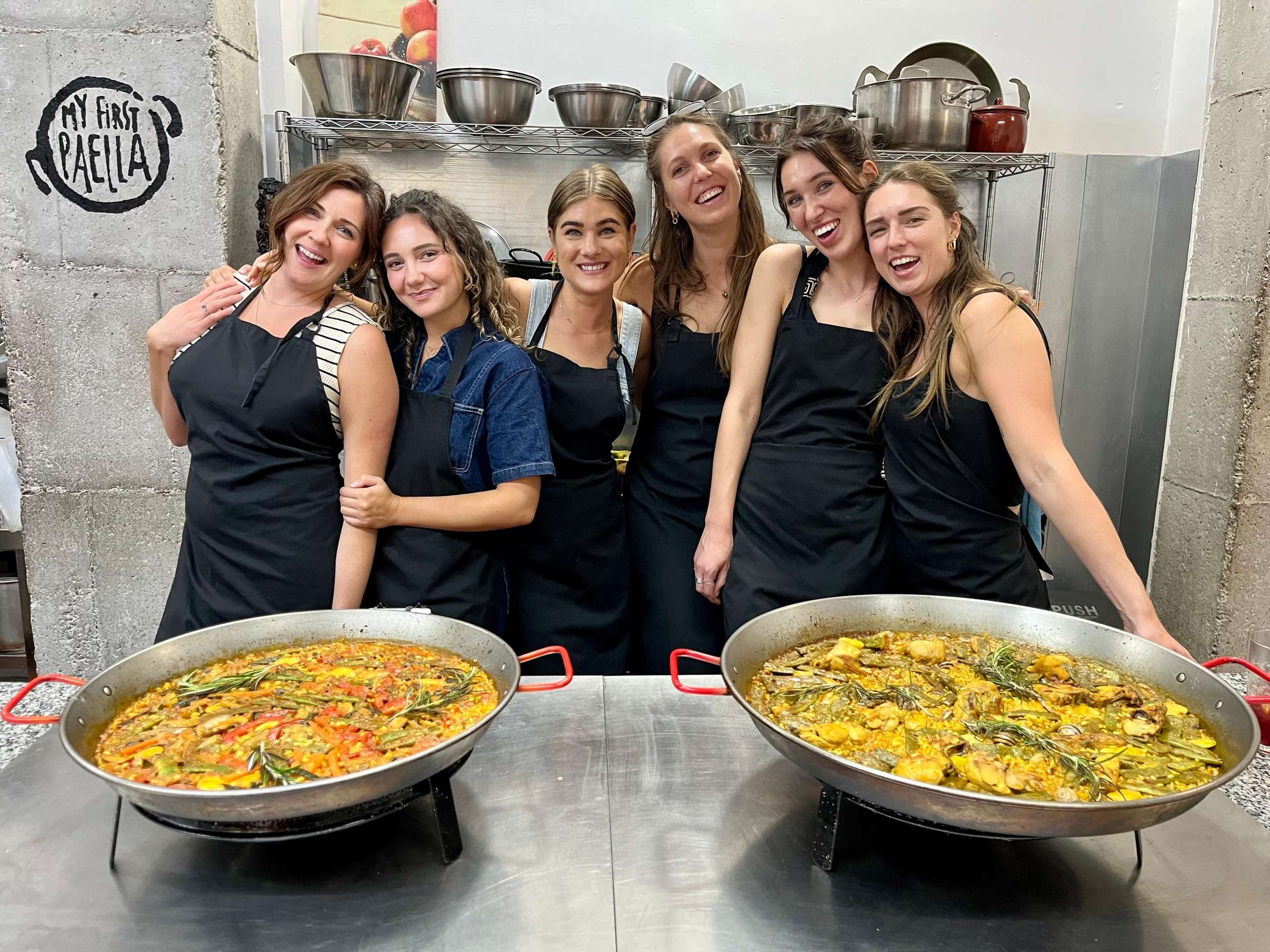
★★★★★Salmorreta, sangria and steam rising off the pan
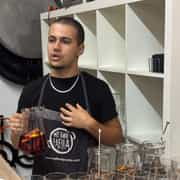
"Perfect experience, highly recommend. Guillermo & Anna were fantastic guides, making the class fun and instructive. Great way to learn authentic Valencian paella, and cooking together as a team was really fun."
4.9★average rating967traveler reviews100%free cancellation39countries travelers came from
Choosing your seafood paella class in Valencia
Valencia runs seafood paella workshops in a few shapes: a morning market-and-kitchen class, an evening session that starts straight in the kitchen, a dinner-format class, and a private lesson. The difference that decides it is timing. Morning sessions shop the stalls first; evening ones cook with pre-sourced fish and shellfish.
Sunday closuresMercado Central closes completely on Sundays, so market-to-table classes skip the market walk and cook with extra kitchen time instead.
Monday morningsThe market reopens at 7:30 am but seafood stalls run a reduced selection, so Monday classes still run using stalls that are open plus pre-sourced seafood.
Market hoursBoth central markets trade Monday to Saturday from 7:30 am to 3 pm, so only morning departures include a market visit.
Minimum numbersMost workshops need at least 2 participants to run; if the number falls short, you can reschedule, transfer to another session, or get a full refund.
Booking aheadReserve a day or more in advance in spring and autumn, when demand for classes peaks; summer sessions quiet down.
FootwearWear closed-toe shoes, since open gas burners around the paella pans splatter hot oil; aprons are usually provided.
ClothingDress casually in long pants and fitted tops without loose sleeves, in clothes you do not mind getting messy.
Getting thereMetro trains stop at the edge of the old town, so take the metro to Colón or Xàtiva and walk, or ride an EMT bus into the historic center.
Getting thereFor studios in Ruzafa, walk from Colón or ride Metro Line 10, or take EMT buses 6, 14, 18, 40, or C3.
Season noteJuly and August bring daytime highs above 30°C beside the burners, so an air-conditioned kitchen counts for a lot in summer.
closureMercado Central closes completely every Sunday, so seafood paella classes with a market visit run without the market walk that day, and Monday stalls trade with a reduced catch because no fishing deliveries arrive on Sunday.
Book your market-to-kitchen seafood paella class Monday through Saturday if the market visit matters to you, or accept a shorter kitchen-only session on Sunday and on public holidays, when classes run with pre-sourced seafood.
Seafood paella class picks for Valencia
With the market run
3.5 hours·English
5.0(438)
Real Paella Cooking Class, Market Visit & Sangría Workshop
Option: Seafood Paella Workshop
Starts at Ruzafa Market where locals shop, then 3.5 hours of hands-on cooking with salmorreta and bottomless sangria.
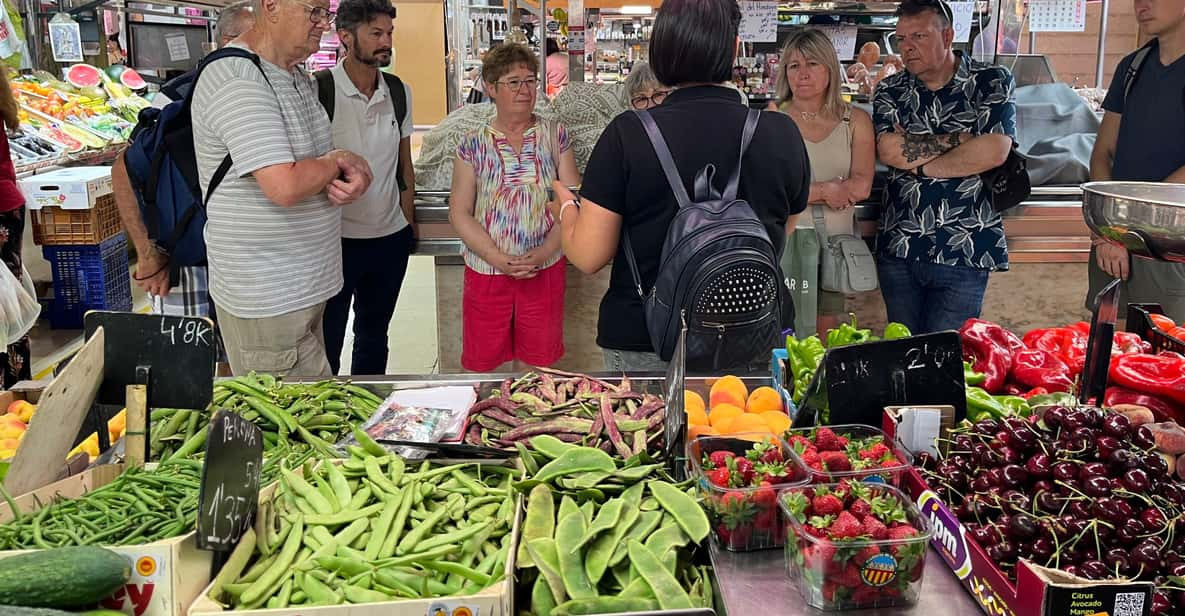
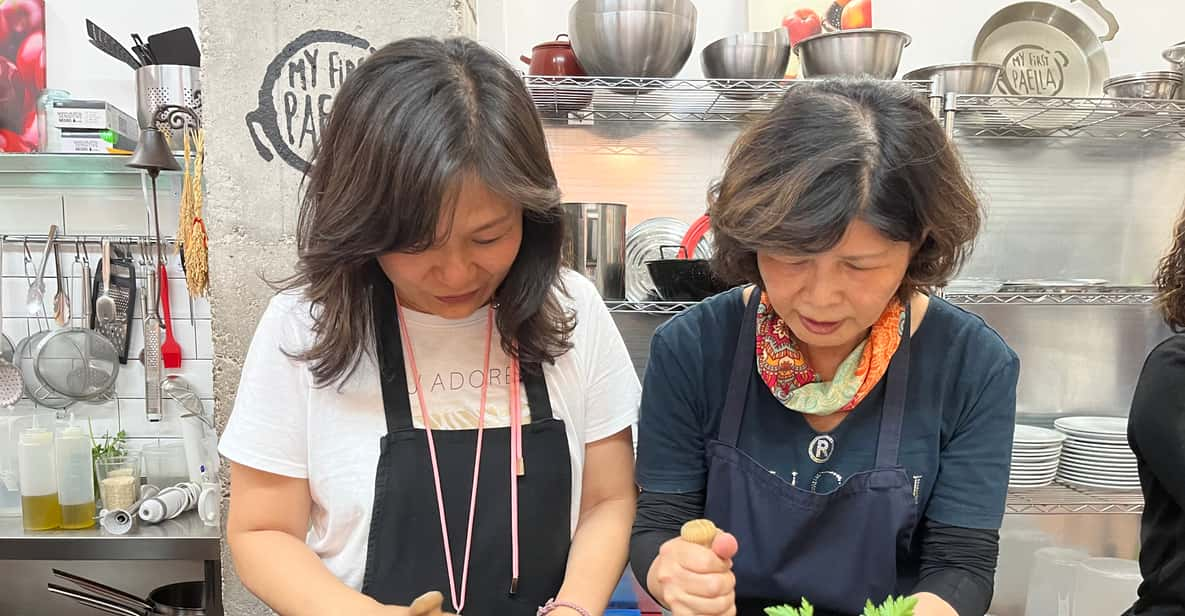
The day starts at Ruzafa Market, the neighborhood market where locals shop while tourists queue at Central Market. Your chef walks you through the seafood stalls and vegetable stands, picking up the ingredients you will cook with an hour later.
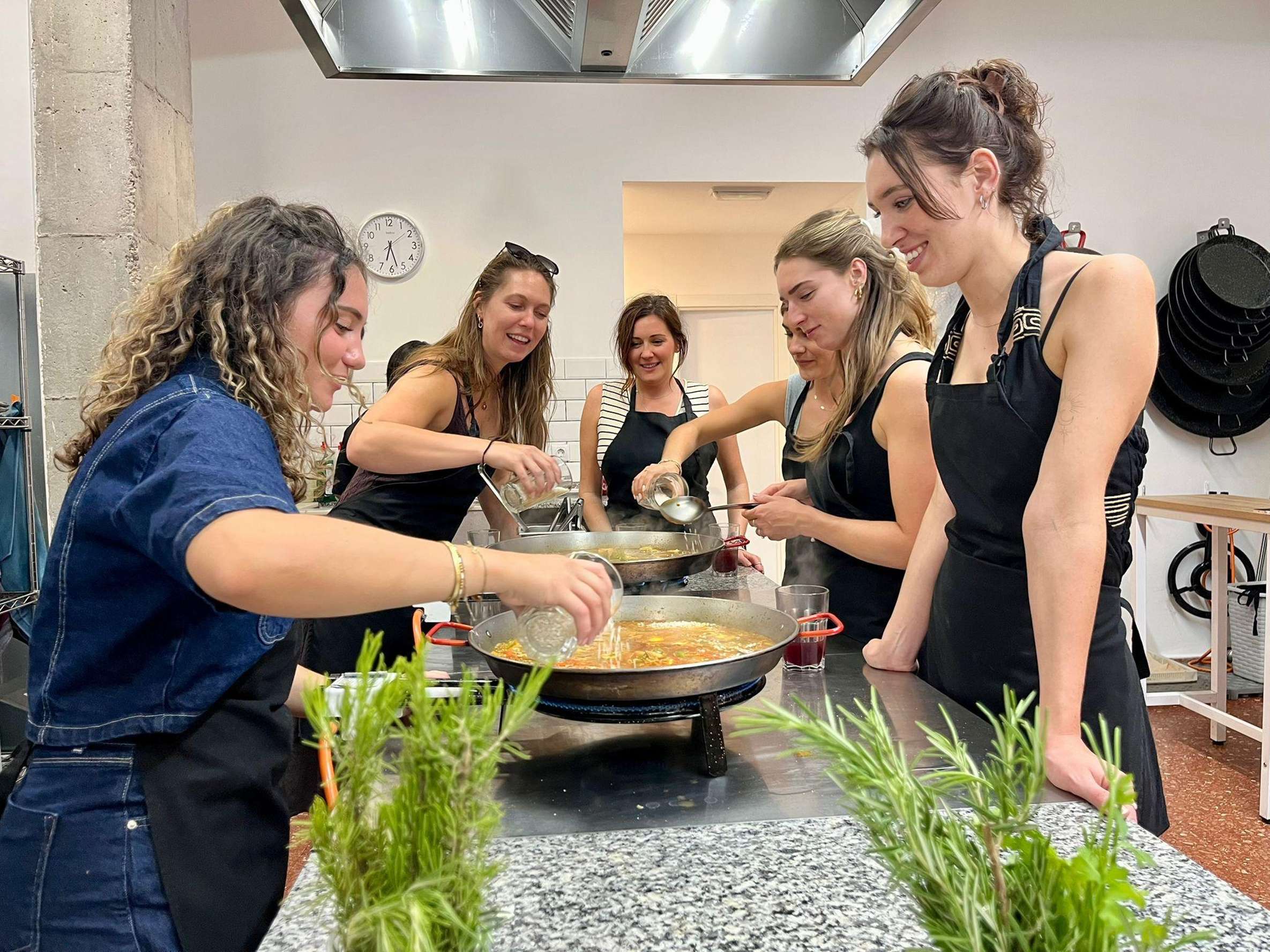
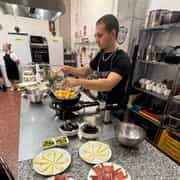
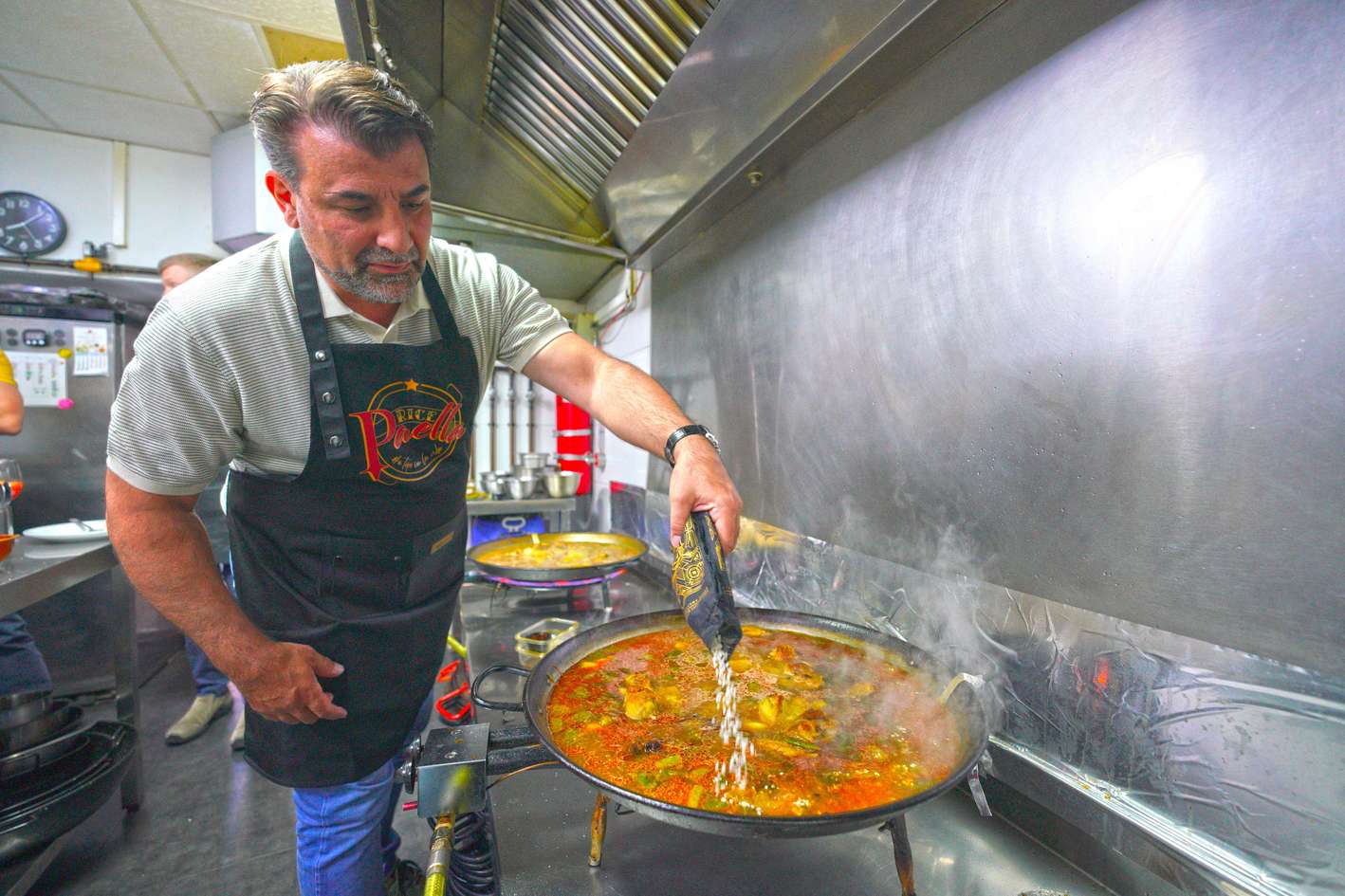
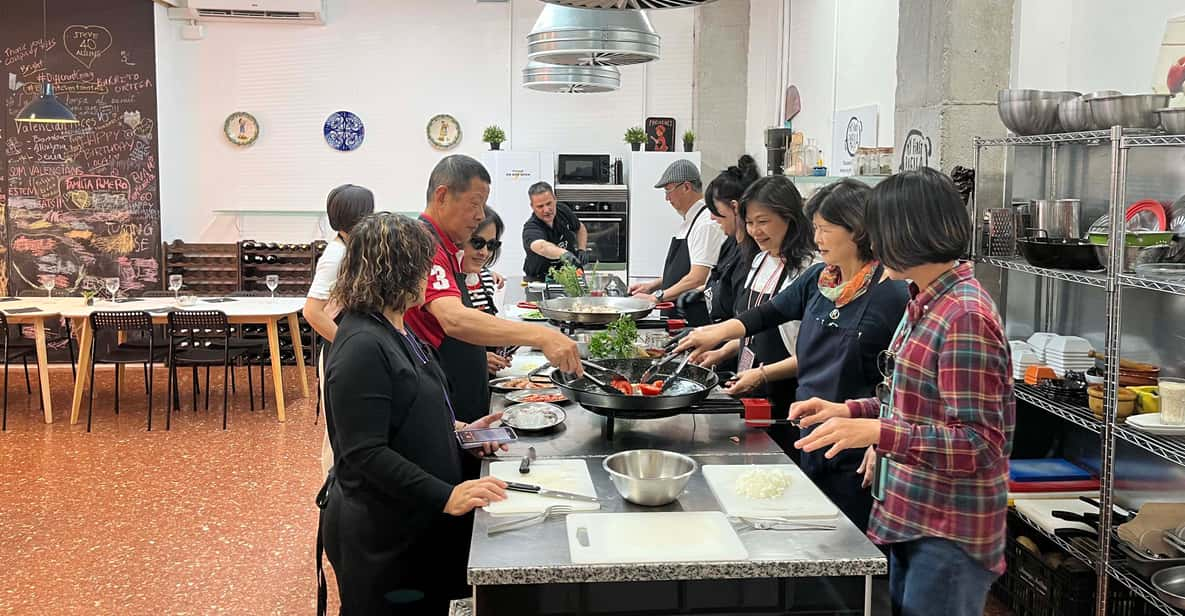
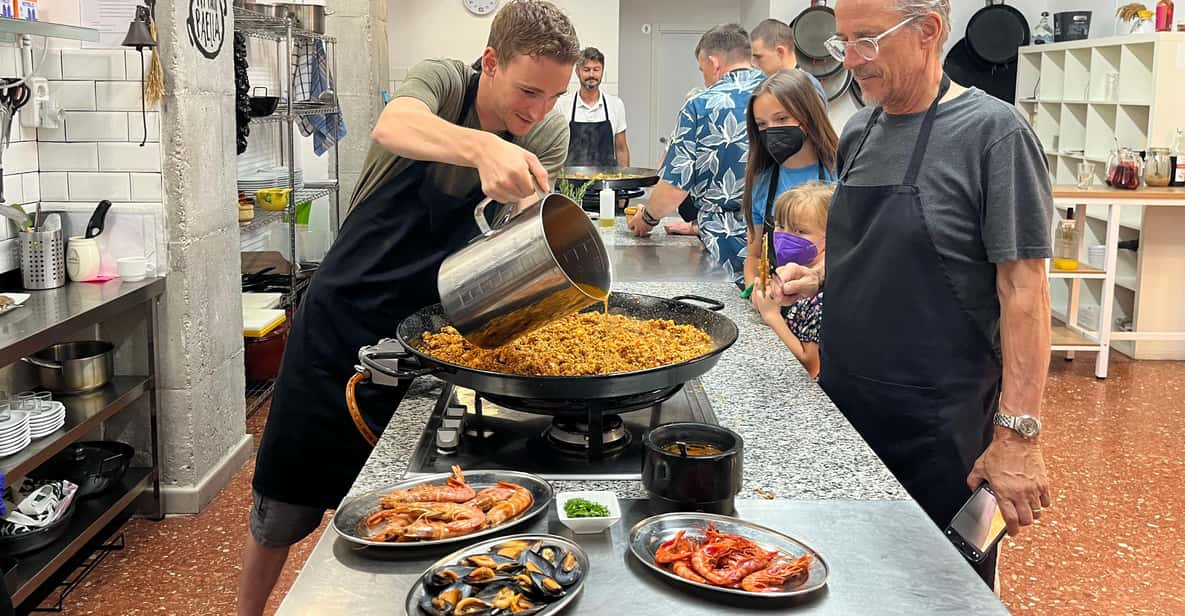
Back at the kitchen, tapas are already on the table and the sangria making begins. Then you cook: a seafood paella with its traditional salmorreta sofrito, hands in the rice, in a small group with a chef who grew up making it.
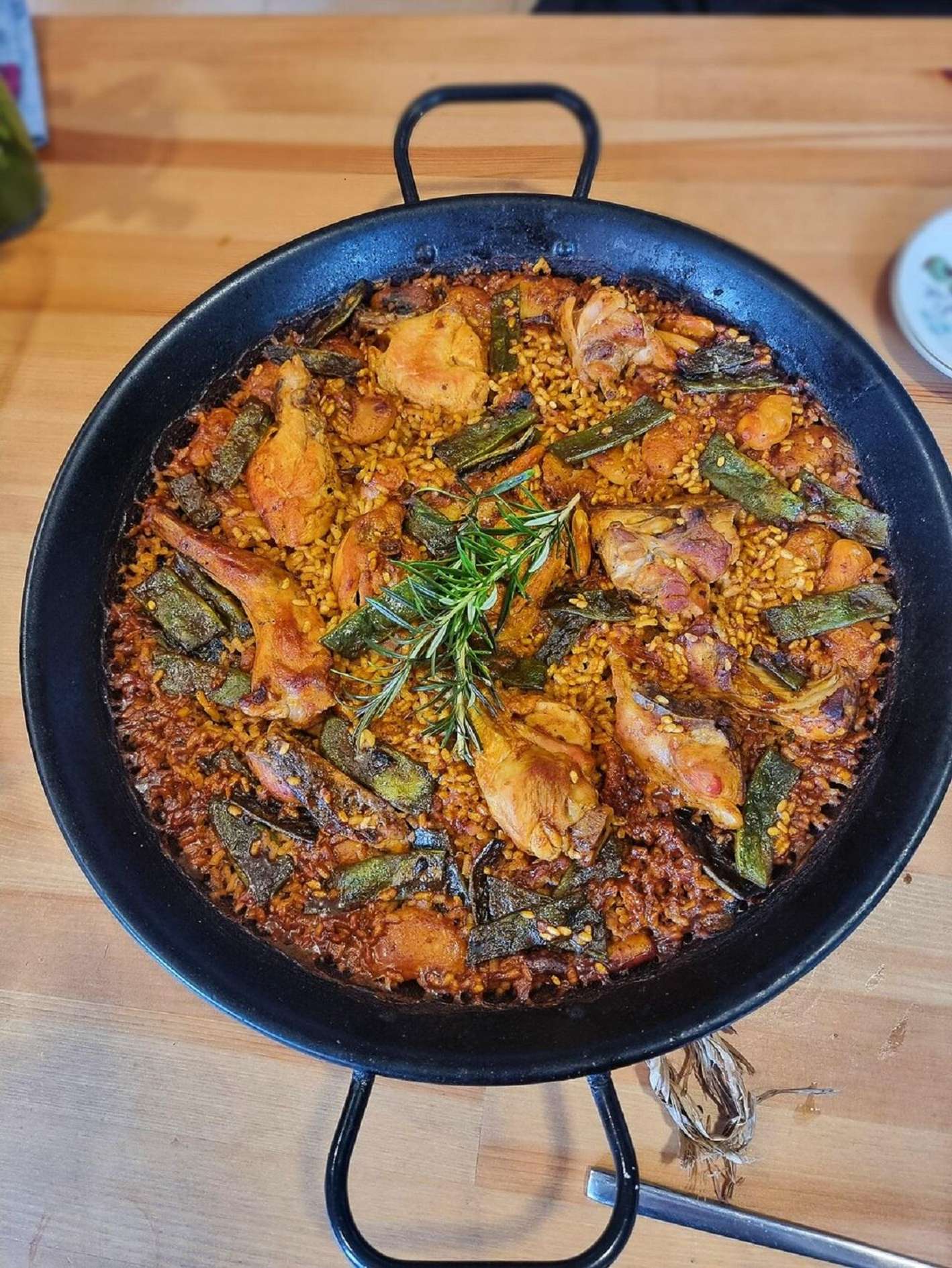
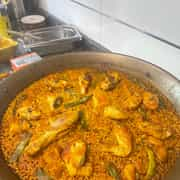
You eat what you made, and you learn the socarrat, the crispy crust at the bottom of the pan that Valencians call the best part.
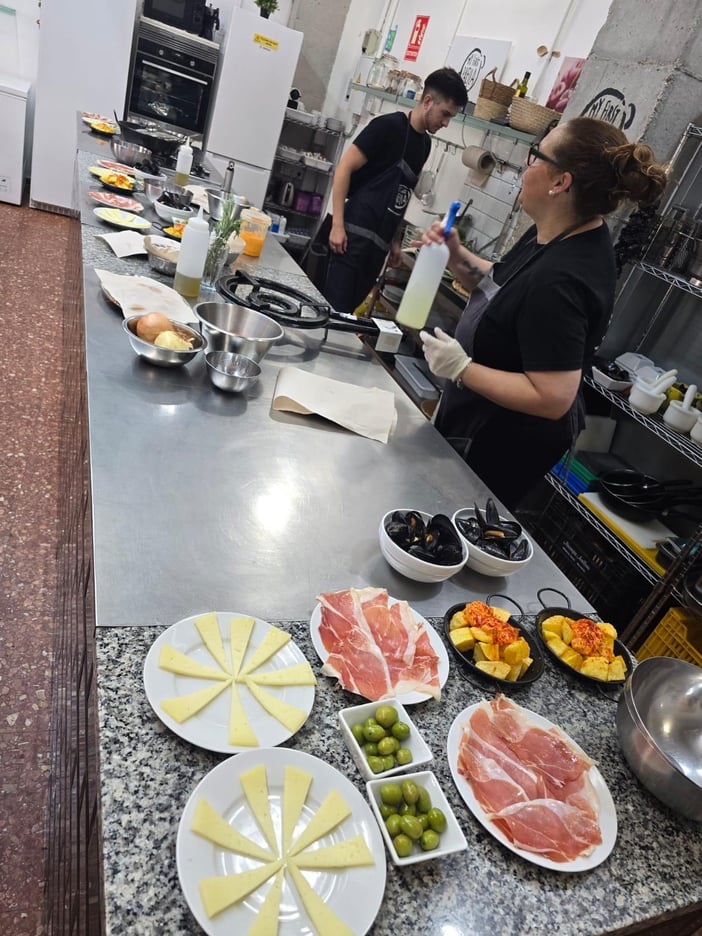
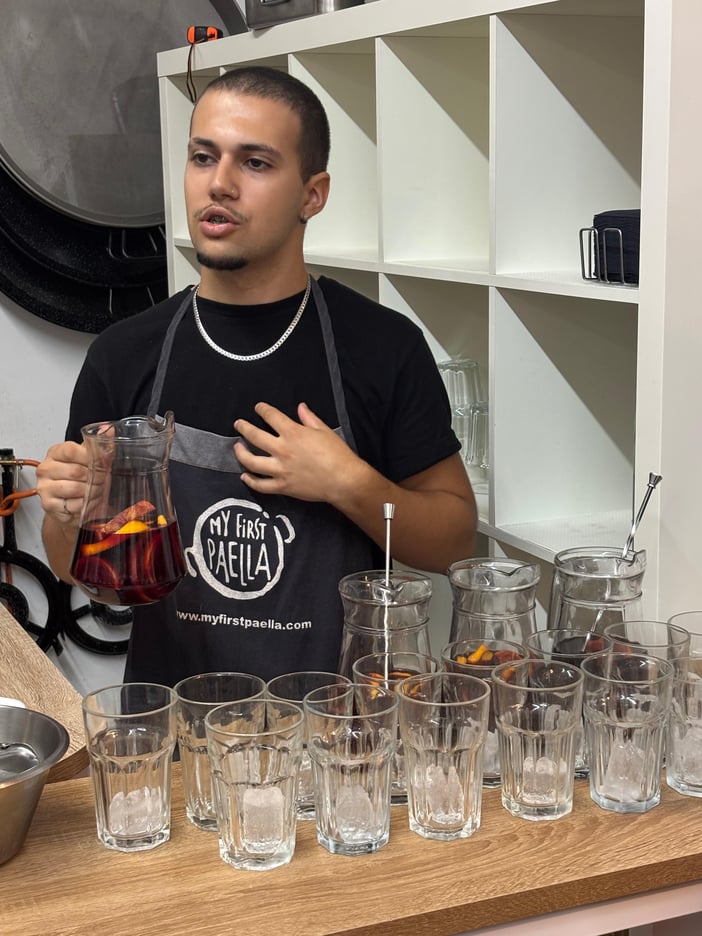
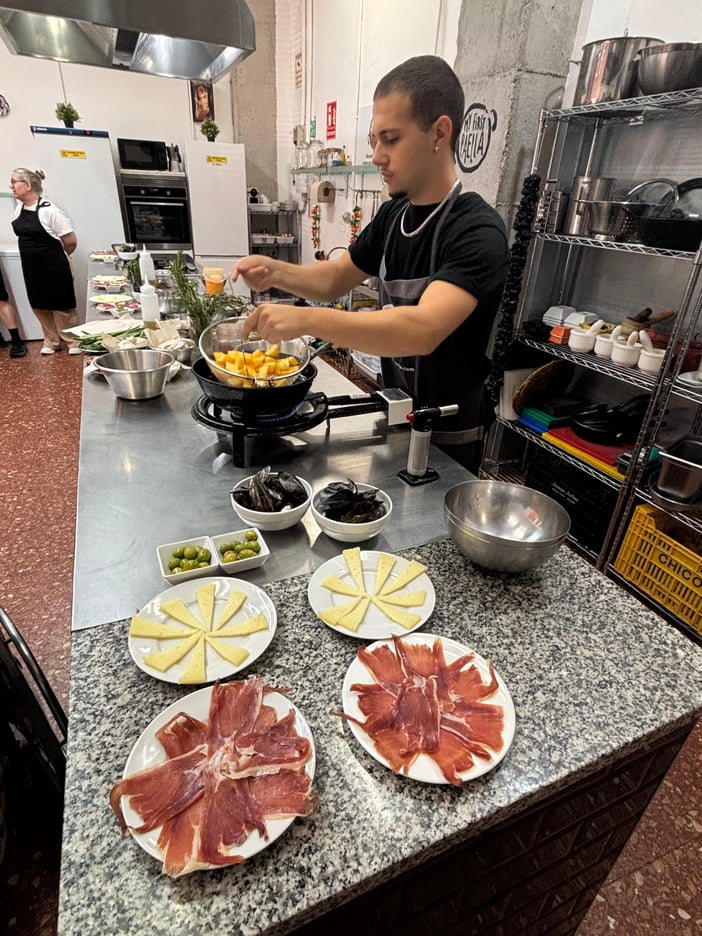
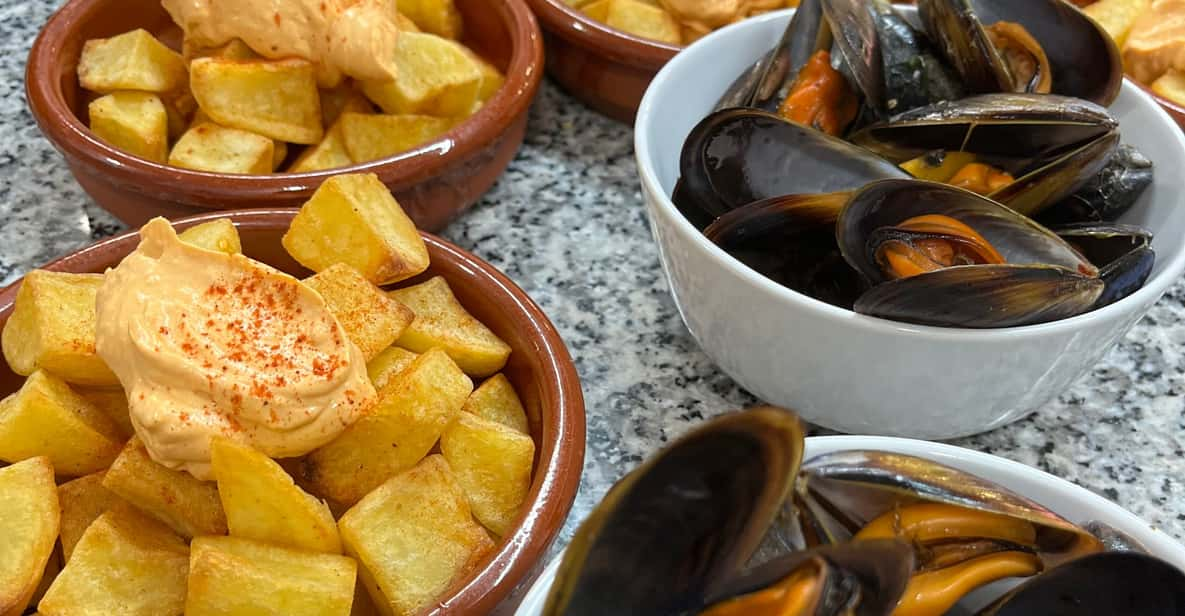
1Ruzafa Market visit· about 40 minYour chef guides you through the market where neighbors do their daily shopping, selecting fresh ingredients for the class.2Tapas and sangria welcome· about 30 minBack at the kitchen, homemade tapas wait on the table: manchego, steamed mussels, patatas bravas and olives. You learn to mix sangria while you nibble.3Cooking the paella· about 90 minThe chef walks you step by step through the seafood version with its salmorreta sofrito, correcting your moves as you work.4Lunch and socarrat· about 50 minYou sit down to your paella with salad, seasonal fruit, sponge cake and mistela, and scrape the crispy socarrat from the pan bottom.
Included
Paella workshopChefGuided visit to Ruzafa MarketAll ingredients for the workshopSelection of tapasBottomless sangria
Not included
Extra purchases at Ruzafa Market
Which seafood paella class fits your Valencia trip
Green marks the lowest price. Prices per person.
Tour
Price
Duration
Languages
Best for
Our pick
Real Paella Cooking Class, Market Visit & Sangría Workshop
5.0★ (438)
from $71per person
3.5 hours
English
morning cooks who want Ruzafa Market plus bottomless sangria
The chefs and hosts made the group feel like family, with warm hospitality from start to last sip.
Best surprise
Several solo travelers found it easy to connect, leaving with new friends and even continuing the night at nearby bars.
Most common wish
Many reviewers wished the class had lasted longer, wanting more time to cook, ask questions, and talk with the chefs.
Booking your seafood paella cooking class in Valencia
01
Pick the right day
Choose a weekday morning if you want the market walk before you cook. Markets in Valencia close at 3 pm, so morning sessions Monday to Saturday are the only ones that include a visit. Evening classes cook on with pre-sourced ingredients instead.
Pro tipSunday and public holiday closures end the market stop, yet the class still runs with extra kitchen time
RecommendedMornings in July and August keep you out of the midday heat beside the burners
02
Choose your paella option
Open the booking options and pick the seafood workshop, the one built around prawns, squid, and mussels. Most classes also run the classic Valencian and vegetable versions from the same kitchen, so a mixed group can each cook their own style.
Pro tipRead the description before you pay to see whether you get your own pan, share one with a partner, or cook a communal paella
ImportantSome operators need at least two people per paella type, so a solo seafood booking can depend on another guest choosing the same dish
03
Book for two or check the minimum
Standard workshops need a minimum of two participants to run. If the number is not reached, the operator offers a reschedule, a transfer to another session, or a full refund. Solo travelers still get in; just watch the email in case the session moves.
Pro tipSolo travelers join these classes all the time, the small minimum protects the class from being canceled
RecommendedBooking a month ahead helps in September and October, when demand peaks
04
Check the cancellation window
The classes on this page let you cancel up to 24 hours in advance for a full refund, so a flexible plan costs nothing extra. Confirmation arrives right after payment, and hosts often message you beforehand about meeting points or dietary needs.
ImportantKeep that 24-hour limit in mind if your flight or train schedule is still moving
05
Plan the day itself
Most kitchens sit in the old town, a short walk from metro stops like Xàtiva or Colón, and the meeting point is in your voucher. Wear closed-toe shoes and clothes you do not mind splashing with oil; the apron is provided.
Common mistakeFirst-timers turn up in sandals and loose sleeves around open gas burners
Pro tipCome hungry, tapas, wine, and bottomless sangria flow while you cook
What to know before you book a seafood paella class
Can stop the dayGood to knowGood news
01
ChoosingWhat it is, who it suits, when to go
8
Market daysCan stop the day
Mercat Central and Mercat d'Algirós open Monday to Saturday from 7:30 to 3 pm and close Sundays and public holidays. Mercat d'Algirós also shuts for all of August. Market visits run mornings only, so evening classes skip the market and start in the kitchen.
Class format
Sessions run from 2 to 4 hours. On some tours you pick your pan at booking: seafood, vegetable, or the traditional meat version. Whether you get your own pan or share one communal pan is worth checking in the experience description before you book.
What's included
Expect these things in the price of the class: Extra purchases at the market and hotel pickup cost more.
All ingredients and a chef guiding you step by step
Tapas and appetizers while you cook
Sangria, DO Valencia wine, beer, and soft drinks
Dessert and coffee at several workshops
A detailed recipe to take home
Allergies
These classes center on prawns, squid, mussels, and fish stock. Anyone with a shellfish allergy should book the traditional meat or vegetarian paella workshop instead, which the same kitchens often run in parallel.
Mobility
Some schools near Town Hall Square have step-free entry and lowered prep tables with knee clearance, so you can cook seated. Certain providers also let guests watch the cooking instead of standing for hours.
Cooking method
Seafood paella works differently from the meat version: the fish fumet and salmorreta paste are made ahead, and delicate pieces get seared first, then added back during the final simmer so prawns and squid stay tender.
Takeaways
Portions run generous, and hosts often hand out takeaway containers so the leftover paella comes back to your apartment with you.
Pan etiquette
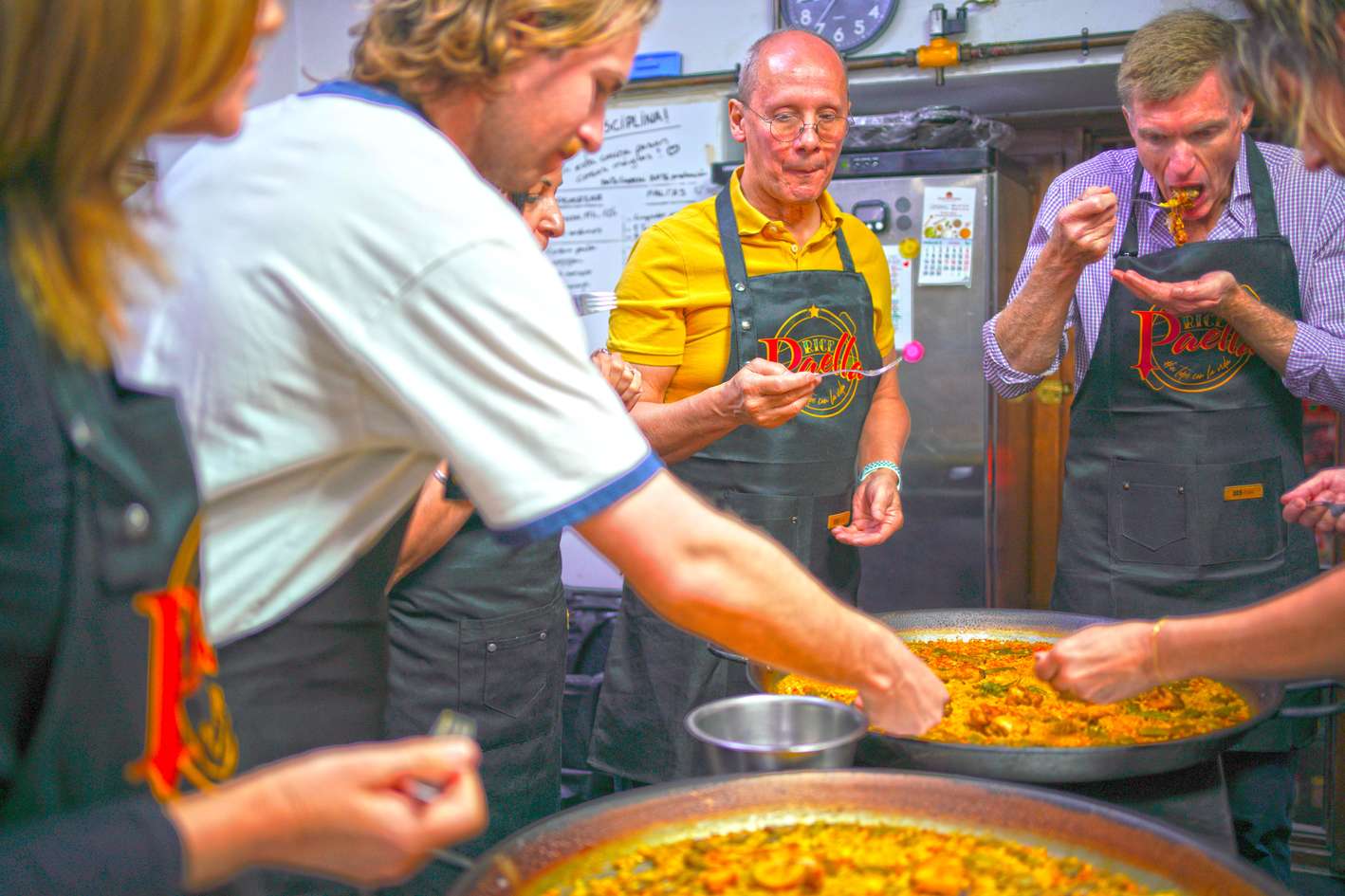
When the class eats straight from the pan, Valencians use a flat wooden spoon and each diner sticks to the wedge in front of them. No spinning the pan. The crisp socarrat at the bottom gets scraped and shared fairly.
02
BookingHow far ahead, and what happens if plans change
2
Cancellation
Each of these workshops lets you cancel up to 24 hours in advance for a full refund, so you can lock in a spot early and still change your plans.
Group minimumCan stop the day
Most traditional workshops need at least 2 participants to run, and some need 2 people per paella type. If the minimum is not reached, you can reschedule, move to another session, or get a full refund.
03
Before you goPapers, health, what to bring
1
What to wear
You cook beside open gas burners with oil popping, so wear closed-toe shoes and clothes you do not mind staining. Long pants and fitted sleeves help. The workshops hand out kitchen aprons.
04
On the dayWhere to be, when, and how you get there
1
Meeting point
None of the classes include hotel pickup. Market-to-kitchen sessions meet in the Old Town, usually near the market where the walk starts. The metro stops at the edge of the old quarter, at Xàtiva or Colón, and you walk the rest.
Seafood paella in Valencia - a cooking class guide from market to socarrat
Valencian purists call seafood paella arroz de marisco, and it is a real coastal tradition taught here by chefs who grew up on it. Which session, which day and which pan you book decides how much of it you take home.
Valencia
If you only remember three things
1
Book a morning from Tuesday to Saturday if you want the market walk, since markets shut by 3 pm and close entirely on Sundays.
2
Sear the seafood early and return it in the final simmer, or the prawns and squid go rubbery while the rice finishes.
3
Let the pan rest five minutes off the heat under a cloth before anyone eats; the rice needs it.
Is a seafood paella class in Valencia the real thing?
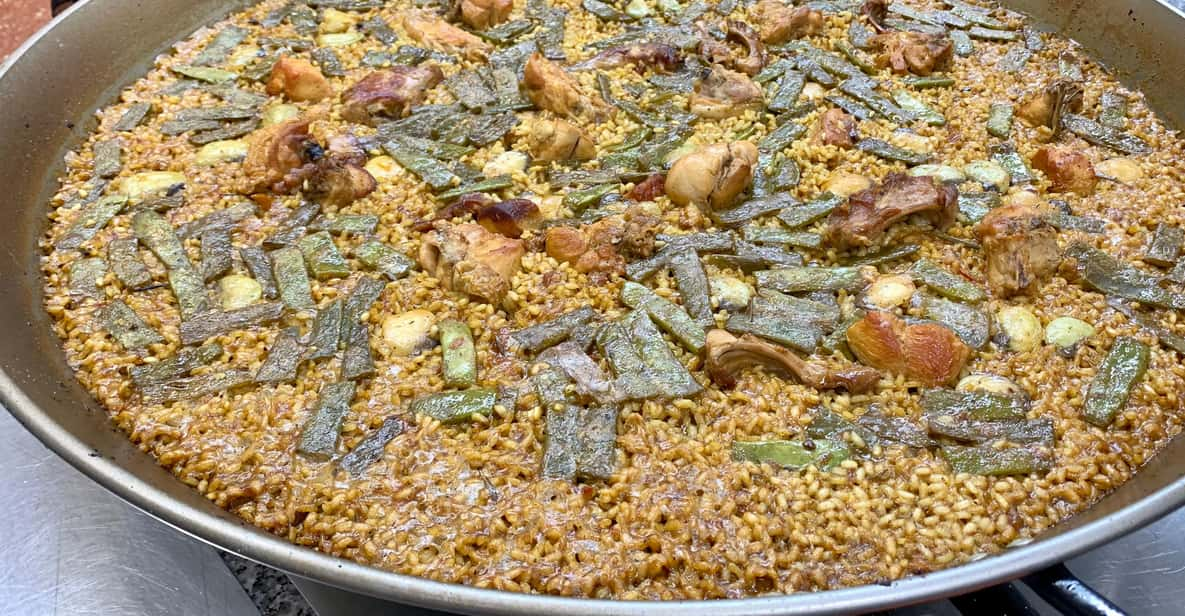
Ask a purist in Ruzafa what paella is and you will get a firm answer: chicken, rabbit, broad beans, sometimes snails. Seafood versions get their own name, arroz de marisco. That is the vocabulary you want, and it matters more in the kitchen than on the menu.
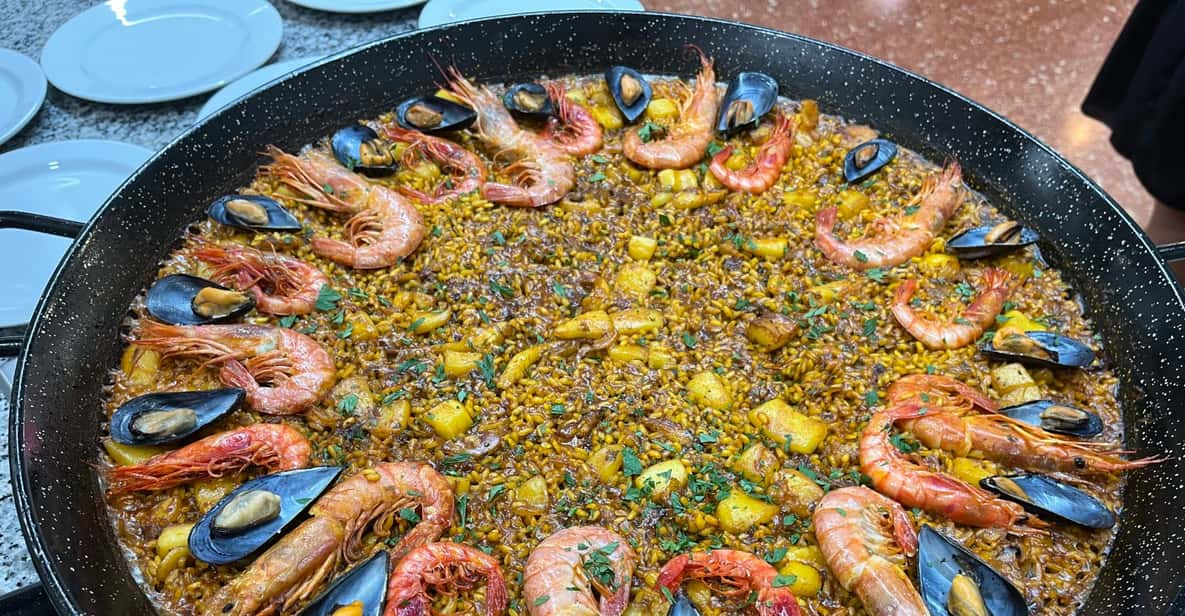
Seafood paella is an authentic coastal Spanish tradition, one that existed on this shore long before anyone thought of selling it to visitors. Valencian chefs cook it with prawns, squid and clóchinas, the local mussels that run from May to September.
Locals guard the naming because regional pride runs deep, and they will call mixing chorizo with seafood a culinary offense. They will happily teach you a proper seafood version.
What people get wrong about seafood paella
MythSeafood paella is a tourist invention
Reality
It is an authentic coastal tradition, cooked along the Valencian shore long before visitors arrived, and Valencian chefs teach it with pride.
MythMixing seafood and meat into one pan is normal
Reality
Locals treat it as a culinary offense. Meat paella is Paella Valenciana, seafood is arroz de marisco, and each keeps its own kitchen.
MythAny rice dish in a wide pan counts as paella
Reality
The name belongs to the traditional recipe with land meat and beans. Knowing the difference earns you respect at the market and at the table.
One practical note before you pick a class: if anyone in your group has a shellfish allergy, this is the wrong kitchen. Book a land-meat or vegetarian session instead.
Seafood paella works differently from the meat version, and the difference is the first thing a good class teaches. In meat paella the broth builds in the pan.
In a seafood class you make fumet and salmorreta separately: a strained stock simmered for 20 to 30 minutes from fish bones and shellfish shells, and an Alicante paste of fried garlic, ñora peppers and tomato blended smooth. Hot fumet goes over the rice once the salmorreta has sautéed into a base.
The rice cooks in three stages: about 5 minutes on high heat, 5 on medium, then 5 to 8 on low, 18 to 20 minutes in total. After you spread the rice in a thin layer, you stop stirring. Stirring leaches starch and turns the pan into porridge.
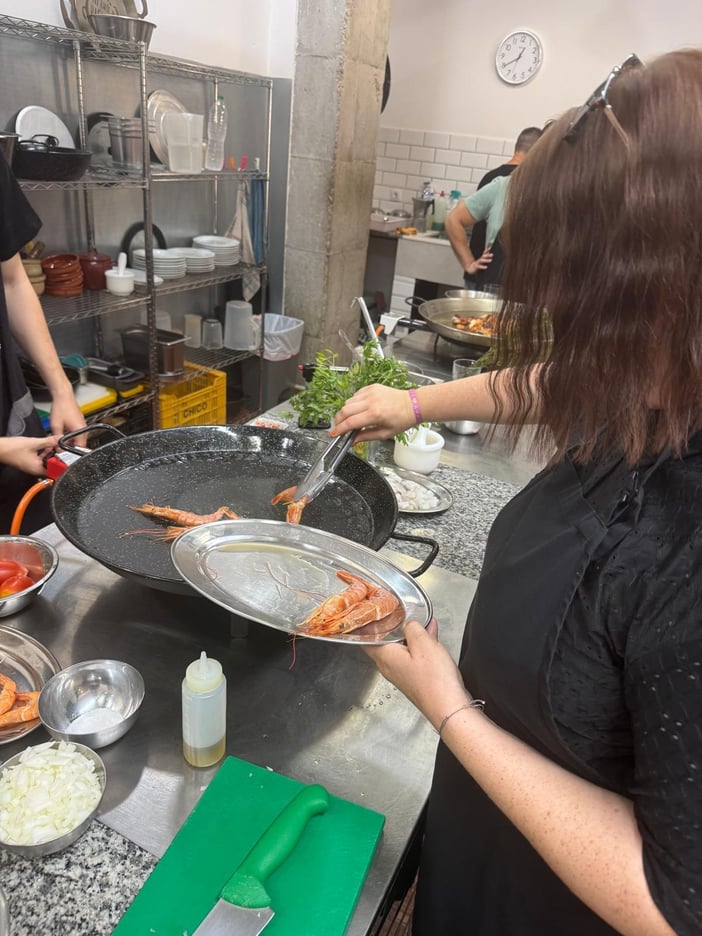
Then comes the timing that separates good paella from rubbery paella: sear the prawns and squid first, hold them back, and return the delicate pieces only during the final simmer. Fish left in the broth the whole way ruins itself.
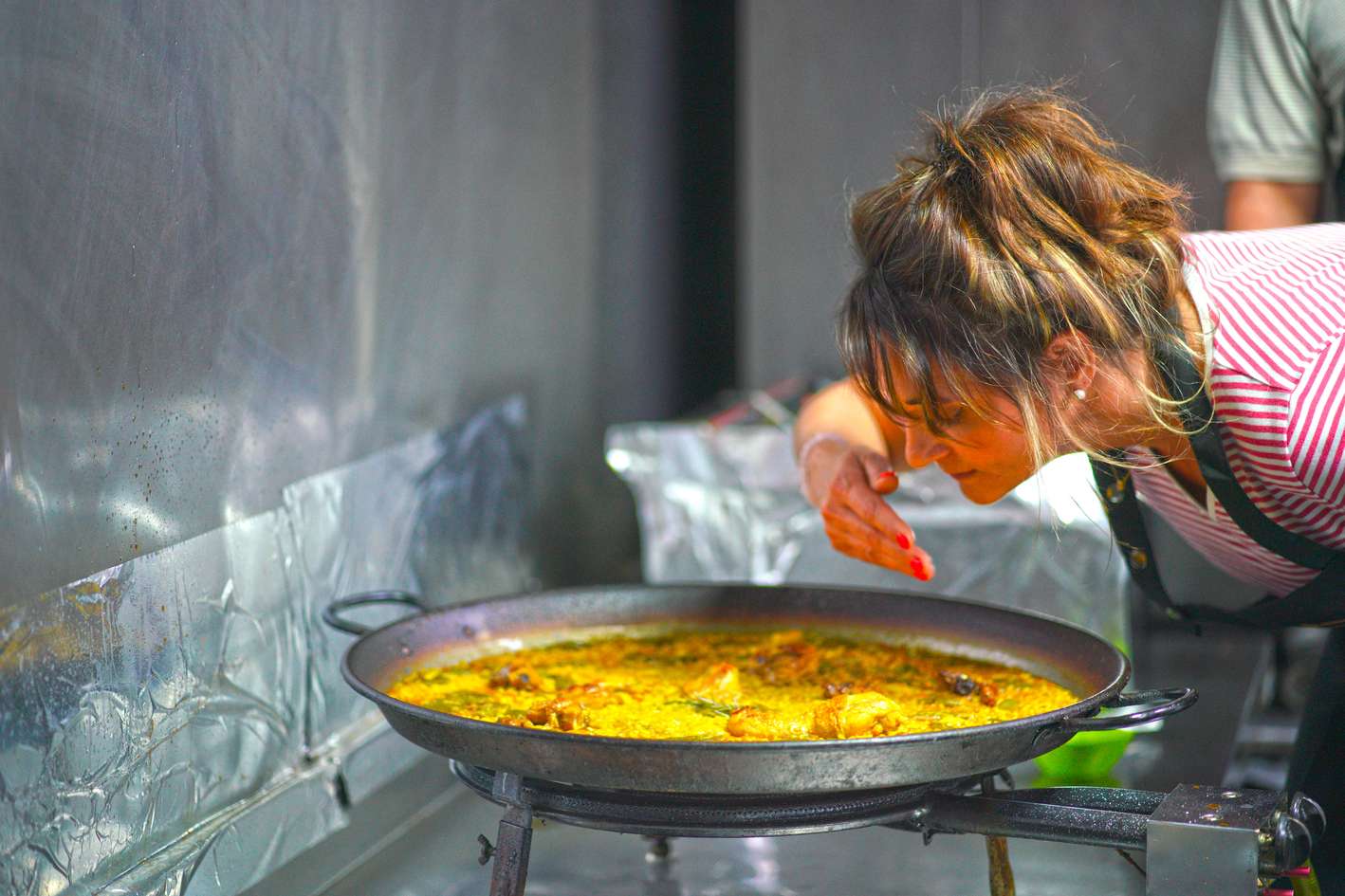
The last part is listening. When the boiling sound shifts to a gentle crackle, the broth is gone and the socarrat, the toasted crust, is forming.
Half a minute to two on medium-high, amber edges, a nutty smell, and the pan comes off. Rest it a few minutes before serving. Classes pour sangria and wine throughout the session, and tapas keep coming while you cook.
How the class day unfolds
1
Market start (morning sessions)
The chef walks the group through Ruzafa Market or Mercado Central to pick fresh produce
Monday to Saturday mornings only; evening sessions start in the kitchen instead
2
Prep at your station
Grate tomatoes, snap beans, prepare the ingredients for sofrito
The seafood version opens with salmorreta paste and fish stock, with no meat browning involved
3
Rice in, hands off
Spread round rice evenly, often in a cross or diagonal line, then leave it
Stirring after this point ruins the texture
4
The listen-for moment
The boil turns to a crackle when the broth evaporates
Half a minute to two minutes more builds the socarrat
5
Rest and eat
The pan rests off the heat, then everyone sits down together
Wine, sangria and tapas flow during cooking and at the meal
By the time you sit down you will have touched every stage of the dish yourself: the stock, the paste, the pour and the crackle. That full cycle is what a hands-on class gives you, and the recipe you take home preserves it.
Tour for this
Only for You, Private Paella Class ..(Also at your home)..5.0★ (35) · 2.5 hours · Free cancellation
When to go - the day and the season decide your class
The calendar picks your format before you do. Mercado Central and the neighborhood markets trade Monday to Saturday, 7:30 am to 3 pm, and shut completely on Sundays and public holidays. No market visit on Sundays; those sessions skip the walk and cook straight away, trimming a 3.5-hour class to about 3 hours.
Mondays are a subtler case. The market opens, morning tours run as normal, but the fish counters sit thinner because no fishing boats delivered on Sunday. Classes work with the stalls that are open and pre-sourced seafood, so nothing cancels. Tuesday through Saturday gives you the fullest counters.
Seafood stall availability and market tours by day
Tue: the busiest. Full seafood counters and optimal morning market conditions for guided cooking class tours.
Bar height: how busy each day is, from very quiet to the busiestThe busiest: Tue
Tap a day to read it.
Season matters too. Summer days reach the low 30s beside open gas burners, which is why travelers in July and August look for air-conditioned kitchens. Spring and autumn sit in the low to mid 20s, far kinder over a hot pan.
And the rhythm of bookings flips in autumn: September and October fill fastest, while summer classes quiet down. One more quirk, Algiros Market closes for the whole of August, so a neighborhood itinerary shifts that month.
How busy it gets, month by month
September: 5 out of 5 for how busy it gets.
HighestJul to Oct
In betweenFeb, Apr to Jun, Nov
LowestMar, Dec to Jan
Darker: a higher how busy it gets score, out of 5
Tap a month to read it.
The takeaway is simple. If the market is the part you imagined, pick a Tuesday-to-Saturday morning outside August. If you would rather cook in the cool of the evening, take a Sunday or a weekday night and let the kitchen come to you.
Paella is Valencia's midday meal, cooked and eaten when the sun is highest. That is why culinary insiders push lunchtime sessions: markets close by 3 pm, so only morning departures can shop the stalls first.
The trade-off is real. A morning market-to-table class means walking Ruzafa Market with your chef, choosing the prawns and mussels you will cook an hour later. An evening session starts in the kitchen with pre-sourced ingredients and pays you back in pace: tapas, sangria making, then dinner, three hours end to end.
The Real Paella Cooking Class, Market Visit & Sangría Workshop runs 3.5 hours and does both halves well, a guided visit to Ruzafa Market where neighbors shop, then a hands-on cook with tapas and bottomless sangria.
Group sizes vary less by time of day than people expect; both morning and evening formats come in small groups, though standard evening workshops can hold up to 20 unless a small-group class is chosen.
Morning market class or evening session?
Morning market-to-table
Evening tapas-and-drinks class
Short dinner class
Timing
Morning departures, Monday to Saturday
Afternoon onward, no market window
Evening, around 2 hours
Market visit
Yes, stalls before cooking
No, pre-sourced ingredients
No, pre-sourced ingredients
Drinks
Sangria, wine and beer while you cook
Sangria, beer, soft drinks and wine
Homemade sangria, beer and water
Length
3 to 3.5 hours
Around 3 hours
Around 2 hours
Morning market-to-table
Timing
Morning departures, Monday to Saturday
Market visit
Yes, stalls before cooking
Drinks
Sangria, wine and beer while you cook
Length
3 to 3.5 hours
Evening tapas-and-drinks class
Timing
Afternoon onward, no market window
Market visit
No, pre-sourced ingredients
Drinks
Sangria, beer, soft drinks and wine
Length
Around 3 hours
Short dinner class
Timing
Evening, around 2 hours
Market visit
No, pre-sourced ingredients
Drinks
Homemade sangria, beer and water
Length
Around 2 hours
Pick by appetite. If sourcing your own seafood is half the pleasure, go morning. If the day is already full of sights, the evening kitchen and its free-flowing sangria will not feel like a lesser class.
Tour for this
Valencia: Traditional Paella Cooking Class and Dinner4.9★ (58) · 2 hours · Free cancellation
Three details change the class before you arrive, and all three are visible in the description if you know where to look.
First, the pans. Some kitchens give each pair or person an individual pan; others gather everyone around one communal one.
It changes what you learn, because a pan of your own means you pour the rice, judge the crackle and build the socarrat yourself. The description tells you which setup you get, so read it before booking.
Second, the language. Many public workshops run bilingually in English and Spanish, and some private English instruction needs a minimum group size. If the class language decides the day for you, confirm it before you book.
Third, solos. Valencia's sit-down restaurants almost universally require two people per pan, which leaves solo travelers eating at specialized paella bars in Russafa instead. Cooking classes have no such minimum; you can book a single seat, cook your own pan, and the sociable kitchen makes it easy to meet people.
How to choose a seafood paella cooking class in Valencia
Check
Why it matters
Our pick
Pan setup, individual or communal
A pan of your own means you control the rice, the simmer and the socarrat yourself
The Ruzafa Market class is a small-group, hands-on session with your chef correcting your every move
Language of instruction
Some sessions run bilingually or need minimum numbers for private English
Runs in English, with the guided Ruzafa Market visit included
Solo-friendly booking
Restaurants enforce a two-person minimum per pan; classes do not
Single seats welcome in a small-group format
Check those three lines and nothing at the door will surprise you.
Mixed diets travel together, and Valencia's kitchens have caught up. Classes that split the group let each person choose a style: classic Valencian, seafood, or vegetarian, all cooked side by side in the same kitchen.
A shellfish-allergic partner books the meat or vegetable pan while you cook arroz de marisco, and nobody compromises at a shared table.
A shellfish allergy means booking a different class entirely. A seafood session is the wrong room for anyone allergic to prawns, mussels or squid, however tempting it looks. Land-meat and vegetarian alternatives cook in the same city, often in the same school.
Age rules vary more than most families expect. Workshops accept children across bands from age 3 and under, through 4 to 11, to 12 to 17, but some classes bar children 4 and under or are not suitable for under 2s or under 10s.
One tour that offers vegetarian paella on request is not suitable for children under 2. Read the age band on the session you want before you promise the kids a cooking afternoon.
What nobody tells you
Split-group classes mean no one compromises
Each person picks their own paella style, so a seafood cook and a vegetarian sit at one table.
Age bands differ class by class
The same kitchen may welcome a 5-year-old in one format and not another, so check the age band for the exact session.
Allergy bookings need a different class
Seafood kitchens handle shellfish all session; land-meat and vegetarian sessions are the safe booking.
So the booking question is simple. Pick a session whose description names the split-group option, and the whole family cooks what each prefers at one table.
Metro trains stop short of the old town. Metrovalencia does not run into the interior lanes of Ciutat Vella, so most cooks arrive at a perimeter station, Xàtiva, Colón, Ángel Guimerá or Plaça d'Espanya, and walk the last stretch.
Morning meeting points for market-to-kitchen tours sit in the Old Town, which makes the walk part of the day.
Buses get closer. EMT lines 4, 11, 27, 31, 32, 60, 62, 70 and 73 run directly into the historic center if the metro-to-walk combination does not suit.
Ruzafa studios work the same way. Colón, Xàtiva or Plaça d'Espanya are all inside walking distance, Metro Line 10 serves the neighborhood, and EMT lines 6, 14, 18, 40 and C3 pass through. Walking from Colón to Ruzafa is a few level streets and entirely normal.
Transit routes to Ciutat Vella and Ruzafa studios
To Central Market & Ruzafa Cooking Studios · Ciutat Vella & Ruzafa
Budget the last stretch on foot whatever you choose. The lanes of Ciutat Vella were laid out long before trains, and the chefs who meet you at the market know the walk is how everyone arrives.
Searing prawns pops oil. That is the scene to dress for: open gas burners, a hot paella pan, and droplets that travel.
Closed-toe shoes protect feet against hot oil splatters, long pants cover your legs, and a fitted top without loose sleeves keeps fabric away from open flame. Wear casual clothes you do not mind getting messy, and let the workshop furnish the apron.
Loose sleeves near an open burner are the one real hazard of the class, and the fix costs nothing: roll them or leave the billowy blouse for dinner.
Mobility is handled better than most visitors expect. Some central schools have wheelchair-accessible facilities adapted for reduced mobility, and accessible workshops near Town Hall Square run step-free rooms with lowered preparation tables that leave knee clearance, so you can prepare and cook seated.
Certain providers also let guests choose between preparing the food and watching the cooking without standing at all.
ImportantWear closed-toe shoes and clothes you can mess up; loose sleeves near the open gas burners are the one real hazard of the day.
Dress for the stove and the hour goes smoothly, whatever the kitchen layout.
Booking months ahead raises a fair worry: what if the class does not fill? Standard workshops need a minimum of 2 participants to run, some operators asking for at least 2 per paella type. If the number is not reached, you are not stranded.
The operator offers a reschedule to another date or time, a transfer to a different session such as a morning class, or a full refund. You can also cancel any of these classes up to 24 hours ahead for a full refund.
What happens when things change
If this happens
What happens then
Minimum enrollment not reached
Reschedule to another date or time, transfer to a different session, or take a full refund
Market closed (Sunday or public holiday)
The class still runs: it skips the market walk and adds cooking time in the kitchen instead
Change of mind a day out
Cancel up to 24 hours in advance for a full refund
The Sunday case deserves repeating, because it looks like a cancellation and is not. Mercado Central sits closed all day on Sundays and bank holidays, and morning classes continue anyway, swapping the market walk for extra time at the burners. Book the Sunday without fear; expect a kitchen day with extra time at the burners.
When the pan lands on the table, the ritual begins. Communal paella is eaten with a spoon, traditionally a flat wooden one, and never a fork.
Everyone spaces themselves evenly around the pan, and each person eats only the wedge in front of them, working inward from the edge. Never spin the pan to reach another section; that is the move locals remember.
The socarrat is shared property. The caramelized crust at the bottom gets scraped and divided fairly among everyone at the pan. When you finish, rest your spoon on the rim or say you are done, which frees your wedge for your neighbors.
Pro tipShellfish paella means peeling and deshelling at the table, so work steadily; take too long and the rice cools while you shell.
Learn the ritual before the meal and the whole table eats better, which is exactly the point of eating from a shared pan.
Taking it home, and where to eat paella afterwards
Two things leave the kitchen with you. The host hands out the detailed recipe after the workshop, so the fumet and salmorreta live on your shelf at home. Portions run generous too, and takeaway containers often appear for the leftovers.
A traveler's note
Amazing experience! The paella workshop was super fun and well organized. Our guide was friendly, explained everything clearly, and got everyone involved. Great tapas and drinks - a highlight of our Valencia trip.
One reality check on recreating it: a wide paella pan over a standard home stove leaves the outer edges undercooked, because seafood paella needs a burner that matches the pan's diameter. Either scale the pan down to the burner or plan an outdoor ring.
For restaurant nights, aim at arrocerías, the dedicated rice kitchens; standard tourist restaurants rarely give rice the care it needs.
And book ahead in the morning: authentic rice restaurants cook paella to order and often require you to choose the rice dish by the morning of your visit. Walk in at 8 pm expecting a pan and you may find the kitchen has none for you.
The class carries. The recipe travels, the timing lessons transfer, and the rice you cook in September tastes like the coast you learned it on.
A class that starts with a market walk ends mid-afternoon, right when Ciutat Vella opens up. Central workshops sit within a 5- to 15-minute walk of the historic quarter's best sights, so the day extends without planning.
Mercat Central stands on Plaza del Mercado, a Modernist food hall of more than 1,000 stalls under a dome and stained glass, open Monday to Saturday until about 3 pm.
Its seafood hall ranks among the largest fresh fish spaces in Europe, worth a slow lap even after you have cooked one. Directly opposite rises La Lonja de la Seda, the Gothic Silk Exchange, and the circular Plaza Redonda near Santa Catalina holds traditional stalls and classic horchata.
Historic sights and landmarks within walking distance
If you have a car or a long afternoon, the City of Arts side, with its science museum and gardens, sits about 15 minutes away by road. Otherwise, stay on foot.
The plazas and small galleries within two or three minutes of your kitchen fill an afternoon well enough, and an evening session then closes the day with tapas.
A seafood paella class in Valencia is a genuine coastal tradition taught well, and the day shapes itself around the market. Choose a Tuesday-to-Saturday morning to shop Ruzafa Market with your chef, or an evening kitchen with tapas and sangria. Either way, expect a hot stove, generous portions and a recipe to take home.
Go ifYou want a dedicated seafood class with prawns, squid and clóchinas at the center of the menuYou can take a Tuesday-to-Saturday morning and want the market walk with your chefYou cook solo or in a small group and want hands-on pans rather than a demonstration
Skip ifAnyone in your group has a shellfish allergy; book a land-meat or vegetarian session insteadYou only want a market visit and your only free day is a Sunday or a public holiday
Seafood paella cooking class in Valencia - questions answered
Quick answers on menus, market days, timing and booking a seafood paella class.
Valencia2026
The kitchen smells of fumet and the pan is crackling toward socarrat. Book a morning slot if you want the market walk first.
What goes into a proper seafood paella in Valencia?
Expect prawns, squid, and shellfish, with locally grown mussels called clóchinas in season. Valencians count this dish separately from the meat paella and call it arroz de marisco.
How is seafood paella different to cook from the chicken and rabbit version?
The seafood version starts from two bases made in advance. A strained fish stock called fumet simmers for 20 to 30 minutes, and salmorreta, a paste of garlic, ñora peppers, and tomato, is sautéed in the pan before the hot stock goes over the rice.
When should the prawns and squid go into the pan?
Cooks sear the seafood first and add the delicate pieces back during the final simmer. Leaving squid or prawns in the broth the whole time turns them tough and rubbery.
Can I join a class on my own?
Yes. Sit-down paella restaurants in Valencia usually require two people per pan, but a cooking class lets a solo traveler cook and eat freshly made paella without that minimum.
Do I need to book for two or more people?
Most workshops need a minimum of two participants to run. If the number is not reached, the operator typically offers a reschedule, a transfer to another session, or a full refund.
Is sangria served during the cooking or only at the meal?
It depends on the workshop. Many pour tapas, wine, and free-flowing sangria throughout the session, while others bring water, beer, soft drinks, and wine to the table when you sit down to eat.
Will I learn how to avoid a paella that is too salty?
Use a low-salt homemade fish stock and hold off on adjusting the salt until the end, because shellfish release their own salt as they cook. A squeeze of lemon at the end helps too.
Can I take leftovers home?
Portions tend to be generous, and hosts often hand out takeaway containers so you can bring leftover paella back to your room.
Do I get the recipe after the class?
Hosts share the detailed paella recipe after the workshop, so you can recreate the dish at home once you are back.
Will my class have one pan for the group or one per person?
It varies by workshop. Read the experience description before booking, since that is where each class states whether you cook individual, paired, or communal pans.
Still deciding? More ways to cook seafood paella in Valencia